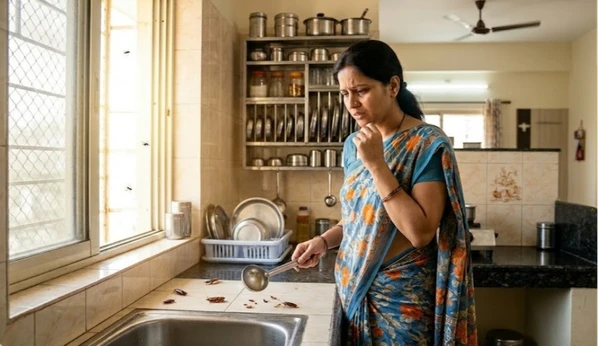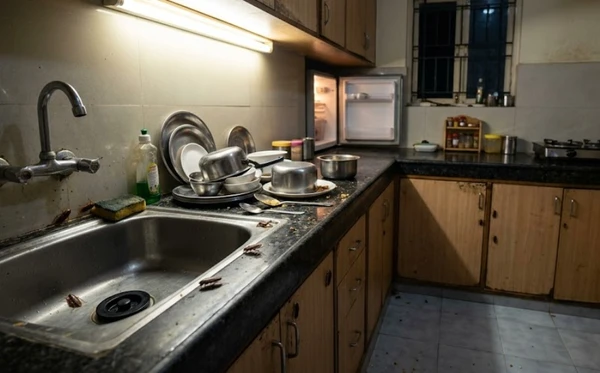
You spot one near the drain. Then another behind the fridge. Then one running across the kitchen floor at midnight. And you think — I cleaned yesterday. Why is this happening?
It happens to almost every household in India during monsoon. And no, it's not about how clean your home is.
The drain is the real problem
Most people imagine cockroaches crawling in through windows or gaps in the wall. That does happen. But the bigger issue — especially in Indian cities — is the drainage system.
Cockroaches live in sewers and drain pipes all year. It's dark, damp, warm. Perfect for them. When the rains come and those drains start flooding, they get pushed out. They come up through your bathroom drain, your kitchen pipe, sometimes even the toilet. That's why you'll see more of them the day after heavy rain, not before.
Sealing drain openings with a mesh cover is one of the most underrated fixes people never try.
Humidity does something specific to them
Monsoon air in Rajasthan, Delhi, Mumbai — it sits heavy. 75%, 80% humidity for weeks at a time. That's not just uncomfortable for us. For cockroaches, it's basically a signal to breed.
They move more. They eat more. They reproduce faster. An egg case that might take a month to hatch in dry weather hatches much sooner when it's humid. So the ones already hiding inside your walls and cabinets — they're multiplying right now, even if you can't see them.
That musty smell in your kitchen cabinet? Sometimes that's them.
Your walls develop new gaps every monsoon
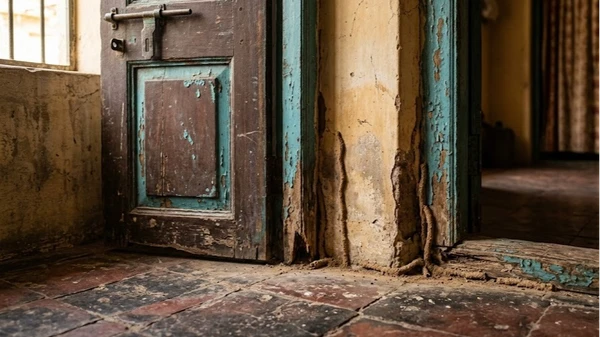
This is something nobody talks about. When moisture gets into building materials — concrete, wood, plaster — it causes tiny shifts. Gaps appear around pipe fittings. The space under your kitchen counter gets a little wider. The seal around your bathroom drain loosens.
Cockroaches can push through a gap about 1.5mm wide. Half the width of a sim card. So those "tiny" new cracks matter a lot more than you'd think.
Before monsoon hits, spend 20 minutes just walking around and pressing sealant into any gap you can find near pipes and floor edges. It genuinely helps.
What actually works to keep them out
Here's the honest version — not a list of ten things you'll forget by tomorrow.
Fix the moisture first. A dripping tap under the sink, a slow pipe leak behind the washing machine, condensation collecting somewhere dark — these are more attractive to cockroaches than leftover food. Find the wet spots and dry them out.
Close off the kitchen at night. Cockroaches feed after dark. Wipe the counter, don't leave dishes soaking, dry the sink before bed. It's not glamorous advice but it works.
Storage matters more than you think. That open packet of atta, the uncovered dal container, the fruit sitting on the counter — seal everything. Not because cockroaches are hungry. Because the smell travels, and they follow it.
Bay leaves under the sink and in cabinets — sounds old-fashioned. But cockroaches genuinely avoid the smell. Cheap, safe, no chemicals.
The one thing that actually solves it: a professional gel treatment. Not a spray you buy from the store. Modern cockroach control uses a gel bait that the cockroach carries back to its hiding spot. It spreads through the colony — the ones you never see get affected too. One treatment done properly, before the season peaks, is worth more than months of sprays and traps.
When to stop trying DIY
If you're seeing cockroaches during the day, that's already serious. They're nocturnal. Daytime sightings usually mean the infestation has grown large enough that there's no more hiding space.
Same if you find dark specks near your fridge, or small brown egg cases tucked into cabinet corners. At that point, home remedies won't touch the scale of the problem.
That's when a cockroach pest control ↗ service is the right call — not a last resort, just the right tool for the job.
Pestend provides cockroach control across India. Odourless, child-safe treatments, no need to vacate your home.