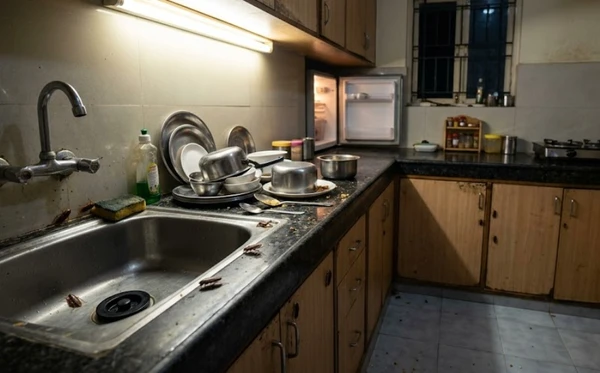
You see a small pile of mud near your wall. You tap the wood — it sounds hollow. Your heart sinks.
Termites.
In India, this is more common than you think. From Mumbai's humid buildings to Delhi's older homes — termites cause crores worth of damage every year. The good news? You can stop them. Let me walk you through everything, in plain simple language.
How Do I Know If I Have Termites?
Most people find out too late. That's the real problem with termites — they don't make noise. They don't show up suddenly one morning. They quietly eat through your home for months while everything looks perfectly fine from outside.
By the time something breaks or cracks — the damage inside is already bad.
So here's what you need to check right now, before things get worse.
Go knock on your wooden door frames. Not just look at them — actually knock. Does it sound solid? Or does it sound empty, like knocking on a hollow box? That hollow sound means termites have eaten the wood from inside. Only a thin outer shell is left.
Look at the base of your walls. Especially near bathrooms, kitchens, and dark corners. Do you see thin brown lines that look like dried mud tracks running up the wall? Those are termite mud tubes. Termites build these to travel from soil into your home without coming out in the open.
Check near your windows and lights after rain. If you find tiny transparent wings lying around — this is a serious sign. Flying termites shed wings when they're starting a new colony. Finding wings means a new colony is forming, possibly already inside your walls.
Look at your paint carefully. Not for peeling — but for tiny bubbles or patches that look slightly raised. No water damage nearby, but the paint surface looks uneven? Termites feeding underneath cause exactly this.
Find powdery dust near wooden furniture? That fine sandy dust is termite droppings, called frass. If you're seeing it, they're actively feeding right now.
One sign is enough to act on. You don't need to wait for all five.
Why Indian Homes Get Hit So Hard
Here's something most pest control ↗ companies won't say out loud — but it's true.
A huge number of Indian homes, especially ones built more than ten or fifteen years ago, have wooden door frames or beams that directly touch the soil outside. The flooring dips slightly near the entrance, soil meets wood, and that's it — termites have a direct highway into your home.
Now add our climate on top of that. Long hot summers. A full monsoon season every year. High humidity from June to September. Termites absolutely love these conditions. Warm and wet is exactly what they need to thrive.
If your home is older and has never had any termite treatment done — there's a real chance they're already somewhere inside. Not maybe. A real chance.
What Actually Works to Get Rid of Termites
Let me be straight with you. Home remedies don't work once termites are properly settled in. Kerosene, turmeric, camphor — people try these things. They might disturb the surface activity for a day or two. But the colony underneath? Completely unaffected.
Here are the treatments that professionals actually use:
Soil Treatment — This is the most common treatment for existing homes. The team drills small holes near affected areas — along your walls, near the foundation, around door frames. A chemical solution is injected into the soil. This kills the active colony and creates a barrier that stops new termites from entering. The holes are sealed cleanly after. Most people are surprised how quick and non-messy the whole thing is.
Baiting System — Small bait stations are placed around your home in the ground. Termites find the bait, eat it, and carry it back to their colony. Over a few weeks, the whole colony is wiped out. Slower process, but very thorough — especially for large or widespread infestations.
Wood Treatment — Applied directly to furniture, window frames, and wooden fixtures. Works like a protective coat that makes wood resistant to future termite attacks. Usually done alongside soil treatment for full protection.
Pre-Construction Soil Treatment — If you're building a new home or doing major renovation — ask for this specifically. It's done before the flooring is laid. A chemical barrier goes into the soil from day one. Far more effective than treating problems after they develop.
For most Indian homes, soil treatment combined with wood treatment gives the best results.
Termite Treatment Chemicals — What's Actually Being Used
You have every right to ask this before anyone starts work in your home. A good company will answer without hesitation.
The most commonly used and government-approved chemicals in India are:
Chlorpyrifos — One of the most widely used termiticides here. Very effective for soil treatment, creates a strong chemical barrier.
Bifenthrin — Works for both soil and wood treatment. Known for being long-lasting.
Imidacloprid — Used in soil treatment. Disrupts the termite's system and kills the colony gradually over time.
Fipronil — Used in baiting systems and spray treatments. Spreads through the colony by contact — works slowly but eliminates the whole group.
All of these are safe when applied correctly by trained professionals. After treatment, you'll usually need to stay away from the treated area for a few hours while it settles. The team will tell you exactly what to do.
One thing — always check that the company you hire is registered and licensed. Ask them directly. If they get vague or uncomfortable with that question, that's your answer.
How to Prevent Termite Infestation
If your home is currently termite-free, here's how to keep it that way without spending much.
Fix water leaks as soon as they appear. A dripping pipe or a damp wall is not just a plumbing issue — it's an invitation for termites. Moisture is the main thing that attracts them.
Don't keep old wood near your walls. Broken furniture, leftover construction material, old wooden planks — if they're sitting near your home, termites will find them first and then move inside.
Make sure wood doesn't touch soil. This one change removes the most common entry point. Add a concrete or tile border wherever wooden frames meet the ground outside.
Be more careful during and after monsoon. Termite activity spikes during this season. Check walls, door frames, and wooden fixtures more regularly from June to October.
Get a professional inspection once a year. It takes an hour, costs very little, and catches problems before they turn expensive.
When Should You Call a Professional?
The moment you notice even one sign — call someone.
Don't wait to see if it gets worse. Don't try one more home remedy. And definitely don't ignore it because the house "looks fine otherwise."
A proper pest control company will inspect your full home, identify the type of termite, recommend the right treatment for your specific situation, and give you a warranty — usually anywhere from one to five years depending on the treatment done.
The earlier you catch it, the simpler and less costly the treatment.
One Last Thing
Termites don't care how clean your home is. They don't care if it's a new building or an old one. They're looking for two things — wood and moisture. That's it.
But they are very stoppable if you stay alert and act early.
Go knock on your door frames today. Check the base of your walls. And if something feels off — get it looked at.
Pestend provides trusted termite control services across India. We inspect first, explain clearly, and only then begin treatment — using safe, government-approved methods.