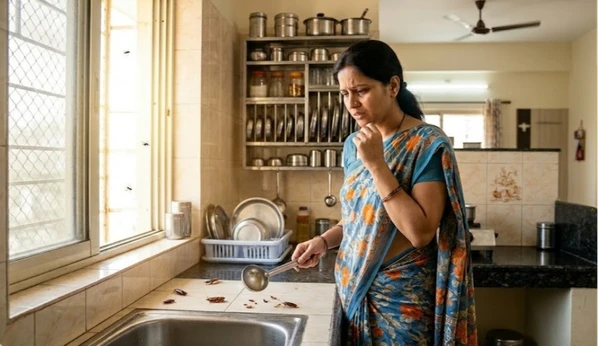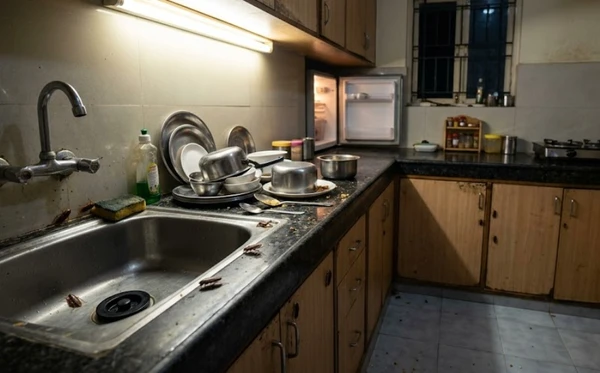
This is one of the most common questions people ask, and most answers are too generic to be useful. "Once a year" is the default response from a lot of companies. It's not wrong exactly. It's just incomplete.
The honest answer depends on a handful of specific things — your location, the age and construction of your building, what pests you've had before, and whether you're treating proactively or reacting to a current problem. Here's how to actually work out a schedule that makes sense for your home.
The baseline most homes need
For a typical home in an Indian city with no active infestation and reasonably good hygiene habits, a general pest control treatment once every six months is a sensible baseline. This covers cockroaches, ants, and general crawling insects, and resets the protective barrier before it fully wears off.
Most residual insecticides used in professional treatments are effective for roughly 90 days against contact, with a tapering effect after that. By month four or five, the protective barrier is significantly reduced. A six-month cycle means you're never going too long without coverage, while not over-treating a home with low pest pressure.
This baseline assumes general pest control ↗ — cockroaches and crawling insects. Termites, mosquitoes, and rodents typically run on their own separate schedules, which is where most of the "it depends" comes in.
Why your location changes the answer
Coastal cities and high-humidity regions — Mumbai, Chennai, Kolkata, coastal Kerala — see consistently higher pest pressure year-round because humidity supports breeding for cockroaches, ants, and mosquitoes almost continuously. Homes in these regions often benefit from quarterly treatment rather than the six-month baseline.
Cities with distinct dry and monsoon seasons — most of Rajasthan, much of central and northern India — see a sharp spike in pest activity during and immediately after monsoon, with comparatively lower pressure during the dry months. For these regions, timing matters more than frequency. A treatment in May or early June, just before monsoon, and a follow-up in September or October as the season ends, often covers the highest-risk windows more efficiently than a flat six-month schedule.
Ground floor versus upper floor. Ground-floor flats and independent homes have direct exposure to soil-based pests — termites, ants, ground-nesting insects — and easier rodent access. They generally need more frequent attention than a fourth-floor apartment in the same building, which is somewhat insulated from ground-level pest pressure but still vulnerable to cockroaches via shared plumbing and drains.
Why the type of pest changes the schedule
General cockroach and ant control — every six months as a baseline, or quarterly in high-pressure regions, as covered above.
Termite inspection — this is different from treatment. An annual termite inspection is worth doing even without visible signs, particularly for homes with significant wooden structural elements, older construction, or any history of termite activity in the area. Actual anti-termite soil treatment, once properly done, can last several years — five to ten depending on the product and application method — so this isn't a repeating cycle in the same way as cockroach control. But the inspection to confirm it's still holding is worth an annual check.
Mosquito control — seasonal rather than year-round in most of India. A pre-monsoon treatment in May or June, covering breeding sites and residual spraying, followed by a mid-monsoon top-up if mosquito pressure remains high, covers most households adequately. Outside monsoon, mosquito treatment needs drop significantly unless you're in a region with year-round high humidity.
Rodent control — this is more reactive than scheduled for most homes, unless you're in an area with known high rat pressure (older neighbourhoods, areas near food markets, ground-floor properties near open drains). If rodent activity is a recurring seasonal issue, a pre-monsoon rodent inspection and bait placement, similar to the mosquito timing, is worth adding to the annual schedule.
Bed bugs — entirely reactive. There's no preventive schedule for bed bugs in the way there is for cockroaches, because bed bug introduction is almost always linked to a specific event — travel, a guest, new furniture. Treatment happens when there's an active problem, not on a calendar.
Signs you need to increase frequency beyond the baseline
If you're seeing pest activity again within six to eight weeks of a treatment, the standard interval isn't holding for your specific situation. This could mean your home has higher-than-average pest pressure from a nearby source — a neighbouring property with an active infestation, proximity to a market or food business, a building with structural gaps that keep reintroducing pests — or it could mean the treatment itself wasn't thorough enough.
Either way, the response isn't to wait out the original schedule. It's to either move to a more frequent cycle or get a more thorough inspection to understand why the standard treatment isn't holding as long as expected.
Households with young children, anyone with allergies or asthma, or homes adjacent to food storage or waste collection areas often benefit from more frequent, lighter treatments rather than less frequent, heavier ones — this keeps chemical exposure lower per treatment while maintaining more consistent protection.
Signs you can extend the interval
A home with consistently low pest activity, good sealing of entry points, careful food storage habits, and no recurring issues across two or three treatment cycles can often extend to annual general treatment, particularly in lower-pressure regions or for upper-floor apartments.
This isn't a universal recommendation — it only applies once you have an actual track record showing low pest pressure for your specific home, not as a starting assumption.
What an ongoing maintenance plan actually looks like for most Rajasthan homes
For a typical home in Jaipur or similar cities in Rajasthan, a reasonable annual plan looks something like: general pest control (cockroach and ant) every six months, timed roughly around April-May and October-November to bracket the monsoon. A pre-monsoon mosquito and drain treatment in May-June. An annual termite inspection, ideally also pre-monsoon since soil moisture changes are when termite activity becomes most visible. Rodent attention as needed, with extra vigilance during and right after monsoon when displacement from flooding increases activity.
This isn't a rigid formula — it's a starting framework that most households in the region can adjust based on their specific building, history, and pest pressure.
The cost logic of staying on schedule
Preventive pest control on a maintained schedule is consistently cheaper than reactive treatment for an established infestation. A six-month general treatment costs a fraction of what a full cockroach infestation requiring multiple visits, gel baiting, and follow-up treatment costs once the population has had months to establish.
The same logic applies more sharply to termites — where prevention costs a small fraction of structural repair after years of undetected damage — and to rodents, where early intervention avoids both the higher treatment cost and the electrical/structural damage a long-term infestation causes.