Most people call a pest control company after they've seen too many cockroaches running around. That's already late. But finding the eggs? That's a whole different situation — because it means they're not just passing through. They've made a home inside yours.
The good news is that eggs are actually easier to spot than people think, once you know what you're looking for. The bad news is most people don't look — until the hatching is already done.
What cockroach eggs actually look like
They're not what you'd imagine. No gooey cluster, nothing that looks like a typical insect egg.
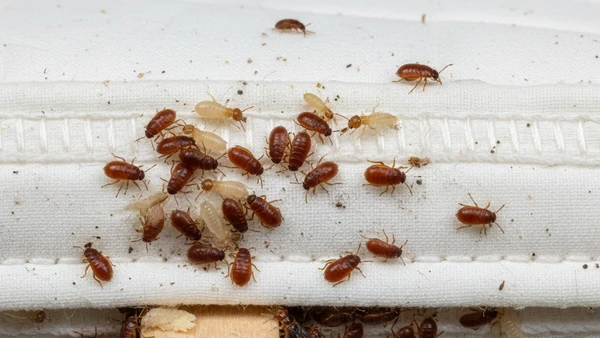
What you'll find is a small, hard capsule — shaped a bit like a brown kidney bean or a tiny purse. Pest control professionals call it an ootheca. It has ridges along the top edge where it eventually splits open, and the colour ranges from light tan to dark reddish-brown depending on the species.
Size-wise, we're talking roughly 6 to 10 mm. Small enough to miss completely if you're not looking with a flashlight.
One ootheca can hold anywhere from 14 to 50 eggs. One female cockroach produces multiple oothecae over her lifetime. You can do that maths yourself — it gets uncomfortable quickly.
The two species you'll most likely find in Indian homes are the German cockroach and the American cockroach. The German one is the more alarming of the two because the female actually carries the egg case attached to her body until just before hatching. By the time you find the casing, the eggs are often already gone.
Where they hide them
This is the part that catches people off guard. Cockroaches are deliberate about where they lay eggs. They're looking for dark, warm, undisturbed spots that are close to food or moisture. They're not random about it.
The places worth checking first:
Behind the refrigerator, not just underneath — the compressor area at the back stays warm and is rarely cleaned. Under the kitchen sink, especially in the corner where the pipe meets the wall. Inside cabinet hinges and the back corners of deep shelves. Behind the washing machine. Inside the motor area of your microwave. Along the bottom edges of wooden furniture, particularly in joints and grooves.
Bathrooms come second — under the sink cabinet, behind the toilet, near any pipe that comes through the wall. If there's a slow leak anywhere, check that area thoroughly.
One thing people don't think to check: cardboard boxes in storage areas. Cockroaches lay eggs in the corrugated layers of cardboard. Old boxes stacked in a corner are practically designed for this.
What finding eggs actually means
Here's the uncomfortable part. If you've found egg cases, you're not dealing with a couple of stray cockroaches. You're dealing with at least one established female — and wherever she's laying eggs, there are adults nearby feeding and hiding.
Eggs don't get carried from outside. They're laid where the cockroaches already feel safe. So the location where you found them tells you something important: that spot has been undisturbed, warm, and comfortable enough for a cockroach to treat it as a nursery.
Seeing the eggs usually means the infestation is more spread out than what's visible. The adults you spot running across the kitchen at night are a fraction of what's actually there.
What to do right now
First — don't just sweep the egg case away. An intact ootheca that's not yet hatched needs to be crushed or dropped into soapy water to kill the embryos inside. Just knocking it into the bin doesn't do it. The casing is hard, designed to protect the eggs from exactly that kind of casual dismissal.
If it's already hatched — you'll notice it's empty, cracked open at the ridge — vacuum the area thoroughly with a vacuum that has a sealed bag or HEPA filter. Seal the bag immediately and dispose of it outside.
Then clean the area properly. Not just a wipe — soap and water, getting into the corners. Cockroaches are attracted to the chemical traces other cockroaches leave behind. If you don't clean those, others will use the same spot again.
After that, block the area. Sealant around the pipe, a tight-fitting cabinet, mesh over the drain opening — whatever makes that spot harder to access.
What doesn't work when eggs are involved
Spray cans from the hardware store. They kill what they touch, and that's it. Egg cases are specifically built to resist environmental threats, including most contact insecticides. You can spray an ootheca directly and the eggs inside will hatch perfectly fine. This is one of the most common reasons people feel like their cockroach problem keeps coming back — they're treating the adults but not breaking the reproductive cycle.
Gel bait works differently. The cockroach eats it, goes back to its hiding spot, and the bait spreads through the colony — including to cockroaches you never see. It doesn't solve eggs that are already laid, but it does interrupt the cycle by reducing the breeding population. That's why professionals use it rather than sprays alone.
When to call someone
If you've found more than one egg case, or you found one in a place you genuinely can't reach and treat properly — call a pest control service. There's no version of this where discovering multiple oothecae in different spots ends well with DIY products.
A professional cockroach treatment will include gel baiting in harborage areas, treatment of the nesting zones you can't access, and a follow-up check. Modern treatments are odourless and don't require you to leave the house. The process takes a couple of hours and handles the problem from the root — eggs, nymphs, adults, all of it.
Finding cockroach eggs is genuinely one of the better outcomes of a cockroach problem, strange as that sounds. It's a warning before the hatching happens at full scale. The ones who ignore it are the ones calling six months later with a far bigger situation.
Pestend provides professional cockroach control across Rajasthan — gel-based, odourless, child and pet-safe. Visit pestend.in to book an inspection.