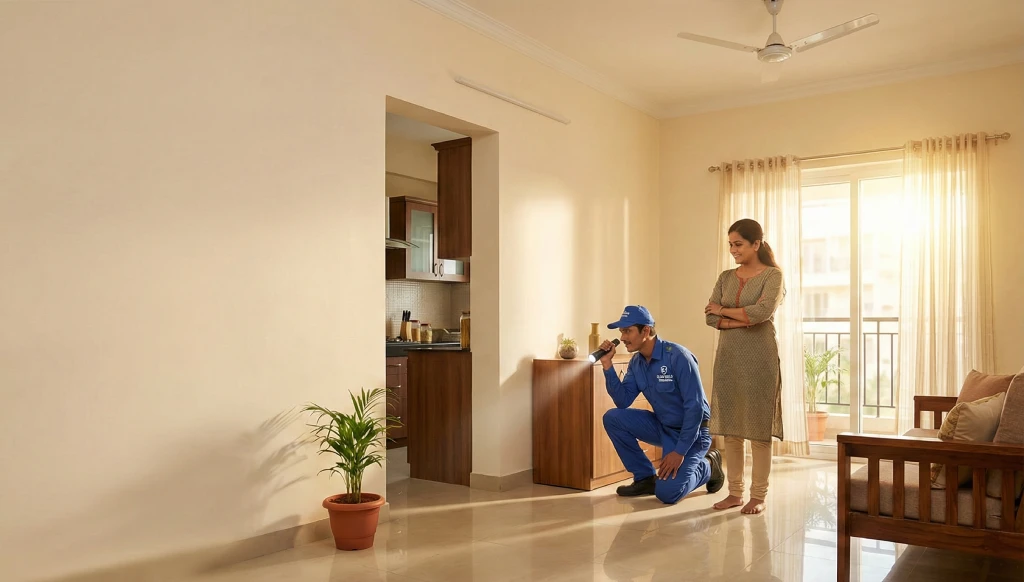
Pest control services in Yamunanagar for homes, plywood belt properties, Yamuna riverside residences & offices. Termites, cockroaches, bed bugs, rodents & mosquitoes. Free inspection, transparent pricing. Call PestEnd.
Fill form to get a call back in 10 mins
Customized solutions for Yamunanagar's climate and pest problems.

""Colony flat near the timber yard road — termites in the main door frame within 2 years of construction. PestEnd explained the industrial timber soil pressure issue — completely new information. They treated the full perimeter including the factory-facing external wall. Eight months clear. First proper fix.""
""Cockroaches in the kitchen — back within 3 weeks of every spray treatment for 2 years. PestEnd gel treatment plus sealed the drainage pipe entry. Gone next morning, still clear at 4 months. The drainage sealing was what made the difference, not the product.""
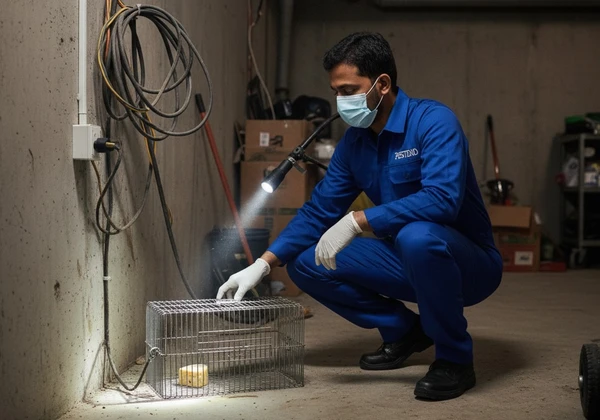
""Ground-floor house near the Shivalik fringe — large rodents coming in every winter, bigger than city rats. PestEnd mapped the drainage channel entry points specifically and sealed all three gaps with proper material. Nothing since. They understood the forest-edge situation without it needing explanation.""
Yamunanagar makes plywood. More plywood than any other city in India — hundreds of manufacturing units producing veneer, MDF, particle board, and timber products for the national market. The city's industrial identity is built on wood.
That same identity creates a pest situation no other Haryana city has to deal with.
Plywood manufacturing means timber storage yards across the industrial belt. Timber yards — raw logs, sawn lumber, wood in various stages of processing — are ideal termite habitat. The warmth from pressing and drying machinery. The organic wood dust in drainage channels around the mills. The moisture from steam-conditioning processes. Properties adjacent to the plywood industrial belt don't just live next to a factory. They live next to one of the most favourable termite environments a city can generate, and they deal with pest re-supply pressure from that environment year-round.
That's the first thing. The second is the Yamuna itself. Yamunanagar is named after the river — the Yamuna runs directly alongside the city's eastern edge. The floodplain soil here stays at elevated moisture depth well past the visible monsoon season. The Hathnikund Barrage upstream regulates Yamuna flow and feeds the Western Yamuna Canal, which carries irrigation water through the district and keeps sub-surface soil damp in the canal-adjacent agricultural zones year-round. Termite soil conditions along the Yamuna and canal corridors in this city are among the most persistent in Haryana.
The third is the Shivalik foothills. Kalesar National Park is 30km north. Forest-fringe residential areas on Yamunanagar's northern edge — the stretch toward Bilaspur and Chhachhrauli — sit at the wildlife corridor boundary. Rodents from the Shivalik belt follow drainage and nullah channels into residential areas, particularly during agricultural harvest season when field food sources are cleared.
Pest control ↗ in Yamunanagar that doesn't know the plywood belt, the Yamuna floodplain, and the Shivalik corridor isn't a local service.
Plywood and timber industrial belt — the manufacturing units, timber yards, and processing facilities are concentrated around the main industrial areas off the Ambala Road and the Jagadhri bypass. Wood processing warmth, timber storage moisture, and organic sawdust residue in drainage channels create an external cockroach and rodent environment that never fully switches off. Residential properties within 300–500m of active plywood units and timber storage yards see persistent re-supply pressure. Treating the inside of the flat without sealing the drainage-pipe connection to the industrial drainage network gives 2–3 weeks of results on this belt.
Yamuna riverside residential belt and canal-adjacent zones — the eastern residential stretches near the Yamuna bank and the Western Yamuna Canal corridor hold sub-surface soil moisture at foundation depth through most of the year. Termites in these zones stay active well into winter when Yamunanagar's elevated western zones get some seasonal relief. Mosquito breeding in the Yamuna-adjacent low pockets and canal drainage channels continues into October and November in monsoon years with late recession.
Old Jagadhri town — bazaar lanes, metalwork quarter, heritage construction — Jagadhri is the older twin city, with denser and older residential fabric. The metalwork (brass and copper utensils) bazaar area has industrial-residential mixed construction, shared drainage across workshop rows, and properties built close together in the original Mughal and colonial-era layout. Cockroaches in the bazaar kitchens follow the shared-drainage collective pattern. Some of the older havelis here have original woodwork that has never had soil treatment — the plywood belt's termite pressure reaches this old construction through the drainage network.
Shivalik foothills fringe — northern residential edge toward Bilaspur and Chhachhrauli — the wildlife corridor boundary on Yamunanagar's northern side. Rodents from the Shivalik forest belt — including larger bandicoot varieties — follow seasonal nullah channels into residential areas during harvest and when agricultural food sources in the forest fringe are depleted. Ground-floor properties on this edge deal with rodent pressure that is more severe and less predictable than standard urban rat patterns.
New residential sectors and Model Town — planned development corridors, newer construction on Yamuna floodplain alluvial soil. Fresh excavated soil, 3–7 year old flats, timber industry proximity. Pre-possession termite treatment is not standard here. Year 2 to 3 the first signs appear — and in plywood belt proximity, those signs appear faster than in a city without industrial timber storage nearby.
Sugar mill zone — Radaur and Chhachhrauli Road — sugar processing generates molasses organic waste. Rodent populations established near sugar storage don't follow harvest-only patterns — the processing season runs several months and the organic residue persists in drainage channels after the mills pause. Ground-floor units in these corridors deal with year-round rodent pressure at above-average density.
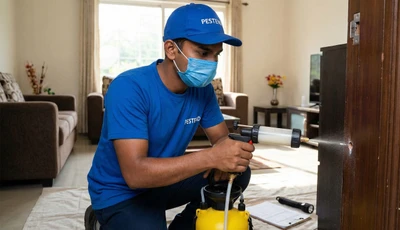
Termites Plywood belt adjacent colony flat, Yamuna riverside property, new Model Town flat, Jagadhri heritage haveli — approach matches the structure. For Yamuna floodplain properties with elevated sub-surface moisture year-round, complete perimeter coverage at correct injection depth is essential — lighter treatment degrades before the moisture cycle shifts. For properties adjacent to timber storage, we treat the full perimeter including every external wall facing industrial drainage corridors — termite pressure from adjacent timber yard soil is real and directional. For new construction under 3 years old, pre-flooring treatment is still accessible where flooring hasn't fully settled.
Cockroaches Plywood belt residential colony kitchens, Jagadhri bazaar lane kitchens, sector flat kitchens near the industrial corridor — odorless gel bait placed in exact harbourage points: pipe chases, behind modular panels, wall-floor joints. No prep. No smell. No vacating. Active next morning. Holding 3 months later. For plywood-belt properties with timber processing drainage re-supply, drainage-pipe entry sealing after gel treatment is what stops the industrial perimeter from cycling back in within weeks.
Mosquitoes Yamuna riverside low pockets, Western Yamuna Canal drainage channels, open plots in new sector construction — canal-fed agricultural drainage keeps standing water in the district's low-lying zones through October and November. Larvicide in every standing source before fogging. Fogging without larvicide gives 5–7 days before the canal and river-adjacent sources reset the population.
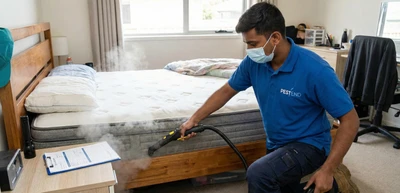
Bed Bugs Transit accommodation near Yamunanagar-Jagadhri railway station, guesthouses on the Ambala Road corridor, PG accommodations near Kurukshetra University feeder colleges in the district — luggage-based reintroduction. Heat treatment combined with targeted chemical application clears adults and eggs. Standard spray relocates them. For accommodation properties, treating all rooms in one visit is the only lasting approach.
Rodents Shivalik foothills fringe ground floors on the northern residential edge, sugar mill corridor units near Radaur Road, plywood belt industrial drainage-adjacent properties, Jagadhri old city compound walls with kuccha gaps — entry point sealing is the critical step. Shivalik-fringe rodents are larger and follow drainage channels differently than standard urban rats — we map entry points specific to the wildlife corridor pattern before sealing. Without sealing, forest-fringe or industrial-edge pressure refills the space within one season.
General Pest Control Ants, silverfish, spiders, wood borer — specifically relevant in timber-belt proximity — lizards. One visit covers all. April pre-monsoon is the right timing. Yamunanagar's industrial proximity and Yamuna corridor make pre-monsoon treatment more critical than in purely inland Haryana cities.
|
Service |
1 BHK |
2 BHK |
3 BHK |
|
₹999 |
₹1,299 |
₹1,599 |
|
|
Termite Treatment |
₹3,500 |
₹5,500 |
₹7,000 |
|
Bed Bug Treatment |
₹1,499 |
₹2,599 |
₹3,499 |
|
₹999 |
₹1,899 |
₹2,599 |
|
|
General Pest Control |
₹899 |
₹1,299 |
₹1,599 |
|
Rodent Control |
₹1,500 |
₹2,500 |
₹3,000 |
This is the pest control in Yamunanagar price list for standard residential properties. Plywood belt industrial-adjacent units, large Yamuna riverside bungalows, sugar mill corridor commercial units, and Jagadhri heritage properties quoted separately after inspection. Price confirmed before treatment — nothing added on the day.
Searching for pest control in Yamunanagar near me? We serve:
Yamunanagar town · Jagadhri · Model Town · Azad Nagar · Guru Nanak Colony · Sector zones · Ambala Road corridor · Jagadhri bypass belt · Plywood industrial area · Yamuna riverside · Western Yamuna Canal belt · Radaur · Chhachhrauli · Bilaspur · Sadhaura Road · Mustafabad · Damla · Budhera · Sarsini · Yamunanagar-Jagadhri railway station area and surrounding localities.
Not listed? Call — confirmed in minutes.
Free inspection first. Within 24 hours. Plywood belt colony flat or Yamuna riverside property — inspection depth suits the structure. We assess infestation level, entry points, timber-belt and floodplain external pressure. Free. No commitment.
Fixed price after inspection. Confirmed before treatment begins. Nothing changes on the day.
Treatment. We bring all equipment. Standard flats done in 1–2 hours. Exact re-entry timing per room before we leave.
Follow-up at 7–10 days. Activity in the warranty window? We return. No charge.
Book your free inspection — no pressure, just find out what's actually there and what it costs to fix.