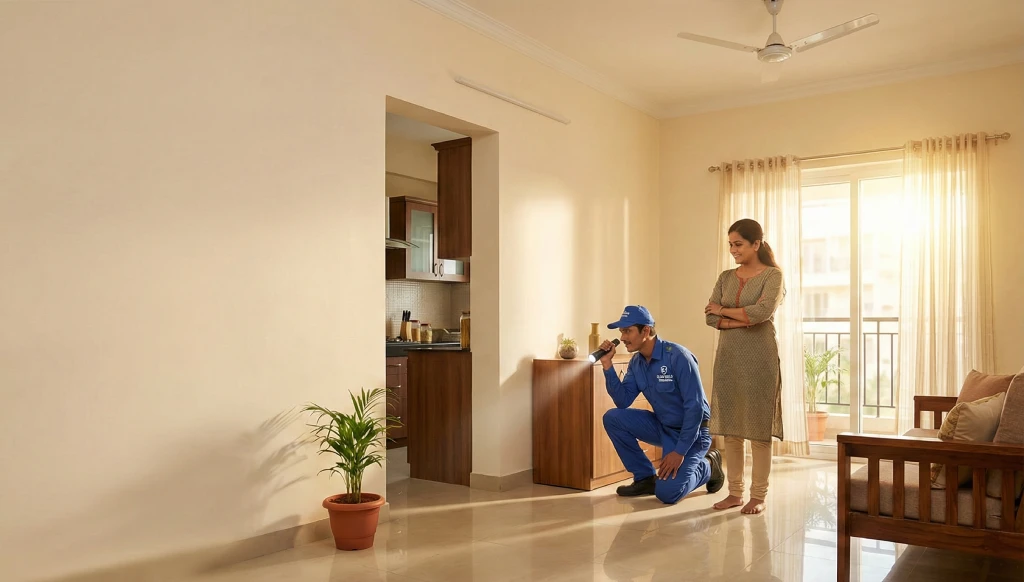
Pest control service in Valsad for homes, Tithal belt properties, orchard-edge residences & offices. Termites, cockroaches, bed bugs, rodents & mosquitoes. Transparent pricing, free inspection, warranty. Call PestEnd.
Fill form to get a call back in 10 mins
Customized solutions for Valsad's climate and pest problems.
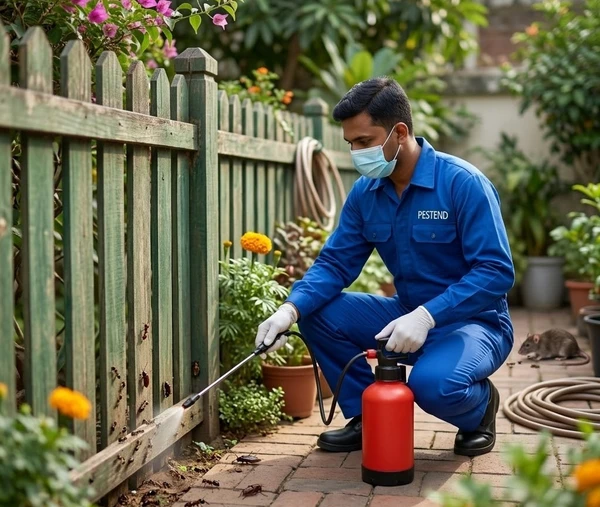
""Family haveli — termites in the original teak door frame and the ground-floor wall base near the compound wall. Had it treated before but it came back within one monsoon. PestEnd did the full foundation perimeter and explained the coastal moisture issue clearly. Nine months clear. Nothing has held this well before.""
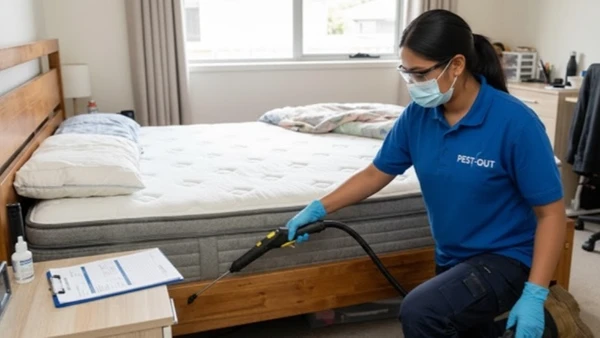
""Cockroaches in the kitchen in a 4-year-old flat. PestEnd gel treatment, no smell, no prep, 40 minutes. Gone next morning. Still clear 4 months later. Price exactly as quoted on the phone. Very straightforward service.""
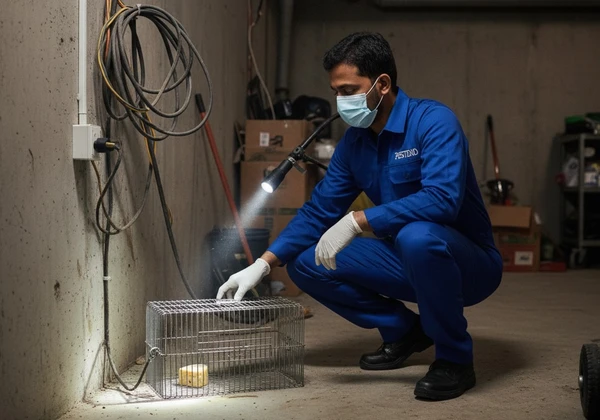
""Ground-floor house near the orchard edge — rodents every year from October, worst during harvest. PestEnd found gaps in the compound wall drainage footing that we had no idea about and sealed them properly. First harvest season without the problem in 3 years. The sealing made all the difference.""
Valsad is at the end of Gujarat. One more hour south on the Western Railway mainline and you're in Maharashtra. The Arabian Sea is 6km to the west at Tithal. The Auranga river cuts through the district. Mango and chikoo orchards press right up to the residential edge on the eastern side of the city.
That geography creates a pest profile no inland Gujarat city has.
Start with the orchards. South Gujarat — Valsad, Navsari, Surat district — produces the majority of India's chikoo (sapodilla). Mango belts surround Valsad on multiple sides. Orchards mean fruit waste on the ground through most of the year, not just at harvest. Orchard rats are different from urban rats — larger, more numerous, and they follow drainage channels into residential areas on the agricultural fringe consistently. Sealing against orchard-fringe rodent pressure is not the same as sealing against a single urban rat entry.
Then the coast. Tithal beach is one of Gujarat's most visited beaches, 6km from the city. The coastal humidity from the Arabian Sea keeps atmospheric moisture elevated on Valsad's western side year-round. Combine that with South Gujarat's 900–1,100mm annual rainfall and the Auranga river's floodplain soil moisture — and the soil around older Valsad construction stays damp at foundation depth through most of the year. Termites have no meaningful off-season here.
And the railway corridor. Valsad Junction is one of the busiest stops on the Western Railway mainline between Mumbai and Surat. High-volume transit, guesthouses near the station with frequent short-stay turnover, migrant worker movement up and down the South Gujarat–Mumbai corridor. Bed bug reintroduction at the station belt is consistent.
Pest control ↗ in Valsad means knowing the orchards, the coast, and the railway. Not just the city name.
Old city and Parsi–Jain heritage construction belt — Valsad's oldest residential fabric includes Parsi wads and Jain merchant havelis with lime-mortar construction, original teak beams, and thick compound walls that have absorbed coastal moisture for generations. This is similar to Navsari's old city character — heritage architecture that is beautiful and highly termite-vulnerable. Cockroaches in the old bazaar lanes near the main market share drainage infrastructure across entire rows of adjoining properties.
Tithal Road and coastal residential corridor — the stretch between Valsad town and Tithal beach has residential and guesthouse development that sits in the zone of maximum coastal humidity exposure. Termite soil moisture here stays elevated through the dry months when the city's inland areas get some relief. Mosquito breeding near the coastal low-lying patches persists later in the season than in the city centre.
Orchard fringe — Dharampur Road, Halar area, Pardi Road edge — where residential development meets the mango and chikoo belt. Fruit waste on orchard floors through most of the year sustains a rodent population that cycles inward during harvest and remains partially active between seasons. Ground-floor properties on the orchard fringe consistently face more rodent pressure than properties in the city centre, and the pressure is agricultural in character — larger animals, more entry points, faster refill rate if gaps are not sealed.
Valsad railway station belt — guesthouses, lodges, and daily-rent accommodation near the junction. High turnover, short stays, shared rooms. Bed bugs cycle through this belt consistently. The Mumbai–Surat mainline volume means new introductions arrive regularly. Treating one room while adjacent rooms stay untreated is a temporary measure in an accommodation property.
GIDC Valsad and industrial corridor near Pardi — pharmaceutical and chemical processing units adjacent to the city's industrial zone. Industrial food waste and organic effluent in the drainage channels near the GIDC creates cockroach and rodent pressure similar to — though smaller scale than — Vapi's GIDC belt. Ground-floor residential units adjacent to the industrial drainage network deal with re-supply pressure that treatment alone, without sealing, doesn't resolve.
Expanding residential corridors — Tithal Road societies, Amalsad Road, Dharampur bypass — new construction, fresh excavated South Gujarat alluvial soil. Termites establish in this soil before possession in the region's moisture conditions. Year 2 and 3 is when the first signs appear.
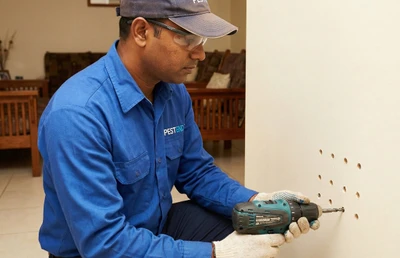
Termites Old city heritage haveli, Tithal coastal property, new Amalsad Road society flat — the approach fits the structure. South Gujarat's high rainfall baseline combined with Arabian Sea coastal humidity means Valsad properties — particularly those on the Tithal Road and Auranga riverside belt — stay at elevated soil moisture for much of the year. Complete perimeter treatment at correct injection depth is essential here. Partial drilling or interior-only treatment degrades before the next monsoon in these conditions. For new construction under 3 years old, pre-flooring soil treatment is still accessible and substantially cheaper than full post-possession perimeter drilling.
Cockroaches Old city bazaar kitchen, GIDC-adjacent residential flat in Pardi area, commercial kitchen near Valsad station — odorless gel bait in exact harbourage points: pipe chases, behind modular panels, wall-floor joints. No prep. No smell. No vacating. Active next morning. Holding 3 months later. For GIDC-edge properties with industrial drainage re-supply, pipe-entry sealing after gel treatment is what makes results last on that belt.
Mosquitoes Tithal coastal low-lying pockets, Auranga river floodplain stretches, open plots in new Tithal Road societies, society sump tanks — South Gujarat's extended monsoon and Arabian Sea humidity keeps breeding active into November in low-lying areas. Larvicide in every standing source before fogging. Fogging without larvicide gives 5–7 days of results and the sources reset everything. Both together holds.
Bed Bugs Railway station guesthouses and lodges, Tithal beach tourist accommodation, transit PG housing on the Mumbai–Surat commuter corridor — reintroduction here is consistent and volume-driven. Heat treatment combined with targeted chemical application clears adults and eggs. For accommodation properties: treating all rooms in the same visit is the only approach that produces lasting results. We can schedule multiple rooms efficiently.
Rodents Orchard-fringe ground floors on Dharampur Road and Pardi Road edge, old city compound walls with original drainage gaps, GIDC-adjacent residential units with industrial drainage corridor access — orchard-fringe rodent sealing needs to account for the larger size and more varied entry patterns of agricultural rodents versus standard urban rats. We bait, find every real entry point, seal with material they cannot gnaw. Without sealing, orchard-sourced pressure refills the space within weeks during harvest season.
General Pest Control Ants, silverfish, spiders, wood borer, lizards — one visit covers all. April pre-monsoon is the right timing. South Gujarat's monsoon arrives earlier than north Gujarat — waiting until June is too late for pre-treatment benefit.
|
Service |
1 BHK |
2 BHK |
3 BHK |
|
₹999 |
₹1,299 |
₹1,599 |
|
|
Termite Treatment |
₹3,500 |
₹5,500 |
₹7,000 |
|
Bed Bug Treatment |
₹1,499 |
₹2,599 |
₹3,499 |
|
₹999 |
₹1,899 |
₹2,599 |
|
|
General Pest Control |
₹899 |
₹1,299 |
₹1,599 |
|
Rodent Control |
₹1,500 |
₹2,500 |
₹3,000 |
This is the pest control Valsad price for standard residential properties. Heritage havelis, large coastal properties, accommodation units near the railway and Tithal belt, and GIDC-adjacent commercial units quoted separately after inspection. Price confirmed before treatment — nothing added on the day.
Searching for pest control near me in Valsad, Gujarat? We serve:
Valsad town · Tithal Road · Tithal beach belt · Old city market area · Parsi Wad · Railway station belt · Halar · Dharampur Road · Pardi · Amalsad Road · Dharampur bypass · Udvada Road · GIDC Valsad · Pardi GIDC edge · Bulsar Colony · Kanta Road · Dungri · Abrama · Bilimora Road edge and surrounding localities.
Not listed? Call — confirmed in minutes.
Call PestEnd directly — number at the top of this page. No hold queue, no routing. We pick up, confirm your locality, and book within the same call. Most inspections happen within 24 hours.
For pest control contact number queries — the direct line at the top of this page reaches us any day of the week.
Free inspection first. Within 24 hours. Old city haveli, orchard-fringe ground floor, or new Tithal Road society — inspection depth suits the structure. We assess infestation level, entry points, coastal and agricultural moisture exposure, what is actually driving the problem. Free. No commitment.
Fixed price after inspection. Confirmed before treatment begins. Nothing changes on the day.
Treatment. We bring everything. Standard flats done in 1–2 hours. Exact re-entry timing per room before we leave.
Follow-up at 7–10 days. Activity in the warranty window? We return. No charge.
Book your free inspection — no pressure, just find out what's actually there and what it costs to fix.