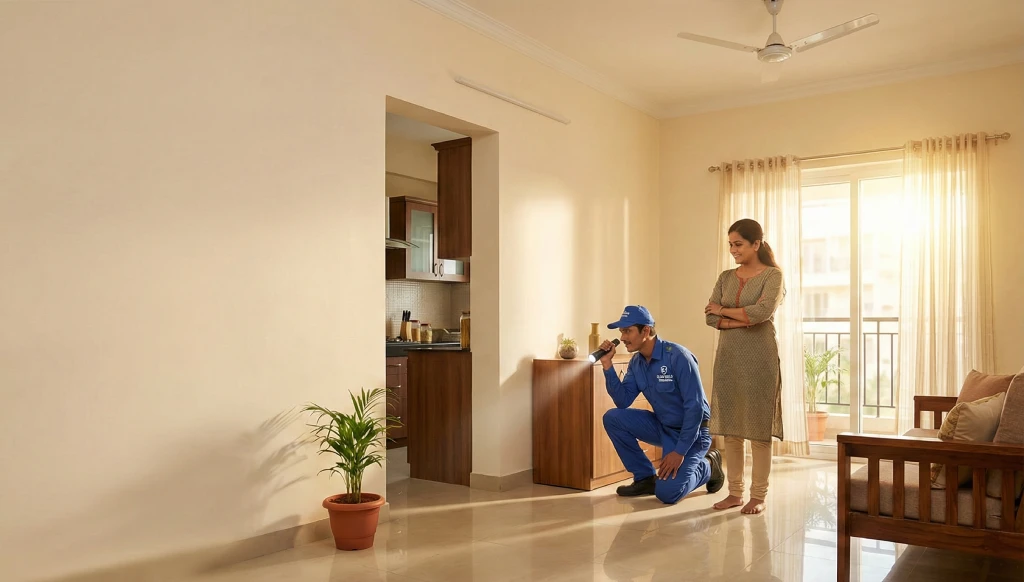
Pest control services in Navsari for homes, Parsi heritage properties, sugarcane belt areas & offices. Termites, cockroaches, bed bugs, rodents & mosquitoes. Free inspection, fixed pricing, warranty. Call PestEnd.
Fill form to get a call back in 10 mins
Customized solutions for Navsari's climate and pest problems.
""Old family bungalow — termites in the original teak door frame and one ceiling beam. Had it treated twice before, came back within a year both times. PestEnd did the full foundation perimeter without touching the original woodwork, explained the Purna moisture issue clearly. Nine months clear. First time it's held this long.""
""Cockroaches in the kitchen every monsoon. PestEnd gel treatment, 40 minutes, no smell, nothing to move. Gone by next morning. Still clear 4 months later. Price exactly as quoted. Straightforward, professional service.""
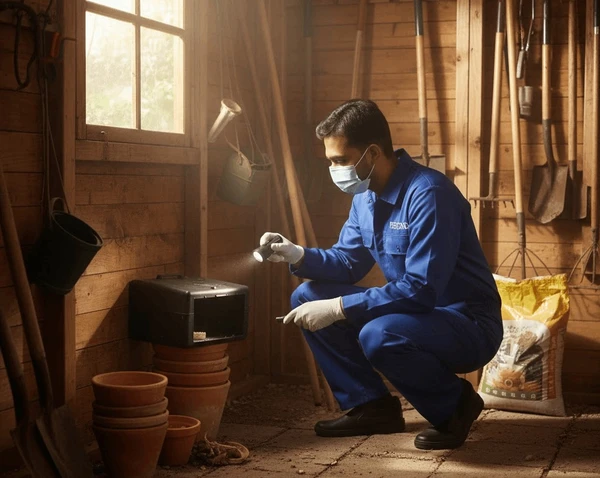
""Ground-floor house near the cane field edge — rodents every winter from October onwards without fail. PestEnd sealed two entry gaps in the compound wall drainage channel that we hadn't found and baited properly. Nothing since October. First winter without the problem in 4 years.""
Navsari gets more rain than most of Gujarat. South Gujarat's coastal belt — Navsari, Valsad, Surat district — receives 900 to 1,100mm annually in a normal monsoon year. That's nearly double what Ahmedabad or Rajkot gets. The soil here doesn't just get wet — it stays wet. The Purna river, which runs directly through Navsari city, keeps the floodplain soil in the residential areas adjacent to its banks at elevated moisture levels well into January.
For termites, this means no real off-season. In central Gujarat, properties get a 3–4 month dry window when termite activity slows. In Navsari, the soil moisture baseline is high enough year-round that termites stay active through what should be the dry months. That changes the treatment approach — a lighter annual treatment that works in Ahmedabad degrades faster in Navsari's moisture conditions.
Then there's the heritage dimension. Navsari is the spiritual heart of India's Parsi community. The Atash Bahram — one of only eight in the world — is here. The old agiary lanes, the Parsi wads, the distinctive Parsi bungalows with their thick stone walls, original teak beams, carved wooden doors and high-ceilinged rooms — this is some of Gujarat's oldest continuously inhabited residential architecture. Beautiful. And among the most structurally termite-vulnerable construction in the state, because those original wooden elements are exactly what termites work into over decades.
And surrounding all of this: sugarcane. South Gujarat is India's cane belt. Navsari taluka, Bilimora, Chikhli — sugarcane fields press right up to the urban edge. Harvest season drives rodents inward. It's not a city-sourced rodent problem. It's an agricultural-fringe problem that repeats every year at harvest.
Pest control in Navsari has to know the Purna, the Parsi wads, and the sugarcane calendar.
Old city Parsi wads and agiary lanes — the most historically significant residential fabric in Navsari. Parsi bungalows with original teak structural elements, lime-mortar masonry, compound walls that have never had soil treatment. Moisture from the Purna floodplain and South Gujarat's heavy rainfall penetrates this construction deeply. Termites in the Parsi wad area have had uninterrupted structural access in some properties for generations. Cockroaches in the dense bazaar lanes behind the old city share drainage infrastructure across entire rows of adjoining properties — treating one kitchen temporarily relieves the symptom.
Purna riverside belt — areas adjacent to the river banks on both sides — the lowest-lying residential zones in Navsari. Post-monsoon, the Purna's flood recession leaves saturated soil in the riverside pockets for months. Termite activity here is among the highest sustained levels in the city. Mosquito breeding in residual standing water near the banks continues well into October and November — longer than in Navsari's elevated inland zones.
Sayaji Vaibhav Colony and Dudhia Talao area — established residential colonies, 1980s and 90s construction, aging drainage infrastructure. The Dudhia Talao (pond) creates a local moisture and mosquito breeding zone within the residential belt. These colonies have the specific termite and cockroach profile of mid-age construction with original plumbing that has degraded in sections.
Abrama Road and the expanding residential corridor — Navsari's growth direction. New societies, 3–7 year old construction, fresh excavated soil. Pre-possession termite treatment is rarely standard in new South Gujarat developments despite the high soil moisture baseline. The problem shows up in year 2 to 3, when door frames begin to show activity.
Sugarcane belt residential fringe — Vejalpore, Bilimora Road, Chikhli Road edge — agricultural transition zones where sugarcane fields directly adjoin residential development. Harvest season — typically October to March — drives field rats and bandicoot rats into the residential fringe as agricultural food sources are removed. This is not a year-round even pressure. It concentrates at harvest and then gradually declines — but for those 5–6 months, ground-floor properties on the agricultural edge deal with rodent pressure that originates outside the city.
Vijalpore — functionally part of Navsari's urban spread, growing rapidly. New construction on alluvial South Gujarat soil. Same termite-establishment pattern as Abrama Road with the added factor of proximity to Surat's expanding industrial belt creating occasional commercial-waste rodent pressure from the highway corridor.
Termites Parsi bungalow in the old wad, Purna riverside property, new flat on Abrama Road — the treatment fits the structure. For old city Parsi homes with original teak and lime-mortar construction, we treat the full foundation perimeter without drilling through or damaging original woodwork or carved surfaces. The treatment targets the soil entry pathway — that's where termites come from. For Purna riverside properties where soil moisture stays elevated year-round, thorough perimeter coverage with correct injection depth is essential — partial treatment degrades in South Gujarat's moisture conditions before the next monsoon. New Abrama Road flats under 3 years old can still access pre-flooring soil treatment — cheaper and less invasive than full post-possession drilling.
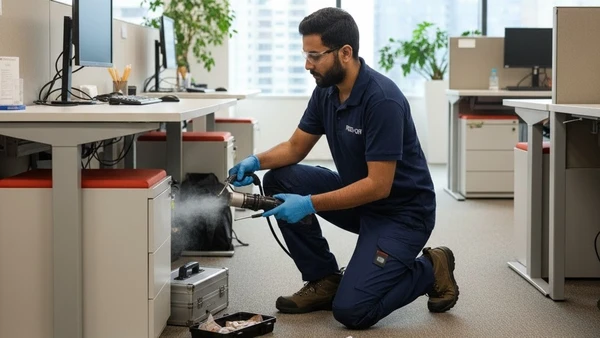
Cockroaches Old city bazaar lane kitchens, Sayaji Vaibhav Colony residential flats, commercial kitchens near Station Road and the main market — odorless gel bait placed in exact harbourage points: pipe chases, behind modular kitchen panels, wall-floor joints, under refrigerator brackets. No prep. No smell. No vacating. Active next morning. Holding 3 months later. For old city shared-drainage properties, pipe-entry sealing after gel treatment significantly reduces the re-entry cycle from adjacent units.
Mosquitoes Purna riverside low-lying stretches, Dudhia Talao perimeter, open plots in Abrama Road new societies, society sump tanks — South Gujarat's heavy monsoon and the Purna river's slow recession extends mosquito breeding season here into November in low-lying areas. Larvicide in every breeding source before fogging. Fogging alone gives one week of results before active breeding sources replenish the population. Both steps together holds.
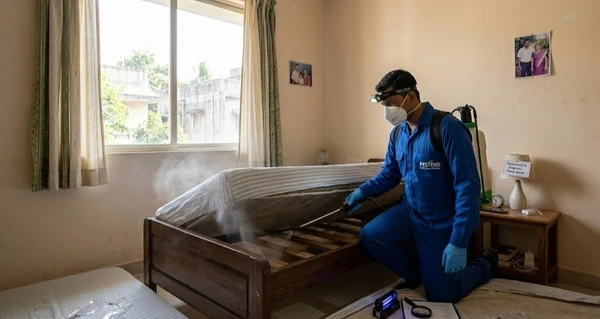
Bed Bugs Guesthouses and dharamshalas near the Atash Bahram and the old agiary pilgrim belt, PG accommodations near Navsari Agricultural University, transit hotels near Navsari railway station — pilgrimage and student turnover means consistent luggage-based reintroduction. Heat treatment combined with targeted chemical application clears adults and eggs. Standard spray alone relocates them.
Rodents Sugarcane belt residential fringe near Bilimora Road and Chikhli Road edge, Purna riverside properties with old compound drainage gaps, old city havelis with kuccha boundary walls — sealing is the critical step. We bait, locate every real entry point, seal with material they cannot gnaw. For agricultural-fringe properties, sealing before harvest season starts is the right timing — easier to prevent entry than to manage an active harvest-season influx.
General Pest Control Ants, silverfish, spiders, wood borer, lizards — one visit covers all. Pre-monsoon in April is the right call. South Gujarat's early and heavy monsoon onset makes pre-monsoon treatment timing more critical here than in north or central Gujarat.
|
Service |
1 BHK |
2 BHK |
3 BHK |
|
Cockroach Control |
₹999 |
₹1,299 |
₹1,599 |
|
Termite Treatment |
₹3,500 |
₹5,500 |
₹7,000 |
|
Bed Bug Treatment |
₹1,499 |
₹2,599 |
₹3,499 |
|
Mosquito Control |
₹999 |
₹1,899 |
₹2,599 |
|
General Pest Control ↗ |
₹899 |
₹1,299 |
₹1,599 |
|
Rodent Control |
₹1,500 |
₹2,500 |
₹3,000 |
Old city Parsi bungalows, large heritage properties, commercial kitchens, and agricultural-edge industrial units quoted separately after inspection. Price confirmed before treatment — nothing added on the day.
Looking for pest control services in Navsari near me? We serve:
Old City Parsi Wads · Agiary Lane area · Atash Bahram belt · Purna riverside · Sayaji Vaibhav Colony · Dudhia Talao area · Abrama Road · Station Road · Main Market area · Vijalpore · Vejalpore · Bilimora Road corridor · Chikhli Road edge · Navsari Agricultural University area · Lunsikui · Khergam Road · Sayan · Navsari GIDC area · Gandevi Road and surrounding localities.
Not listed? Call — confirmed in minutes.
Free inspection first. Within 24 hours. Parsi bungalow in the old wad or new Abrama Road flat — inspection depth suits the structure. We check infestation level, entry points, moisture sources, what is actually driving the problem. Free. No commitment.
Fixed price after inspection. Confirmed before treatment begins. Nothing changes on the day.
Treatment. We bring all equipment. Standard flats done in 1–2 hours. Exact re-entry timing per room before we leave.
Follow-up at 7–10 days. Activity in the warranty window? We return. No charge.
Book your free inspection — no pressure, just find out what's actually there and what it costs to fix.