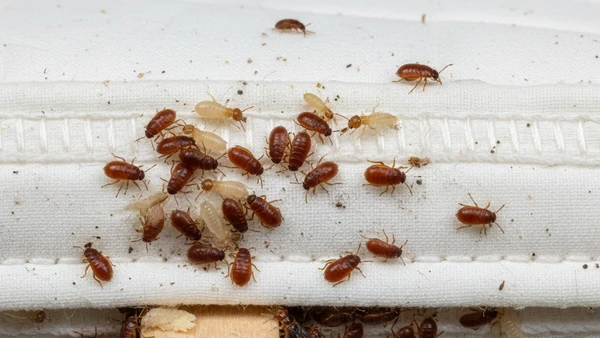
You had a treatment done. The bites stopped for a few weeks. And then one morning you wake up scratching again, pull back the mattress corner, and find exactly what you were hoping you'd never see again.
It's demoralising. And confusing. You followed the instructions, cleared the room, stayed out for the required hours. So why are they back?
The answer is almost never that the treatment failed in a simple sense. It's usually one of a few specific things — and once you understand what they are, you can actually stop the cycle instead of just repeating it.
The eggs survived
This is the reason most people don't know about, and it's the most common one.
Contact insecticides — the spray-based treatments that most local pest control ↗ companies in India use as their primary method — kill the bed bugs they touch. Adults, nymphs, bugs crawling across treated surfaces. The residual effect continues working for some days after application.
But bed bug eggs are physically resistant to most insecticides. The shell of the egg is tough enough to protect the embryo inside from contact with the chemical. The eggs sitting in mattress seams, inside bed frame joints, in tiny cracks in the wall — they survive the treatment. And they hatch in around ten to fourteen days.
So what happens is predictable. Treatment kills the visible population. Two weeks later a new generation of nymphs hatches. Within a month they've started feeding and within a few months there are enough adults that you're back to where you started.
This is exactly why professional bed bug treatment that uses only a single spray visit almost always needs follow-up sessions. The follow-up — done around two weeks after the first — is specifically timed to catch the generation that hatched from eggs the first visit couldn't kill. Skip the follow-up and the infestation restarts.
The infestation wasn't fully mapped
Bed bugs are not confined to beds, despite the name. They hide wherever is dark, warm, and close to where you sleep regularly. The mattress and bed frame are the most obvious spots. But in a well-established infestation, they've often spread further — behind the headboard, into the nightstand, into the sofa if you spend time sleeping there, behind picture frames, inside electrical outlet plates, in the gap between the skirting board and the wall.
If treatment targets only the mattress and bed frame and misses everything else, the bugs in those secondary locations survive. They don't starve. They wait. And once the pressure from the treated areas lifts, they move back in.
This is why a proper bed bug inspection before treatment matters as much as the treatment itself. A technician who spends five minutes looking at the mattress and then starts spraying hasn't done a real inspection. The ones that survive will be in the spots they didn't look.
You brought them back in
This catches people off guard, and it's uncomfortable to say, but it's one of the most common reasons for a return infestation — particularly for people who travel.
Bed bugs travel. They hide in the seams of luggage, in clothing, in laptop bags, in the folds of jackets. Hotels, trains, buses, shared accommodation — all of these are places where bed bugs from someone else's home end up in yours.
If you had a successful treatment in January and went on a work trip in March, stayed in a hotel, and came home without checking your luggage — you may have re-introduced them yourself. The new infestation looks and feels identical to the old one. Most people assume the treatment failed rather than asking whether something came back in.
In apartment buildings — common in Jaipur and other Rajasthan cities — a re-infestation can also come through from a neighbouring unit. Bed bugs can move between flats through shared walls, electrical conduits, and under doors. If your neighbour has an untreated infestation and you're sharing a wall or ceiling, your flat is at constant risk regardless of how well you treat your own space.
The treatment method wasn't right for the scale of the problem
Store-bought sprays are designed for surface contact. They work on bugs you can see and reach. They don't penetrate fabric. They don't reach inside the hollow cavity of a wooden bed frame joint. They certainly don't kill eggs.
Foggers — the "bug bomb" type products — are actually counterproductive for bed bugs specifically. The bugs sense the fog, move away from it, and hide deeper inside walls and furniture. When the fog clears, they come back. Studies have shown that foggers are essentially ineffective for bed bug infestations, and pest professionals know this.
But even professional treatments have range limitations. A chemical spray treatment, done properly with good follow-up, works well for light to moderate infestations. For a severe infestation that has spread across multiple rooms, into walls, and into upholstered furniture throughout the home — it's a harder job. That's where steam treatment or heat treatment, which kills at every life stage including eggs, becomes more appropriate.
The wrong method for the scale of infestation produces a partial result — which feels like failure but is actually just an incomplete fix.
What actually stops the cycle
There isn't one trick. That's the honest answer. Stopping bed bugs for good requires several things to happen at the same time.
The treatment needs to reach all harborage areas — not just the mattress. Properly done, this means a thorough pre-treatment inspection, treatment of every room and piece of furniture where bugs were found or are likely, and deliberate attention to secondary hiding spots like electrical plates and baseboards.
It needs to account for eggs — either through a follow-up visit timed to catch the next generation, or through a method like steam or heat that kills eggs directly.
After treatment, the mattress should go into a proper encasement — a zippered, six-sided cover that seals it completely. This denies the room a major harborage point if any survivors try to re-establish. Bed bug interceptor traps placed under each bed leg let you monitor for activity without having to pull the bed apart every week.
Luggage should be checked after travel before coming back inside. Second-hand furniture — sofas especially — should be inspected before entering the home. These habits sound tedious but they're what closes the last gap that treatments can't address.
And if you're in a shared building, the question of neighbouring units matters. A responsible pest company will ask about it. If your neighbour's home hasn't been treated and they share your wall, the probability of re-introduction is real and ongoing.
If it's already come back once
Don't repeat the same approach that didn't fully work the first time. If a single chemical spray visit left bugs alive, another one alone probably won't finish the job either. Ask specifically about follow-up visits, about what the treatment covers beyond the mattress, and about whether heat or steam treatment is appropriate for your situation.
The goal isn't to reduce bed bugs. It's to eliminate them completely — every adult, every nymph, every egg. Anything short of that just delays the same conversation.