The treatment itself takes a few hours. What happens before and after takes longer — and matters more than most people expect.
A technician doing a cockroach gel treatment who can't access the inside of kitchen cabinets because they're packed full, can't reach under appliances because they haven't been pulled out, and can't treat drain areas because nothing's been cleared from under the sink — that technician is treating a fraction of the harborage areas. The treatment will be partial, the results will be partial, and the follow-up conversation will be frustrating for everyone.
Similarly, someone who mops the kitchen floor with strong detergent two days after a residual spray treatment has just removed the protective layer that was doing the ongoing work.
Preparation and post-treatment care aren't formalities. Here's what actually matters at each stage.
Before the treatment — the preparation that changes outcomes
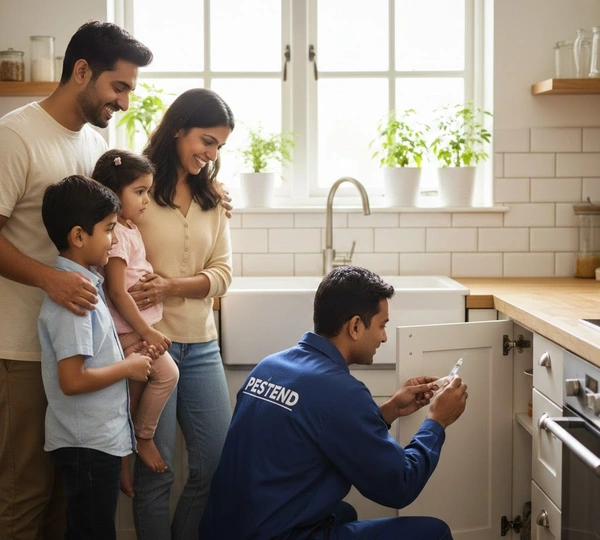
Clear out kitchen cabinets. For cockroach treatment specifically, the inside of kitchen cabinets is a primary treatment zone. Gel bait needs to go into the hinge areas, along the inner walls at the back corners, and along the shelf edges. If the cabinet is full of stacked containers, the technician either skips it or disturbs everything to treat inadequately.
Take everything out of the cabinets the day before. Utensils, containers, food items — put them somewhere outside the kitchen, or in the centre of the room covered with a cloth. This applies to the under-sink cabinet especially — that space is one of the highest-priority cockroach harborage areas and needs to be completely clear.
Pull out appliances from the wall. The space behind the refrigerator, the washing machine, the stove — these gaps are where cockroaches travel and rest. A technician treating the visible surfaces of a kitchen while the refrigerator is against the wall has missed the area where most of the population is likely living. Pull major appliances out from the wall and clean behind them before the technician arrives. This serves both the treatment and your hygiene.
Cover or remove fish tanks. Not just drape a cloth over it — cover it with something that seals the top, and disconnect the aeration pump if possible to prevent aerosols from being drawn into the water. Pyrethroids are acutely toxic to fish at very low concentrations. A tank left uncovered during spray treatment is a serious risk.
Remove pet food, water bowls, and bedding. Put these outside the treatment area entirely. Pets should be out of the home during treatment. Small pets — birds, reptiles, small mammals — are more sensitive to pesticide aerosols than cats and dogs; take extra care with these.
Remove or cover food items. Anything on open shelves, on countertops, in fruit bowls — cover with sealed containers or remove to a room that isn't being treated. This isn't about the gel bait specifically (which is placed in tiny amounts in crevices), but about spray applications that may be part of a broader treatment.
Inform the technician about specific concerns. Someone in the household with respiratory sensitivity, a young infant, a pet with known chemical sensitivity — the technician needs to know before treatment starts, not after. It changes which products are appropriate, where they're placed, and what precautions are taken.
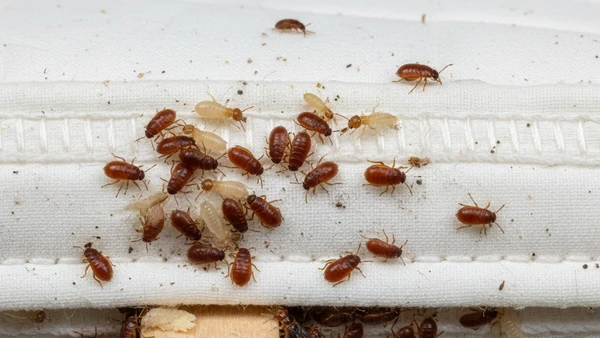
For bed bug treatment specifically. Strip all bedding from the mattress and bed base. Wash it on the highest heat setting the fabric tolerates and seal it in bags if not immediately transferring to the dryer. The treatment needs access to the bare mattress surface, all mattress seams, and the bed frame. A made bed is a partially treated bed.
During the treatment — what you should and shouldn't do
Vacate the treatment area during application. This is not optional — it's specific to the acute exposure period when aerosol concentrations are highest.
For a general spray treatment, vacate the treated rooms and ideally the home until the application is complete and a ventilation period has occurred.
For gel bait treatment, the exposure concern is lower since there's no aerosol component. Vacating the specific rooms being treated is still advisable, but returning to other parts of the home is generally fine.
Don't hover and supervise every application point. This disrupts the technician's process and makes thorough treatment harder. Brief communication at the start — specific concerns, any areas to prioritise — then let the job happen.
After the treatment — what to do and what not to do
Ventilate properly before re-entry. Open windows in all treated rooms and run fans for 30 to 60 minutes before returning. In smaller rooms with poor natural ventilation, allow longer. The acute inhalation risk from spray applications drops significantly once the aerosol has settled and the space is ventilated.
Don't clean treated surfaces for at least a week. This is the most common post-treatment mistake. Residual spray on surfaces — baseboards, wall edges, under appliances — needs time to dry and establish a treated surface layer. Mopping the kitchen floor or wiping down cabinets in the first week removes this layer and significantly shortens the effective protection period.
For gel bait specifically, don't wipe the areas where bait was placed. The bait is in small amounts in crevices — it's not on food contact surfaces. Leave it in place and let it work. The colony effect takes 1 to 3 weeks to fully develop. Disturbing placement points during that period reduces the spread to harborage areas.
Wash food contact surfaces before use. The counter surface, the areas directly where you prepare food — wiping these down with a damp cloth before using them is reasonable and appropriate. This is different from mopping the floor or cleaning the baseboard areas where residual spray is meant to remain.
Return pets after proper ventilation. Not immediately. Wait until the ventilation period is complete, the smell has dissipated, and surfaces are dry. Birds are the most sensitive — re-entry should be later rather than sooner.
Don't use other pest control ↗ products in the treated area. Spraying a consumer contact spray after a gel bait treatment — which people do because they see cockroaches in the days immediately after treatment — disrupts the gel bait process. The consumer spray repels foraging cockroaches from the area, which means they don't encounter and pick up the gel bait that would otherwise spread through the colony. Seeing cockroaches in the days after gel treatment is expected and normal. It means the bait is being found and is working. Adding a consumer spray at that point interrupts the process.
Report what you see during the warranty period. If cockroach activity persists beyond two to three weeks after a professional treatment, contact the company. This is what the warranty period is for. A reputable company sends someone back to assess and top up bait in areas where activity is continuing. Don't wait until the infestation has re-established — report early.
The ongoing habits that extend treatment effectiveness
Seal any gaps that were identified during the inspection. The treatment handles the current population; entry point sealing reduces the rate of re-infestation. Sealant around pipe penetrations, metal mesh on drain openings, a proper door sweep — these extend how long the treatment holds.
Switch food storage to airtight containers after a cockroach treatment. This removes one of the main attractants for any cockroaches that do enter the treated space. Less food signal means slower re-establishment.
Don't put cockroach egg cases in the indoor bin. If you find them during cleaning — check cabinet corners, behind appliances, in the under-sink area — put them in a sealed bag and dispose of them outside immediately. A viable egg case produces a new generation regardless of what treatment has been done around it.
The post-treatment period is also the right time to address moisture issues — a leaking pipe under the sink, condensation collecting in a corner, the water tray on the cooler that never gets changed. These are the conditions that make the treated space attractive again. Fixing them now extends the effective period between treatments.