There's a wardrobe in our second bedroom that's been there for about twelve years. Solid sheesham wood. Built well. Last year my wife noticed the bottom panel felt soft when she pressed her foot against it while reaching for something on the top shelf. We didn't think much of it.
Two months later, the bottom corner crumbled when the carpenter came to fix a loose hinge. The inside of that panel was completely hollow — nothing left but a thin outer layer of wood and a network of tunnels running through it. Termites. Probably active for over a year.
The wardrobe cost more to repair than it would have cost to treat the whole room professionally.
What makes this story extremely ordinary is that almost everyone who's dealt with termite damage in wooden furniture has a version of it. The damage is always further along than expected. Always.
Here's how to actually catch it early.
Why Furniture Is So Vulnerable
Wooden furniture gets attacked differently depending on which type of termite you're dealing with.
Drywood termites live entirely inside the wood they're eating. No soil contact needed. They can set up inside a wardrobe, bookshelf, or bed frame and work for months without any external sign. These are extremely common in Indian homes and the ones most likely to be eating your furniture right now without you knowing.
Subterranean termites come up from soil, travel through mud tubes, and typically attack furniture that's placed against walls or sitting on floors — especially in ground floor homes or areas with damp conditions.
Both cause serious damage. Both are hard to detect early. Which is exactly why knowing what to look for matters.
1. A Fine Powder Collecting Near the Furniture Base
This is probably the single most overlooked early sign — and also one of the clearest.
A small pile of pale, grainy powder sitting near the leg of a wardrobe or bookshelf. Slightly sandy in texture. Not the same as household dust. People sweep it up and forget about it. Then it's back in the same spot three days later.
That's frass — termite droppings. Drywood termites push their waste out through tiny exit holes as they tunnel. The frass falls and collects right below wherever they're working.
If you clean it and it reappears in the same spot — something is actively eating through that piece of furniture right now. This is your earliest warning. Act on it.
2. Small Holes on the Wood Surface
Look closely at the surface of older wooden furniture — especially wardrobes, bookshelves, and bed frames. Small, round or slightly oval holes, roughly the size of a pinhead.
These are either exit holes made by termites pushing out frass, or entry/exit holes left behind by swarmers leaving the colony. They're easy to miss because they're small and often appear in corners, on the back face of furniture, or along the bottom edge where nobody looks.
Run your finger across the surface of wooden pieces occasionally — you'll feel these holes before you see them. Finding one is enough reason to check the rest of the piece carefully.
3. The Tap Test — Hollow Sound Where There Shouldn't Be One
This is the most direct early detection method for termite damage in wooden furniture and it takes thirty seconds.
Tap along the surface of a wooden panel, door, or frame with your knuckle. Not hard — just a gentle knock. Compare different sections. Solid, untouched wood gives a firm, dense response. Wood that termites have hollowed out from the inside gives back a flat, empty, papery echo — like tapping on a cardboard box.
Termites eat inward from behind, leaving the outermost layer completely intact. So the surface can look perfect — same colour, same finish — while everything behind it is tunnels. The tap test catches this.
Do it on wardrobes, bed frames, bookshelves, wooden cabinets, door frames. Anything wooden. If certain sections sound noticeably different from others, that section needs closer attention.
4. Bubbling or Lifting Polish on Furniture Surfaces
The polish on a wooden cabinet or table suddenly looks bubbled. Or lifting slightly in one small area. Or blistering in a patch that wasn't there before.
This isn't always moisture or cheap polish. When termites feed inside wood, they generate moisture as they work. That moisture builds up just under the surface and pushes the polish or finish away from the wood slightly — the same way water damage lifts paint off a wall.
If you notice this on furniture that's kept in a relatively dry area and there's no obvious water source nearby, termite infestation in wood is worth considering seriously. Especially if the bubbling is concentrated in one specific area rather than spread across the whole piece.
5. Mud Trails on Furniture Legs or Nearby Walls
Pull furniture away from the wall occasionally — especially anything that sits against a wall on the ground floor or in a storeroom.
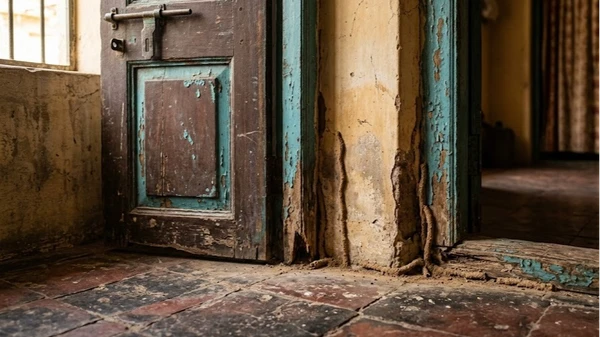
Subterranean termites build mud tubes to travel. These are narrow, brown tunnels made of soil and termite saliva, roughly pencil-width. You'll find them running up furniture legs, along the back of cabinets, or across the floor near where the furniture sits.
Breaking one open and finding it moist inside — or seeing tiny pale insects inside — means the tube is currently active. This is a confirmed sign of termite damage in or around that furniture piece.
Don't just destroy the tube and move on. That solves nothing — they rebuild further inside. The whole colony needs to be addressed.
6. Furniture That Feels Lighter Than It Should
This one sounds strange but it's real.
Pick up a wooden stool, a small side table, a bedside cabinet — something you've lifted before. If it feels noticeably lighter than you'd expect for the size and type of wood, that's because there's significantly less wood inside it than there used to be.
Termites hollow out wood from the inside. Over months of feeding, a piece that was once solid becomes mostly air and tunnel. The surface remains. The weight decreases. Not dramatically at first — just enough that if you're paying attention, something feels off.
This is usually a later sign rather than an early one, but it's often the first thing people actually notice without realising what it means.
7. Wood That Crumbles or Gives Way Under Pressure
Press a screwdriver or even a firm fingernail into an area of wooden furniture that looks slightly discoloured or soft. If it gives way easily — sinking in or crumbling — the wood behind the surface has been significantly eaten through.
This is advanced termite damage in wooden furniture. By this stage the piece has been infested for quite a while. But catching it here is still better than waiting until a shelf collapses or a cabinet door hinge pulls clean through.
Check areas that receive less attention — the bottom edges of wardrobes, the back panels of bookshelves, areas near the floor where furniture meets the wall.
What to Do When You Find These Signs
Don't spray a general insecticide directly on the furniture. It doesn't reach the colony inside and scatters termites through the rest of the piece or into adjacent furniture.
For early-stage termite damage in furniture, boric acid solution applied into the exit holes and along affected surfaces can help slow the damage. Neem oil and orange oil also work as localised treatments for mild cases — they penetrate wood and kill termites on contact.
For anything more than a small, isolated patch of damage — or if you're finding signs across multiple pieces of furniture — the infestation needs professional treatment. A professional will assess how far it's spread, whether the walls behind the furniture are also affected, and treat accordingly using targeted termiticide injection directly into the wood.
Waiting makes it significantly more expensive. The colony doesn't take breaks.
PestEnd handles termite inspections and targeted treatment for both furniture and structural wood — proper assessment first, then the right treatment for what's actually there.