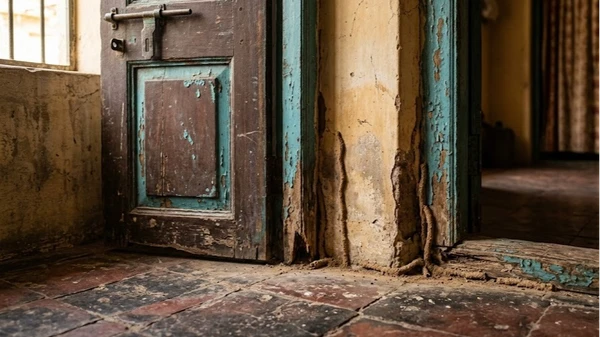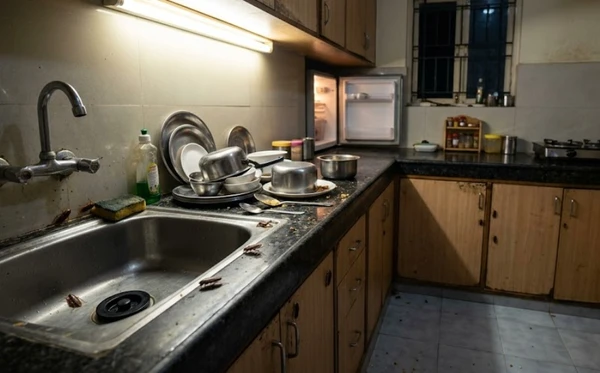
A relative of mine built a house in 2019. Took three years, decent budget, good contractor. By 2022, the wooden door frames on the ground floor were crumbling from the inside. The staircase railing felt soft in places. A pest inspector came, looked around for twenty minutes, and told him the bad news — subterranean termites, coming up through the foundation, probably active for over a year.
The repair bill was close to two lakh rupees. The original pre-construction termite treatment would have cost a fraction of that. He hadn't known it was something to ask for. The contractor hadn't mentioned it.
That's a very common story in India.
What Actually Happens Underground
Termites don't arrive through your front door. They come from below.
Subterranean termites — the most destructive kind in India — live in colonies underground. They build tunnel systems through soil, travel silently upward through foundation gaps, expansion joints, pipe entries, and any crack in the concrete slab, and reach the wood inside your walls before you've finished unpacking boxes.
The warm, humid climate across most of India makes this worse. Termite colonies thrive in exactly these conditions — moist soil, warmth, and the fresh untreated wood that comes with new construction.
By the time any visible sign appears, they've usually been working inside for months. That's the nature of the problem. Pre-construction anti-termite treatment exists specifically because post-construction, you've already lost your best chance to stop them.
What Pre-Construction Treatment Actually Does
The idea is straightforward — treat the soil before the building goes up, so termites can't get through it once the structure is complete.
A chemical barrier gets created in the ground beneath and around the foundation. Termiticides approved under Indian Standards (IS 6313) are applied directly into the soil at multiple stages of construction — before the foundation is poured, when the plinth is being built, before floor concrete is laid, and around the perimeter once walls go up.
Once those layers are in and concrete covers them, you can't go back and do this properly. The soil is sealed under floors and inside walls. That window closes permanently when construction finishes.
That's why anti-termite treatment for new construction has to happen during the build — not after you've moved in, not when something starts looking wrong.
The Four Stages — When Treatment Gets Applied
This is where most people have no idea what to ask their contractor. The treatment isn't a single visit. It happens in phases aligned with construction progress.
Foundation trenches — The first application goes into the excavated soil before the foundation is laid. The bottom and sides of the trenches get treated with chemical solution. This is the deepest barrier, going in before anything else does.
Plinth and floor fill — Before the plinth concrete is poured, the soil inside the plinth area gets saturated with termiticide layer by layer. This prevents termites from entering through the floor slab later.
Pipe and junction points — Anywhere plumbing enters the structure, anywhere electrical conduits run through concrete — these are treated specifically. Termites are very good at finding the exact gaps where pipes break through concrete.
Perimeter treatment — The final ring around the completed structure. This outer barrier stops termites from approaching the building through the surrounding soil.
Miss any one of these and the barrier has a gap. A termite treatment for new homes that's done at two stages but skipped at the third isn't much better than no treatment at all.
Why You Can't Just Do This After Construction
People ask this often — why not wait and see, then treat if termites show up?
A few reasons.
Once floors are tiled and walls are plastered, the soil underneath is completely inaccessible. Post-construction termite infestation treatment requires drilling holes into finished floors and walls, injecting chemicals through those holes, and then resealing everything. It's disruptive, more expensive per square foot, and still doesn't reach every area that pre-treatment does.
Post-construction treatment is necessary when termite infestation signs are already present. But it's damage control — not prevention. You're treating a problem that has already started, in a building that was never designed to stop it from the beginning.
Pre-construction treatment, applied properly at every stage, can protect a home for 10 to 15 years with periodic checks. The cost at construction stage typically runs around ₹15–25 per square foot depending on the company and chemicals used. For a 1500 sq ft home that's somewhere between ₹22,000 and ₹37,000.
Compare that to ₹1–2 lakh for post-construction drilling and injection, plus whatever structural repair the termite damage itself requires.
What to Ask Your Contractor
Most contractors won't bring this up unless you ask. Some will say they've included it and haven't. Here's what to actually confirm:
Ask specifically which stages will be treated — foundation, plinth fill, pipe junctions, perimeter. All four should be included.
Ask which chemicals will be used. Approved termiticides in India include Chlorpyrifos, Imidacloprid, Bifenthrin, and Fipronil. Older chemicals like Chlordane and Aldrin are banned — if anyone mentions these, that's a problem.
Ask for documentation. A legitimate pre-construction anti-termite treatment comes with a certificate specifying chemicals used, areas covered, and a warranty period. Most professional treatments offer 5 years warranty, some with insurance cover for any damage during that period.
If the contractor can't answer these questions or hands the job to whoever is cheapest, get a separate pest control ↗ company to do it. It's worth the cost of coordinating it yourself.
New Home, No Termites — One Decision Made at the Right Time
Nobody builds a house thinking about what's in the soil underneath it. That's completely understandable. But termite control for new construction is one of those decisions that costs very little if you make it at the right time and can cost an enormous amount if you skip it and deal with the consequences later.
PestEnd handles pre-construction termite treatment at every stage of the build — from foundation to perimeter. Certified chemicals, documented warranty, proper stage-by-stage application.
If you're in the process of building or planning a new home, this is the right time to get it sorted.