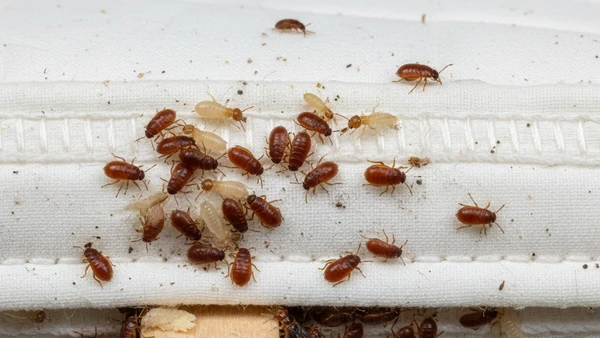
The calls we get most often about termites follow a pattern. Someone spots mud tubes behind a cupboard. Or a door frame that's gone soft. Or fine powder collecting near a bookshelf for the third week in a row. By the time they call, the termites have usually been active for months — sometimes longer.
Pre-construction treatment is the ideal scenario. Soil treated before the foundation goes in, chemical barriers built into the structure from day one. But most homes in India were never treated that way. And even new homes sometimes skip it.
That's what post-construction termite treatment is for. It's not the perfect solution — nothing done after the fact ever is — but done properly, it works. Here's what it actually involves.
What Post-Construction Treatment Is Trying to Do
Before getting into the process, it helps to understand the problem it's solving.
Termites — specifically subterranean termites, the most destructive kind in India — live in underground colonies and travel up through soil to reach the wood inside your home. They enter through foundation gaps, expansion joints, pipe entry points, cracks in the plinth. Once inside, they feed silently inside walls, door frames, and furniture for months or years.
Post-construction termite treatment creates a chemical barrier in the soil after the building is already complete. Since the soil under floors and inside walls is no longer accessible, the treatment involves drilling into finished surfaces — floors, walls, near the foundation — injecting termiticide into those drilled points, and sealing everything back up. The chemical reaches the soil through the drill holes and forms a barrier that kills termites on contact and prevents new colonies from entering.
It's more invasive than pre-construction treatment. It costs more per square foot. It doesn't reach every concealed area the way pre-construction does. But for an existing home with an active infestation or no prior treatment — it's the right intervention.
The Process — What Actually Happens on the Day
A professional post-construction termite treatment follows a specific sequence. Knowing what to expect makes it easier to evaluate whether the company you're hiring is actually doing it properly.
Inspection first. Before any drilling starts, a proper technician does a walkthrough — checking for mud tubes, hollow-sounding wood, frass, active damage areas. This tells them where to concentrate treatment and whether the infestation is mild, moderate, or severe. If a company skips inspection and goes straight to drilling, that's a red flag.
Drilling holes along the floor-wall junction. Holes are drilled at the junction where the floor meets the wall — typically every 30 cm apart, at a 45-degree angle. Standard drill size is about 12mm. This is the most important access point because it reaches the soil layer beneath the floor slab where termites travel.
Chemical injection. Termiticide solution is pumped into each drilled hole using a hand-operated pump. The chemical disperses through the soil, forming a treated zone. Approved chemicals used in India include Chlorpyrifos 20 EC, Imidacloprid, Bifenthrin, and Fipronil — all regulated under IS 6313 Part III.
Perimeter trench treatment. A shallow trench is dug around the external perimeter of the building. Termiticide is poured into this trench and the soil is replaced. This creates an outer ring that stops termites from approaching the structure through external ground soil.
Sealing drilled holes. Once injection is complete, every drilled hole gets sealed — typically with white cement. A properly sealed job leaves no visible damage.
The whole process for an average-sized home takes one to two days depending on property size and infestation severity. For severe infestations, a follow-up visit may be needed after two to three weeks.
How Much Does Post-Construction Termite Treatment Cost in India?
Costs vary depending on city, company, property size, and severity. But here are realistic numbers based on current market rates:
Per square foot rate: ₹3 to ₹8 per sq ft is the standard range for post-construction chemical treatment. Some companies charge flat rates per BHK instead.
Flat rate by home size:
- 1 BHK (approx 500–600 sq ft) — ₹1,500 to ₹4,000
- 2 BHK (approx 900–1000 sq ft) — ₹3,500 to ₹8,000
- 3 BHK (approx 1200–1500 sq ft) — ₹5,000 to ₹12,000
- Larger independent houses and villas — ₹15,000 to ₹25,000+
Severe infestations with extensive structural damage cost more because they require additional treatment rounds and sometimes wood treatment alongside soil treatment.
Baiting systems — where bait stations are installed around the perimeter to attract and kill the colony — are a more expensive option (₹20,000 to ₹40,000+ for a full installation) but can be more effective for certain infestation types. They require monitoring visits every few weeks over a period of 4–8 weeks.
Get at least two to three written quotes before committing. Prices for the same home can vary by 30–50% between companies. Cheaper isn't always wrong — but if a quote seems suspiciously low, ask specifically what's included: inspection, perimeter treatment, hole sealing, warranty documentation.
How Long Does Post-Construction Termite Treatment Last?
Honest answer — shorter than pre-construction, and it depends on a few things.
A properly done post-construction termite treatment using approved chemicals typically lasts 3 to 5 years. Some companies offer a 5-year warranty with their treatments, though in practice many recommend an inspection at the 3-year mark.
What shortens effectiveness:
- Water leakage or flooding near the foundation — washes out chemical from soil
- Foundation cracks or new gaps opening up — creates untreated entry points
- Renovation work that disturbs treated soil or drilled areas
- Cheaper or diluted chemicals used during treatment
What extends it:
- Annual professional inspection — catches new activity before it spreads
- Fixing leaks and moisture problems promptly — dry conditions slow termite activity
- Signing an Annual Maintenance Contract (AMC) with the pest control company — typically discounted, includes at least one inspection per year and retreatment if activity is found
AMCs for termite control usually run ₹1,500 to ₹4,000 per year depending on property size and company. Worth it if you've had an active infestation — retreatment during the warranty period is either free or significantly discounted.
Post-Construction vs Pre-Construction — The Honest Comparison
If you're building or renovating and have the option — pre-construction treatment is better. It costs less per square foot, protects areas that post-construction can never reach, and lasts 5 to 10 years instead of 3 to 5.
But if your home is already built — whether it was never treated or the treatment has expired — post-construction termite treatment is the right option and it works. The drill-fill-seal method done by a professional reaches the soil layer beneath your floors, creates a chemical barrier, and stops active infestations when applied properly.
The mistake people make is waiting. A mild infestation treated early costs ₹3,000–₹5,000 and one day of inconvenience. The same infestation left alone for two more years costs that plus structural repair plus the contents of whatever furniture it reached in the meantime.
How to Know If You Need It Right Now
You probably need a professional termite treatment for existing homes if:
- You're seeing mud tubes behind furniture or along walls
- Door frames have gone soft or sound hollow when tapped
- Fine powder keeps appearing near wood furniture
- You found discarded wings near a window after an evening
- Your home is more than five years old and was never treated
- Your last treatment was more than three years ago
PestEnd does full termite inspections and post-construction treatment — proper assessment of what's actually there before any drilling starts, documented warranty, and follow-up support.