Some of these myths come from genuinely well-meaning advice passed down through families. Some come from marketing. Some are just things that sound logical but don't hold up when you look at what's actually happening with the pest.
Acting on bad information about pest control ↗ doesn't just waste money. It delays treatment while an infestation grows, reduces the effectiveness of products applied in the wrong way, and sometimes creates false confidence that a problem is handled when it isn't.
Here's what's worth correcting.
"A clean home won't get pests"
This is probably the most widespread and most damaging pest control myth in India.
Cleanliness reduces certain attractants — food residue, accessible waste, moisture from poor maintenance. These matter. But pests don't select homes based on hygiene standards. They enter through gaps in the building, through shared drain systems, through secondhand furniture, through luggage returned from travel, through delivery packaging.
A spotlessly maintained flat on the fourth floor of a building with cockroaches in the drain riser will develop a cockroach problem. Not because of anything the resident did or didn't do — because the building's shared infrastructure is a continuous source. A family that keeps the kitchen clean can still get bed bugs from one hotel stay. A home with no food left out can still attract rats if there are entry points in the building fabric.
Hygiene is a pest management tool, not a guarantee. Treating a pest problem as a reflection of housekeeping standards — the shame and delay this creates — is one of the reasons infestations get worse before they're addressed.
"If I can't see pests, there aren't any"
Cockroaches are nocturnal and photophobic — they hide from light. An established cockroach colony can be living inside your kitchen wall, inside the motor housing of your refrigerator, inside the electrical switch boxes in your kitchen, and you will see almost nothing during daylight.
Termites almost never emerge from their tunnels — the damage to a wooden beam happens entirely in the interior, with the outer surface maintained intact until the damage is severe. Homeowners often discover termite damage only when something collapses, warps badly, or sounds hollow on tapping — by which point months or years of feeding have occurred.
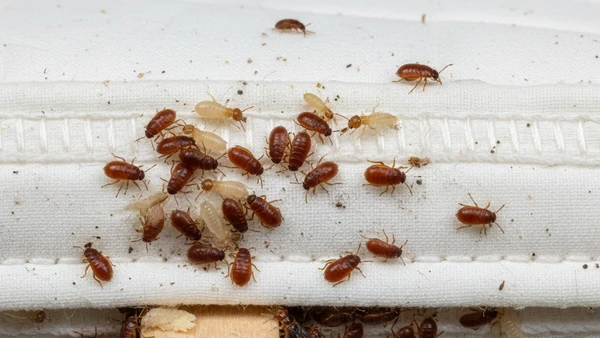
Bed bugs are active for roughly an hour or two around 3 to 4am, feeding while you sleep. During the day they're in mattress seams, bed frame joints, and behind the headboard. Many infestations are discovered only when bites become impossible to ignore — by which point egg sacs and multiple generations are already present.
Absence of visible pests is not evidence of absence of pests. Evidence of absence is a thorough inspection finding nothing — not simply not seeing anything in daily life.
"Pest control chemicals are dangerous for months after treatment"
This one causes a specific practical problem: people delay booking treatment because they're worried about prolonged chemical exposure, or they avoid re-entering treated spaces for far longer than necessary.
Modern residential pest control in India uses pyrethroids and gel-based formulations. Pyrethroids break down when exposed to sunlight and air — their environmental persistence outdoors is measured in days to weeks, not months. Indoors on surfaces away from UV, residual effects last longer — which is the point, since residual protection against pests is what you're paying for — but this is different from the chemical being hazardous to occupants at normal exposure levels after the treatment has been applied and dried.
The standard guidance — vacate during application, ventilate for 30 to 60 minutes before re-entry, wipe down food preparation surfaces before use — reflects actual, specific precautions appropriate to the acute exposure period. Once these are done, the residual chemical on wall surfaces and crevices is present at concentrations intended to affect insects, not humans.
People who avoid their homes for three days after a treatment, or who throw away everything in the kitchen after a gel bait treatment, are responding to this myth rather than to actual chemical risk. It delays normal life unnecessarily and doesn't improve safety outcomes.
"Ultrasonic devices keep all pests away"
Covered earlier in the blog on rat repellers — but worth repeating here because the myth applies across multiple pest categories. Ultrasonic devices are marketed in India for rats, cockroaches, mosquitoes, and spiders simultaneously. The science on these devices shows consistent results: initial brief avoidance from some species, rapid habituation, and no meaningful long-term population reduction.
The FTC in the United States has taken action against ultrasonic pest repeller manufacturers for unsupported claims. No credible regulatory or scientific body anywhere has validated the effectiveness of ultrasonic devices for residential pest control. They're sold on the same shelves as products that work, they're cheaper, and they require no effort — which makes them appealing. They consistently disappoint.
"One treatment fixes the problem permanently"
For almost no pest and no situation is this true.
A single gel bait treatment for cockroaches eliminates the current colony population over several weeks. It doesn't seal the entry points through which new cockroaches will enter from the building's drain system. It doesn't prevent a new infestation from developing in a few months if the conditions that supported the first one haven't changed.
Termite soil barrier treatment, done properly, does provide multi-year protection — but requires annual inspection to confirm the barrier is intact. A one-time treatment from fifteen years ago is not providing protection today.
Pest management is an ongoing activity. For most household pests in Indian conditions, maintenance treatments every six months to a year are what sustain a pest-free home. The expectation of permanent resolution from a single visit leads people to delay re-treatment until the infestation is re-established, at which point they need a more intensive and expensive round of treatment rather than a simple maintenance visit.
"Lizards in the house mean you don't have a pest problem"
Lizards eat insects. Their presence does mean insects are available for them to eat — which is accurate. But the conclusion that lizards are managing your pest problem and you don't need to do anything is not.
A few house lizards will eat some mosquitoes and small insects. They won't meaningfully reduce a cockroach colony, won't affect termites or rodents, won't control a mosquito breeding source. They're incidental, opportunistic feeders — not a population control mechanism for established infestations.
This belief is particularly persistent in Indian households with a cultural tolerance for house lizards. Tolerance for lizards is fine — they're genuinely harmless. Treating their presence as pest management is not.
"Pests are seasonal — they go away after monsoon"
Mosquitoes reduce after monsoon as temperatures drop and standing water dries up — this part has truth to it. But the rest of the claim doesn't hold.
Cockroach populations that moved indoors during monsoon, seeking dry shelter from flooded drains, don't leave when the rains stop. They've established inside the building's wall voids and drain system and now have no reason to leave. The annual cycle of "monsoon brings pests, dry season they disappear" describes the entry event but not what happens afterward.
Termites are not seasonal. They operate year-round, with activity that's more visible during certain conditions — particularly after monsoon when soil moisture activates colonies — but feeding continues regardless of season.
Rats that entered during monsoon flooding are not going to leave voluntarily when the water recedes. They've found shelter, warmth, and food access. The reasons they came in for aren't present anymore but the reasons to stay are.
"Store-bought products work just as well as professional treatment"
For minor, early, contained, visible problems — this is partially true, and has been acknowledged throughout these blogs. A boric acid bait for a small kitchen ant problem, a snap trap for one or two rodents, cleaning up a mosquito breeding site — these DIY approaches work for the situations they're appropriate for.
The myth is the extrapolation: that consumer products handle the same problems as professional treatment just as effectively. They don't, for reasons of product concentration, application method, access to harborage areas, and the diagnostic skill that identifies what's causing the problem rather than just killing what's visible.
A consumer spray can on a cockroach trail handles the cockroaches it touches. It has no effect on the colony inside the wall. Professional gel bait placed in harborage areas reaches the colony. These aren't equivalent treatments for the same problem — they're different tools with different reach.
"Neem and other natural products handle any infestation"
Neem-based products, diatomaceous earth, boric acid, and botanical repellents all have real, documented effectiveness for specific applications at specific infestation levels. This has been covered honestly in the eco-friendly pest control blog.
What they don't do: eliminate an established, severe termite infestation in structural wood. Clear a bed bug infestation spread across a mattress, bed frame, and wall voids. Resolve a large-scale rodent infestation that's been developing for months. Provide the same speed and reach as appropriate professional treatment for established, multi-generational infestations.
The myth isn't that natural products don't work — it's the "any infestation" claim. Scale and severity determine what's appropriate. A natural deterrent for prevention in a pest-free home is a reasonable choice. A natural deterrent as the sole treatment for an active structural termite infestation is inadequate and costly in the delay it causes.