Every restaurant, cloud kitchen, dhaba, catering operation, and food processing unit in India operating under an FSSAI licence has pest control ↗ obligations. Not suggestions — requirements. And unlike some regulatory requirements that exist mainly on paper, pest control compliance is something FSSAI inspectors actively look for during audits.
A cockroach spotted during inspection, rat droppings near the storage area, or the absence of documented pest management records — any of these can trigger compliance action. In serious cases, licence suspension.
Here's what the guidelines actually say, what documentation you need, and what a compliant pest management programme looks like in practice.
What FSSAI actually requires
The Food Safety and Standards (Licensing and Registration of Food Businesses) Regulations require food business operators to maintain premises free from pests and to implement and maintain effective pest control measures.
The specific obligations under FSSAI's food safety management requirements include:
A written pest control programme — not just a receipt from a pest control visit, but a documented programme that specifies which pests are being managed, by what methods, at what frequency, and by whom.
Records of all pest control activities — including inspection reports, treatment records, the products used, their concentration, the areas treated, and the name and licence number of the pest control operator who performed the service.
Evidence that the pest control operator is licensed — pest control companies operating commercially in India are required to hold a valid licence under the Insecticides Act. Using an unlicensed operator doesn't just create a safety risk, it creates a compliance gap that an FSSAI inspector will find.
Pest sighting logs — records of any pest activity observed by staff, what was found, where, and when. This sounds like a burden, but it's actually protective. A log that shows consistent monitoring and prompt response to sightings demonstrates an active programme, even if occasional sightings occur.
What inspectors actually look for
FSSAI food safety inspectors conducting a restaurant or food business audit will typically check:
The physical premises for evidence of pest activity — droppings near storage areas, gnaw marks on packaging, cockroach egg cases in corners, moisture damage that suggests drain-based cockroach entry, damage to structural elements that could indicate rodent gnawing.
The documentation — pest control records, frequency of visits, last treatment date, products used. An inspector who asks for records and is told "we have a pest control company that comes regularly" without supporting paperwork has found a compliance failure.
The pest control measures in place — bait stations, fly screens on windows, drain covers, door brush strips, proofing of gaps and entry points. Physical proofing is part of pest management, and an inspector will notice open gaps at the base of exterior doors, missing drain covers, and windows without fly screens.
Segregation of pest control chemicals from food storage and preparation areas. Rodenticides and insecticides stored near food — even in a closed cupboard in the kitchen area — is a specific compliance issue.
The pests that cause the most compliance problems
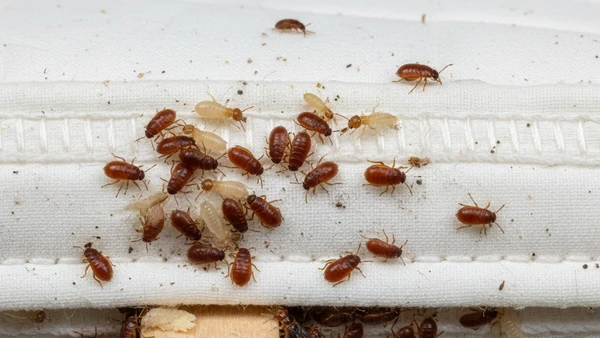
Cockroaches are the most common compliance failure in Indian food businesses. They're attracted to the warmth, moisture, and food residue of a commercial kitchen, they breed fast in undisturbed areas, and they're visible to inspectors in ways that other pests aren't.
A German cockroach (Blattella germanica) infestation in a commercial kitchen compounds quickly. These are the small, fast cockroaches that live specifically in kitchen environments — inside electrical appliances, behind refrigerators, in the warmth of the motor housing of equipment. Unlike the larger sewer cockroach, they don't come from outside. They arrive in cardboard boxes, in second-hand equipment, in goods delivered from infested suppliers — and once they're inside kitchen equipment, standard surface treatments don't reach them.
Rodents are the other major compliance risk. A single rat burrow near the back entrance, gnaw marks on a storage bag, droppings near the grain storage — each of these is a documented compliance failure. The structural damage rats cause to electrical wiring also creates fire risk, which takes the issue beyond pest control into building safety.
Flies are a visible risk specifically in open kitchen environments, dining areas, and food display sections. Fly strips and UV light traps are visible interventions that inspectors can see. A kitchen without any fly control measures in the preparation area is an obvious gap.
Stored product pests — weevils, grain beetles, Indian meal moths — are less visible but common in food businesses that store bulk dry goods. They contaminate product silently over time. An FSSAI inspector finding webbing in a bag of grain, or live insects in stored flour, is looking at both a pest control failure and a product safety issue.
What a compliant pest management programme looks like
Monthly professional visits minimum. For most food businesses, monthly is the baseline for maintaining compliance. High-volume kitchens, businesses in areas with high pest pressure, or operations that have had recent pest activity should be on fortnightly visits.
Gel bait treatment for cockroaches. Gel bait placed inside equipment, in electrical panel areas, under counters, and in harborage zones reaches the German cockroach population where contact sprays don't. In a commercial kitchen, where surfaces are cleaned frequently and spray residues would be inappropriate near food preparation, gel bait is the standard professional approach.
Rodent bait stations at the perimeter. Tamper-resistant bait stations placed around the exterior perimeter of the building, near delivery entrances, and in any storage areas away from the kitchen. Stations are checked and documented at each service visit — whether they've been disturbed, whether bait has been consumed, whether new rodent activity is indicated.
Fly control measures. UV fly killers installed in kitchen areas at appropriate height and distance from food surfaces. Fly screens on windows in food storage and preparation areas. Door brush strips or air curtains at delivery entrances. These are physical measures that an inspector can observe.
Entry point proofing. Gaps under back doors, around pipe penetrations, drain cover condition — these need to be part of any professional pest management assessment. An inspector will check them. A pest control company that provides treatment without checking and reporting on proofing conditions is providing an incomplete service.
The documentation your business needs to maintain
Pest control service reports for every visit — signed by the technician, including the date, areas treated, products used (with full product names and registration numbers), and any pest activity observed.
A pest sighting log — a simple record kept by staff that notes any pest sightings with date, location, and what was observed. This is a legal requirement under FSSAI food safety management systems and is checked during audits.
Pest control operator licence details — the name, address, and licence number of the pest control company you use. Keep a copy of their current licence on file. Licences expire and need renewal.
Chemical safety data sheets for any products used on the premises — most professional pest control companies will provide these as part of the service.
The entire documentation set should be kept accessible at the premises, not just at head office. An inspector arriving at a branch location needs to see the records for that branch.
The cost of non-compliance
A first inspection finding of minor pest evidence with inadequate documentation typically results in a compliance notice with a period to rectify. That notice goes on record.
A second finding, or a finding of significant active infestation, can result in temporary licence suspension — which means the business cannot legally operate until compliance is demonstrated.
For businesses operating under Central Licence (high turnover operations, multi-state businesses), the consequences of repeated non-compliance extend to the full operation, not just a single location.
The practical cost of a brief suspension — lost revenue, reputational damage, re-inspection fees, emergency pest treatment — consistently exceeds the annual cost of a proper pest management programme by a significant margin.
What to ask when choosing a pest control partner for your food business
Does the company hold a valid licence under the Insecticides Act?
Do they have specific experience with FSSAI-compliant food business pest management — not just residential treatment?
Will they provide documentation in the specific format required for FSSAI compliance?
Do they conduct a full inspection and proofing assessment, not just a treatment visit?
Is there a defined escalation process if significant pest activity is found between scheduled visits?
A pest control company that can't answer these questions confidently is not the right choice for a licensed food business.