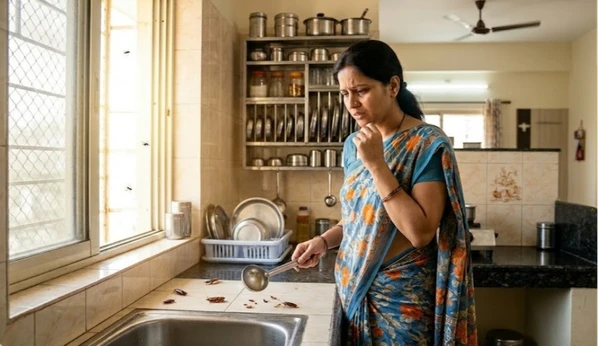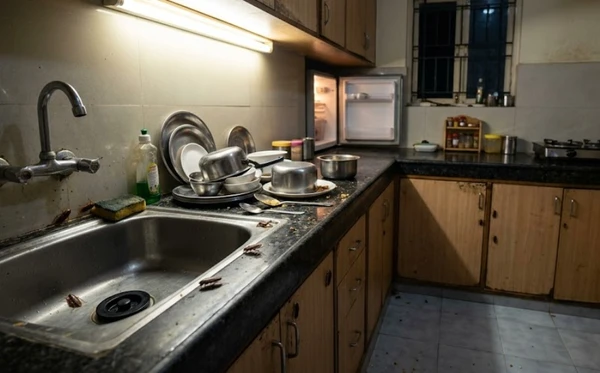
The household pest control ↗ question changes completely when there's a newborn in the home.
Not because professional pest control is categorically unsafe around babies — it isn't when done correctly with the right products and timing. But because the assumptions that apply to adults — brief exposure during treatment, residual chemicals at concentrations low enough for the healthy adult metabolism to handle easily — need to be revisited for an infant.
Newborns and young infants have developing neurological systems, immature metabolic capacity, and spend far more time on or near floor surfaces and soft furnishings than adults. Their relative exposure to residual chemicals on floors, on fabric surfaces, and in indoor air is higher by weight and by time of contact. This is the reason extra care is warranted — not fear of professional pest control, but appropriate adjustment of how it's done.
Before anything: understand why pest control around a newborn still matters
The impulse some families have — to avoid all pest control entirely while a baby is in the home — creates a different risk.
Cockroach allergens are one of the documented triggers for childhood asthma. Early and persistent exposure to cockroach allergens — their droppings, shed skins, and body parts in house dust — contributes to allergen sensitisation in infants. A home with an untreated cockroach infestation exposes a newborn to continuous allergen accumulation in dust on the floor, on soft furnishings, in the air — far more than the brief, controlled exposure of a properly conducted pest treatment.
Mosquito-borne disease risk — dengue, malaria — doesn't pause because there's a baby in the house. Infants are more vulnerable to severe disease outcomes, not less. An untreated mosquito breeding source in a home with a newborn is a genuine medical risk.
The conversation isn't pest control versus no pest control. It's pest control done appropriately for the specific situation versus untreated infestation. The latter is consistently the worse outcome.
Products and methods to prefer around infants
Gel bait for cockroaches — the preferred method regardless, and especially so around infants. The total active ingredient applied in a gel treatment is measured in milligrams, placed inside crevices, appliance housings, and cabinet joints. There's no aerosol component, no surface application on accessible areas, and no meaningful airborne concentration during or after treatment. It's the lowest-exposure method for the highest-effectiveness cockroach treatment available.
Diatomaceous earth — food-grade, non-toxic to mammals. Applied along baseboards, in crevice areas, and around entry points. Mechanical action rather than chemical toxicity. Safe to use in homes with infants when kept out of areas where a baby crawls or plays directly — not because it's harmful when touched, but to avoid inhalation of the fine dust.
Physical exclusion — window mesh, door sweeps, sealed entry points, drain covers. Zero chemical component. Done well, this reduces pest entry enough that treatment frequency and intensity can be reduced.
Larvicide tablets for standing water — for mosquito control, larvicide products like Bacillus thuringiensis israelensis (Bti) are biological rather than chemical — a naturally occurring soil bacterium that's specific to mosquito larvae and harmless to mammals, birds, and fish. These are available as slow-release granules or tablets for use in water containers and drains. Appropriate to use around infants.
Products and methods to use with extra caution
Pyrethroid spray — the most common professional spray treatment. Not categorically unsafe around infants when applied correctly and the home is vacated and ventilated properly. But the caution level is higher. The vacate time before re-entry should be longer than the standard adult guidance — at minimum 2 to 4 hours with full ventilation, ideally the baby sleeps elsewhere for the night if spray treatment was done during the day. The baby's sleeping area, play mat area, and any fabric surfaces the infant regularly contacts should be wiped down before the infant returns.
Spray treatment should not be applied directly to soft furnishings, carpets, or play areas. It goes on wall surfaces, baseboards, behind appliances — not on surfaces the infant contacts.
Organophosphate sprays — these have no place in a home with a newborn. If a pest control company proposes organophosphate treatment in a home with an infant, that's the conversation to stop. Pyrethroid alternatives exist for every application where organophosphates might otherwise be used residentially, and are significantly safer around infants.
Rodenticide bait — never placed in accessible areas in a home with a baby, ever. Bait stations must be locked, tamper-resistant, and placed in locations physically inaccessible to a crawling infant. Under heavy appliances, inside wall voids through access points, outside the home at the perimeter. No open bait placement indoors in a home with a child who can reach the floor.
The timing approach that reduces exposure
Timing pest control treatments to maximise the gap between treatment and the infant's presence in the treated space is the practical tool that makes most methods appropriate.
For spray treatment: treat while the family is out for a full day — visiting family, a day trip. Return in the evening with full ventilation having occurred. The baby sleeps in a room that was treated hours earlier, properly ventilated, with contact surfaces wiped down. This is meaningfully different from treating at 10am and returning with the baby at noon.
For gel bait: treatment can be done with the family present in other parts of the home, given the absence of aerosol. The baby's room specifically can be treated while the infant is in another room, with a brief ventilation of 30 minutes before return.
Mosquito treatment — larvicide for breeding sites can be done at any time with an infant in the home, given the biological rather than chemical action. Fogging treatment for adult mosquitoes should follow the same timing principle as spray — treat while the family is out, ventilate fully before return.
The baby's room specifically
If pest activity is occurring in the infant's room — which is unusual but possible, since pest movement through shared wall voids isn't selective — the approach is the most cautious version of all of the above.
Gel bait in crevice areas of the room, placed where the infant cannot access: inside the gap at the base of skirting boards, inside the hinge of any furniture with internal crevices, behind furniture that the infant isn't placed on. No spray treatment on floor surfaces the infant contacts.
The cot mattress and bedding should be protected by a properly fitted mattress cover — a genuine encasement with a sealed zipper — to remove one harborage opportunity from the baby's immediate environment.
Any pest control treatment in the baby's room should be discussed with the pest control company specifically, not just booked as a standard whole-home treatment. The company should be aware there's an infant and should adjust product selection and placement accordingly. If the company's response to learning there's a newborn is to proceed without modification — that's information about how they operate.
Ventilation and cleaning after treatment — more important, not less
The standard post-treatment ventilation guidance for adults — 30 to 60 minutes — should be extended for homes with infants. 2 to 4 hours minimum for any spray treatment, with windows open and fans running.
The infant's room specifically — floor surface, any fabric the baby contacts, the cot area — should be wiped down with a damp cloth after ventilation and before the infant returns to the space. This removes any surface residue that may have settled on accessible surfaces.
Wash the baby's bedding before use if the room was sprayed. The bedding itself shouldn't have been sprayed, but chemical aerosol during treatment may have settled on fabric. Washing removes it.
The honest conversation to have with your pest control provider
Tell them there's a newborn before booking — not at the door when the technician arrives.
A professional company adjusts the programme for a home with an infant: gel bait preference over spray where possible, extended vacate recommendations, avoidance of spray on fabric and floor contact surfaces, locked bait stations only for rodenticide. If the company doesn't ask about occupants and doesn't adjust anything when told about the baby — find a different company.
The goal is a pest-free home that's also a safe environment for your infant. These aren't competing objectives — they're compatible with the right approach.