Here's something that trips up most homeowners dealing with a rat problem.
They treat the infestation — traps, bait, maybe a professional service. The rats go away. A few weeks later, new droppings appear. Another treatment. Same result. The cycle repeats for months.
The reason is almost always the same. Nobody sealed how they were getting in.
Killing rats is the short-term fix. Sealing entry points is what actually ends the problem. And in Indian homes — with their concrete construction, aging pipe work, and building quirks — those entry points are almost always in the same predictable places.
First, understand what size gap matters
A brown rat — the most common species in Indian homes and markets — can squeeze through a gap roughly the size of a two-rupee coin. Around 20mm. A smaller rat or a young one needs even less.
They can also chew to enlarge a gap that's just slightly too small. Their teeth are harder than aluminium and most plastics. They'll work at a weak point over days or weeks until it's large enough. So anything soft, crumbly, or made of plastic near a potential entry point is not a permanent solution.
This is why foam sealant alone doesn't work. Neither does stuffing a gap with newspaper, old cloth, or wood. Rats chew through all of it. The materials that actually hold are the ones they physically cannot chew — cement, steel, hardened mortar, galvanised metal mesh.
Where to look — room by room
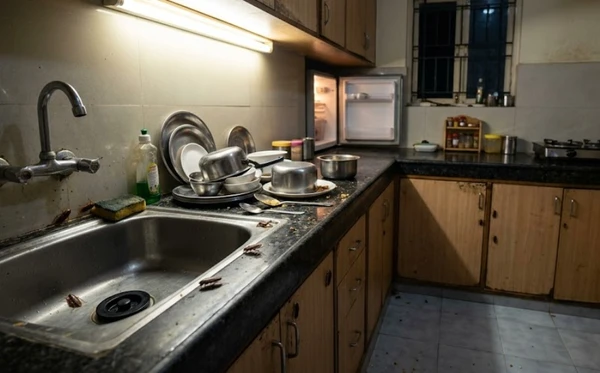
Kitchen first. This is where most infestations start because this is where the food is.
Look under the sink. The pipe that connects to the wall — there's almost always a gap around it, even in newer construction. Builders fit the pipe, cut a hole slightly larger than needed, and leave the rest. That gap is usually at least 20 to 30mm all the way around. Standard rat entry point. Get a flashlight and check it closely.
Check where the pipe from the kitchen drain exits through the wall to outside. Same issue.
Look at the gap between the base of kitchen cabinets and the floor. In most Indian homes, the cabinet units don't sit completely flush — there's a small gap underneath. Rats use this to move between the interior of the wall and the open kitchen floor at night.
Bathroom next. The pipe penetrations in bathrooms are the same problem as the kitchen — inlet pipes, drain pipes, the hole where the flush connection goes into the wall. Check all of them.
The floor drain — the one that's just an open hole covered by a plastic or metal grate — is worth checking. Standard plastic grates with large openings can let young rats through. Metal drain covers with smaller mesh are better.
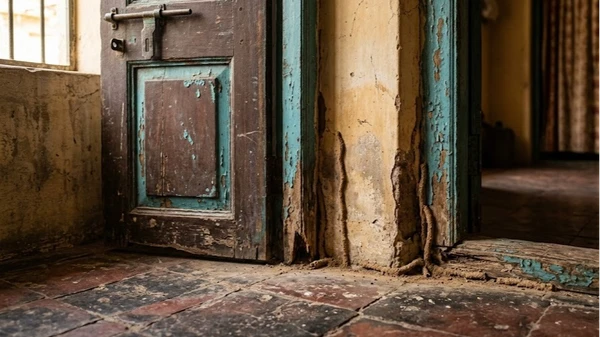
Check the front door and any external door. Lie down and look at the gap between the bottom of the door and the floor. In older Indian homes, door frames shift slightly over time and the gap grows. Anything larger than 6mm is enough for a rat to work at. A heavy-duty rubber door sweep, properly fitted, closes this without affecting how the door operates.
Check every external wall penetration. Wherever an electrical cable, gas pipe, internet cable, AC refrigerant pipe, or water pipe enters from outside — there's likely a gap. Step outside and look at each one from the exterior. The gaps are usually easier to spot from outside. In flats, check where pipes pass between floors through the ceiling.
The terrace and roof area. If you have an older home or a ground-floor flat with a flat roof, check where the parapet wall meets the roofing material, gaps in the junction between the roof and external walls, and any broken or crumbling sections of the exterior wall near the roofline. Rats climb well — getting up to roof level is not a problem for them.
Compound walls, garden areas, and compound drains. If your home has a compound, check where the boundary wall meets the ground — particularly near drains or low-lying areas. Rats burrow. A burrow entrance near the base of a compound wall that leads under the floor slab is one of the harder problems to fix but worth finding.
What to use for each type of gap
Small gaps around pipes — 5 to 30mm — are best handled with steel wool packed tightly into the gap, then sealed with cement or silicone over the top. The steel wool provides the chew-resistant layer. The cement or silicone holds it in place and weatherproofs it. Steel wool alone isn't enough — it can be worked loose over time. The combination holds.
Larger gaps and holes in walls — 30mm and above — need cement mortar or a combination of metal mesh and cement. Pack metal mesh (galvanised, with openings no larger than 6mm) into the gap, then apply cement over it. Once cured, this is essentially impenetrable.
Drainage openings and floor drains where you want airflow or drainage to continue — use galvanised metal mesh covers with openings of 6mm or smaller. Screw them in if possible rather than just resting them over the opening. Rats will move an unsecured cover.
Door gaps — install a proper door sweep. The rubber or nylon strip type that screws to the bottom of the door frame and compresses against the floor when the door closes. Measure the gap first — if it's more than 15mm, you may need a heavier-duty version. Check that it's actually touching the floor all the way across when the door is closed. A gap at one corner defeats the purpose.
Ventilation openings in external walls or ceiling spaces — these need metal mesh fitted over them. Standard ventilation bricks in older Indian construction often have openings large enough for a rat. Cover them with galvanised mesh attached firmly to the wall surface around the opening, not just pressed against it.
How to check your work
Walk the perimeter of your home — outside and inside — with a flashlight. Shine it directly at each sealed point at an angle. Light transmission through an apparently solid seal reveals gaps you'd miss in normal light.
From inside, on a sunny day, check external walls by turning off all lights in the room. Any gap to outside will show as a point of light. Particularly useful for checking under kitchen cabinets and in low corners behind furniture.
If you've had an active infestation, check the sealed areas after two to three weeks. Fresh gnaw marks on a sealed point mean a rat is trying to re-enter there. It means the seal is working — but also that the entry point was correctly identified. Add another layer of material if needed.
What sealing can't do
If rats are already inside your walls or ceiling when you seal the entry points, they're now trapped inside. This creates a different problem — they'll try harder to chew out, they may die inside the wall and create an odour issue, or they'll find an internal route you hadn't considered.
The right sequence is: treat the active infestation first, confirm the population is significantly reduced, then seal. Or seal and treat simultaneously with a professional service that can manage both elements together. Sealing alone, with an active colony inside, is not the right order of operations.