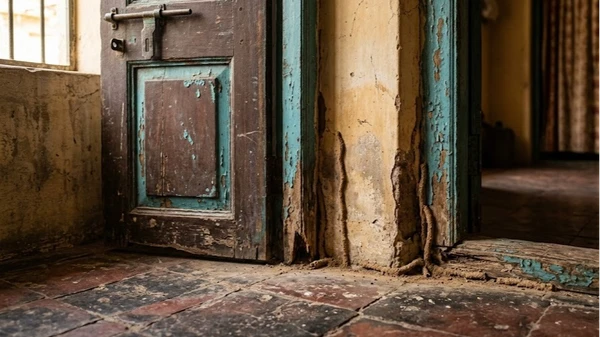
The main door of my uncle's house in Jaipur looked completely fine from the outside. Freshly painted, solid-looking, no visible damage. Then his son leaned against the frame one afternoon and his elbow went through it.
The entire inside of that door frame — teak, installed maybe eight years ago — had been eaten hollow. The surface paint had held everything in place visually while termites quietly finished the wood behind it.
Door frames and window frames are, in many ways, the most vulnerable wooden structures in an Indian home. They sit at ground level or close to it. They have gaps where wood meets wall. They collect moisture every monsoon. And they're usually the last thing anyone thinks to treat or inspect.
Here's how to actually protect them — whether you're building new, renovating, or dealing with something that's already started.
Why Doors and Windows Get Hit First
It's not random. There are specific reasons wooden doors and window frames attract termites before other parts of the home.
Ground contact or near-ground placement. Door frames especially sit close to the floor level — sometimes with the wood base literally touching or near soil. Subterranean termites travel up from underground colonies and the door frame is often the first significant wood they reach.
Moisture accumulation. Every monsoon, water seeps under doors, pools near window sills, soaks into the junction where wood meets wall. Termites are strongly attracted to damp wood. A door frame that stays slightly wet after rain for days at a time is exactly the environment they prefer.
Gaps and joints. The junction between a wooden frame and the surrounding wall is never perfectly sealed. That gap — even a hairline crack — is enough for termites to enter and begin tunnelling into the wood without showing any sign on the surface.
Paint as camouflage. A fresh coat of paint covers everything. Door frames get repainted regularly. The paint holds the outer surface together while damage accumulates inside. By the time paint starts bubbling or a frame feels soft, significant damage has already happened.
1. Start With the Right Wood — Or Treat What You Have
If you're building or replacing door and window frames, wood choice matters more than most people realise.
Teak is the most termite-resistant hardwood commonly used in India — and the most expensive. It contains natural oils that termites find unpalatable. Old teak doors from decades ago often survive precisely because the wood itself resisted attack.
Sal wood is another reasonably resistant option used widely in north India. Deodar works well for frames in dry climates.
BWR grade plywood — boiling water resistant — is chemically treated during manufacturing and significantly more resistant to both moisture and termites than standard commercial plywood. If your door panels or window shutters are plywood, this grade is worth specifying explicitly.
For existing wood that wasn't treated or isn't naturally resistant — and that's most homes — the wood itself needs treatment. Applied wood preservatives like Bora-Care or copper naphthenate penetrate the wood grain and make it toxic to termites. These are brushed or sprayed directly onto the wood surface, especially at joints, the base of frames, and any area near wall junctions. This isn't a one-time job — it needs to be repeated every few years.
2. Seal Every Gap Where Wood Meets Wall
This is the step most people skip because it looks like minor maintenance rather than termite prevention. It's one of the most effective things you can do.
Where a door frame meets the plaster wall, there's almost always a small gap. Same at window frames. Termites don't need much — a gap smaller than 1mm is enough to enter, build a mud tube behind the frame, and start feeding.
Go around every door and window frame in your home. Wherever you can see or feel a gap between the frame and the surrounding wall — seal it. Silicone sealant works well for this. It's flexible, waterproof, and doesn't crack when the wood expands and contracts with seasonal humidity changes the way hard cement filler does.
Pay particular attention to the base of door frames — where the frame meets the floor. That junction is where termites most commonly enter.
3. Control Moisture Around Frames
Moisture is what makes wooden doors and windows vulnerable far more than anything else. Eliminate or reduce moisture and you've removed the main thing that attracts termites to these areas in the first place.
Fix any leaks near door and window frames immediately. A slow drip from a window sill or a leak at the top of a door frame that runs down the wood during rain — these need to be sorted properly, not patched temporarily.
Improve drainage near external doors. Water pooling at the threshold of a ground-floor door after rain keeps the base of the frame damp for days. Ensure the threshold slopes away from the door so water drains outward.
Ventilate damp rooms properly. Bathrooms and kitchens with wooden doors or window frames that stay humid — ensure there's enough ventilation to dry the wood out between uses. A wooden frame that's never fully drying out will attract termites eventually.
Wipe frames dry after heavy rain. Sounds basic. Nobody does it. Takes thirty seconds with a cloth and it makes a real difference to how long moisture sits in the wood grain.
4. Apply Anti-Termite Treatment to Frames Directly
For protecting wooden doors from termites that are already installed — whether they're new and you want to keep them that way, or older frames you want to extend the life of — direct wood treatment is the right approach.
Boric acid solution brushed or sprayed onto wooden frames penetrates the wood and kills termites on contact. It's low-toxicity, relatively safe, and can be applied by homeowners. Focus on the base of frames, joints where wood meets wall, and the back face of frames that sit against masonry. Reapply every year, especially after monsoon.
Neem oil diluted and sprayed on frames acts as a natural repellent. It won't eliminate an existing infestation but deters termites from settling in untreated wood. Good as a regular maintenance treatment for frames that have no current damage.
Anti-termite paint or varnish — several products are available in India that combine wood polish with termite-repellent chemicals. Applied as a finish coat, these provide a protective surface layer. They're not a cure for active infestation but they work well as ongoing prevention when applied regularly.
5. Check Frames Regularly — Especially After Monsoon
Most termite damage in doors and windows is caught late simply because nobody checks.
Once a year — September or October, after monsoon — go around every door and window frame in your home and do three things:
Tap test. Knock with your knuckle along the frame, top to bottom. Solid wood sounds dense. Termite-damaged wood sounds hollow or papery. Any section that sounds noticeably different from the rest deserves a closer look.
Check the base. The bottom of door frames — where the frame meets the floor — is the most common entry point. Look for mud tubes, small holes, or any soft or discoloured areas.
Look for frass. Fine powder near the base of a frame or in the corner of a window sill. If it reappears after you clean it, something is actively feeding inside that wood.
Catching damage at this stage — before it's gone hollow — means treatment is still straightforward. Waiting until the frame needs structural replacement is significantly more expensive.
6. When the Damage Has Already Started
If you find active termite damage in a door or window frame — soft wood, frass, mud tubes, hollow sound across a large area — home treatments won't be enough.
The professional approach for infested door frames involves drilling small holes into the affected wood, injecting termiticide solution directly into the tunnels inside, and sealing the holes. This reaches the infestation where it lives rather than just treating the surface. For frames where the damage is advanced, the wood may need to be replaced alongside treatment — otherwise you're treating a frame that no longer has structural integrity.
If the damage has spread from the frame into the surrounding wall — which happens more often than people expect — the wall area needs treatment too, not just the wood.
PestEnd handles targeted termite treatment for door frames, window frames, and structural wood — inspection first, then the right treatment for what's actually there.