They eat mosquitoes, moths, cockroaches, and other insects. They're harmless to humans. Many people grew up with them on the wall and genuinely don't mind.
But plenty of others find them unsettling — the sudden movement across the ceiling, the droppings on shelves, the occasional one that ends up inside a cupboard. And for some households — particularly those with young children who are frightened by them, or where lizard droppings are landing on food preparation areas — it's a legitimate problem worth addressing.
This isn't about whether lizards are good or bad. It's about the practical question of how to reduce or remove them if you've decided you want to.
Why lizards are in your home in the first place
This matters because it changes the most effective approach.
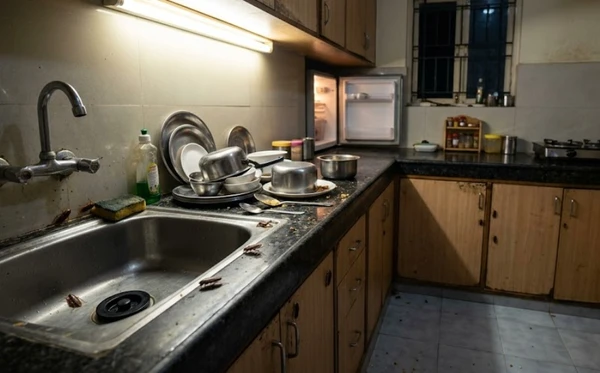
Lizards don't come inside for shelter the way rats do. They come inside because your home has insects — and your home has insects because your home has light sources that attract them at night, moisture that supports them, and food residue that feeds them.
It follows its food source. If your home has a steady supply of moths around the light fittings, mosquitoes near the window, and cockroaches under the fridge — you have a steady supply of lizards.
This means the most durable way to reduce lizards is to reduce insects. Which is also useful for other obvious reasons. But if you want faster or more direct results, there are specific methods worth trying.
Natural methods that actually work
Naphthalene balls. The most widely used lizard deterrent in Indian homes. The smell of naphthalene is unpleasant to lizards and they tend to avoid areas where it's strong. Place them in corners, behind furniture, in cabinets, near door frames — anywhere you've seen lizard activity or droppings.
The important caveat: naphthalene balls are also toxic to humans in significant amounts, and the vapour in enclosed spaces accumulates. Don't use them in food storage areas, and don't use large quantities in rooms where children sleep. Used sparingly in ventilated spaces, they're effective. Used heavily in small enclosed rooms — not a good idea.
Eggshells near entry points. This one sounds like kitchen folklore but gets repeated because it has a basis. Lizards apparently interpret the smell of eggshells as a predator signal — egg-eating creatures. Fresh eggshells placed near doors, windows, and known entry points are reported to deter lizards from entering that area.
Peacock feathers. Traditional in many Indian households, particularly in older homes. The theory is that lizards associate peacock feathers with a predator. Effectiveness varies considerably. Some households swear by it; others see no effect. Possibly the novelty of the smell causes temporary avoidance that fades quickly. Worth trying as a low-cost option if you have access to the feathers — harmless if it doesn't work.
Tabasco or pepper spray on surfaces. Dilute Tabasco sauce or ground pepper mixed with water, sprayed on surfaces where lizards frequently rest — upper corners of walls, near ceiling light fittings. Lizards taste-test surfaces with their tongues. The capsaicin causes enough irritation that they stop visiting those surfaces. Needs reapplication every week or after cleaning. Doesn't smell great to humans in large quantities either.
Coffee powder and tobacco paste. A traditional remedy that's less pleasant to prepare but genuinely reported to work. Mix used coffee grounds or tobacco with water to make small balls. Place these in corners and near entry points. The strong smell of tobacco especially seems to deter lizards. The balls need replacing every few days as they dry out.
Reducing light at night. Light attracts insects, insects attract lizards. If you have bright exterior lights running all night near windows and doors, you're essentially running a free buffet for insects with a lizard restaurant attached. Switching outdoor lights off after a certain hour, or switching to yellow sodium-vapour bulbs (which attract fewer insects than white fluorescent or LED lights), reduces the food supply. Fewer insects, fewer lizards.
What about keeping windows and doors screened
If lizards are entering through windows and doors — and most are — proper window mesh keeps them out. The same mesh fitted for mosquito control blocks lizards, which are small but not small enough to pass through standard insect mesh.
Check existing mesh for tears, particularly at corners and along the edges of the frame. A tear the size of your thumb is large enough for a small house lizard to push through. Repair or replace damaged mesh sections.
This is a one-time fix with ongoing value — it reduces insects and lizards simultaneously.
Chemical methods
There are no pesticides specifically registered and marketed for lizard control in India in the same way as for insects. Lizards are reptiles, not insects, and most standard insecticides don't affect them directly.
What chemical pest control ↗ does is reduce the insect population, which removes the food supply and makes your home less attractive to lizards. A thorough cockroach treatment, a general crawling insect treatment, or a mosquito control service all reduce the insect availability. Lizards that have been relying on that food source in your home will start foraging elsewhere when it dries up.
Some pest control companies offer specific lizard deterrent services using commercial-grade repellent chemicals sprayed along entry points and surfaces. These typically use chemical compounds that irritate the lizard's sensory system — similar to the pepper method but more concentrated and longer-lasting. If DIY methods aren't working and the lizard presence is significant, this is worth asking about when booking a pest control visit.
What doesn't work
Ultrasonic devices marketed for lizard repellent — same problem as with rats. Lizards habituate quickly and there's no credible evidence for meaningful effectiveness.
Fake predator figurines — plastic owls, rubber snakes. Lizards are not fooled by static objects for more than a very short time. They'll park themselves next to the plastic owl within a week.
The honest answer on complete elimination
House lizards in Indian homes are extremely difficult to completely eliminate and keep out permanently unless you address both entry points and the insect food supply. A home in a warm Indian city with open windows and insects present will attract lizards. It's what they do.
Reducing them to occasional visitors rather than permanent residents — through insect control, sealed entry points, and deterrents in high-activity areas — is a realistic goal. A completely lizard-free home in Jaipur in summer is a harder ask.
Pestend provides insect control and general pest management across India.