There's a version of this answer that every pest control ↗ company gives and it goes something like: our treatment lasts three months, some treatments last up to a year, termite treatment lasts five years. Book now.
These numbers aren't false exactly. They're the ceiling — the best-case duration under ideal conditions. What they don't tell you is what those conditions are, how your home compares to them, and what causes treatments to wear off faster than the company said they would.
Here's the honest version.
What determines how long any treatment lasts
Before going pest by pest, it's worth understanding the variables that cut across all of them.
Environmental conditions. Residual insecticides applied to surfaces break down faster in heat, humidity, and UV light. An outdoor perimeter treatment in a Rajasthan summer loses effectiveness faster than the same treatment in a cooler, drier climate. Indoor treatments are more protected but still affected by temperature and humidity — both of which peak during monsoon, which is also when pest pressure is highest. The combination means treatments applied in June are under more demand and degrade faster than ones applied in November.
Cleaning frequency and method. Strong detergent mopping of treated floors, regular wiping of treated wall surfaces, steam cleaning — all of these physically remove residual insecticide deposits. A kitchen that gets mopped daily with a strong floor cleaner will lose surface treatment faster than one cleaned with plain water. This isn't a reason to stop cleaning — it's information for calibrating when you need a follow-up.
Reinfestation pressure from outside the treated space. A treatment works on the population present at the time and provides some barrier against new entrants. But if your home is ground floor, adjacent to a drain system with a large cockroach population, in a building where multiple units are infested, or in an area with high ambient pest pressure — reinfestation from outside the treated space continues regardless of how effective the initial treatment was. The treatment doesn't know where the building boundaries are.
Whether entry points were sealed. A treatment without entry point sealing is treating the symptom continuously. Sealing after treatment is what extends the effective period by reducing reinfestation.
Infestation severity at time of treatment. A light, recent infestation treated early gives the product a better chance to reach the entire population. A severe, established infestation with multiple harborage zones may require two or three visits to fully resolve — and the effective period of the treatment isn't properly calculable until the infestation is actually eliminated.
Cockroach treatment — what's realistic
Gel bait for cockroaches — the standard professional method — has an active period of roughly 60 to 90 days for the gel itself, depending on conditions. In humid, warm kitchens during monsoon, gel can dry out and lose attractiveness faster. In cooler, drier conditions, it lasts toward the longer end.
The colony elimination effect — the process of the bait spreading through the population and eliminating the colony — takes 2 to 4 weeks for a moderate infestation. During this period, activity may actually seem to increase briefly before it drops. The visible reduction in cockroaches over 2 to 4 weeks is not the end of the process — it's the surface population. Secondary kills from the colony-spread effect continue for weeks after.
Residual spray on surfaces, typically used alongside gel for broader coverage, holds on treated surfaces for roughly 30 to 90 days depending on cleaning frequency and surface type.
What this means in practice: a professional cockroach treatment with gel bait and residual spray provides meaningful protection for roughly 3 months in most Indian home conditions. At the lower end — ground-floor flat, active drain pressure, frequent heavy cleaning — it's closer to 6 to 8 weeks before reinfestation becomes visible again. At the higher end — upper-floor flat, sealed entry points, moderate cleaning — closer to 4 to 6 months.
A 6-monthly treatment cycle is the standard recommendation for this reason. It keeps the gel fresh enough to be attractive to foragers and maintains the residual barrier.
Mosquito treatment — the shortest duration
Mosquito treatment is where the gap between company claims and realistic outcomes is largest.
Fogging treatment — the kind most people think of for mosquito control — provides a knockdown of the current adult population. That effect lasts roughly 48 to 72 hours outdoors, where wind and rain disperse and wash away the residual quickly.
Indoor residual spray on wall surfaces lasts longer — 2 to 4 weeks typically for most pyrethroid formulations used for mosquito resting surfaces. Longer in cool, dry, undisturbed interior spaces.
Larvicide treatment of drains and standing water — preventing the next generation from developing — is effective for 4 to 6 weeks per application depending on the product.
The honest framing for mosquito control is: a single treatment provides a window of reduced mosquito activity, not a season of protection. For meaningful protection across the monsoon period — July through October in most of Rajasthan — two or three treatments spaced through the season is what actually works. Anyone who promises you one mosquito treatment will protect your home for the entire monsoon season is overselling.
Termite treatment — the longest duration, most variable
Soil barrier treatment for subterranean termites, when done correctly with a quality termiticide, is the one category where multi-year protection is genuinely achievable. Products like imidacloprid and fipronil-based termiticides, applied as a continuous soil barrier around the foundation, can remain effective for 5 to 10 years.
The range is wide because the barriers degrade. Ground disturbance — renovation work, new plumbing, flooding that shifts soil — can break the barrier's continuity. If a gap develops, termites will find it. This is why annual termite inspection is worth doing even when the barrier treatment is supposedly in its protection window — to confirm the barrier is intact and the structure shows no new activity.
Wood treatment for drywood termites — injected into the wood or applied as a surface spray — is shorter duration, roughly 1 to 3 years, and may need to be repeated if the infestation was widespread.
The five-year claim for termite treatment is achievable but requires an unbroken soil barrier in an undisturbed foundation. Renovation work in year two that cuts through the barrier resets the clock on that section.
Bed bug treatment — the most demanding
Bed bug treatment is where the realistic expectations conversation is most important to have before the work starts.
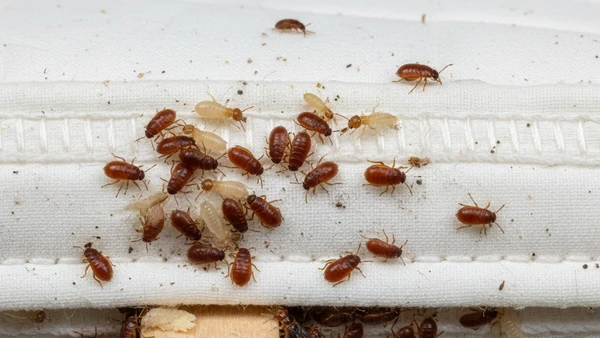
A professional chemical treatment — residual spray on mattress surfaces, furniture, baseboards, and harborage areas — will eliminate the visible population and most of the accessible population. What it doesn't eliminate: eggs inside sealed egg cases, which are resistant to most insecticides.
Bed bug eggs hatch in 6 to 10 days. A single treatment, however thorough, is almost always followed by a visible return of young nymphs from the eggs that survived. This is not treatment failure — it's the biology of the pest. This is why bed bug treatment almost universally requires a second visit 10 to 14 days after the first, specifically timed to catch the hatched generation before they mature and produce new eggs.
With two properly timed visits, the realistic expectation is full elimination of the existing infestation. After that, re-infestation is always an introduction event — brought in from travel, from a guest, from secondhand furniture — not a spontaneous re-establishment. A home successfully treated for bed bugs can stay bed-bug-free indefinitely if no new introduction occurs.
Rodent treatment — ongoing, not one-time
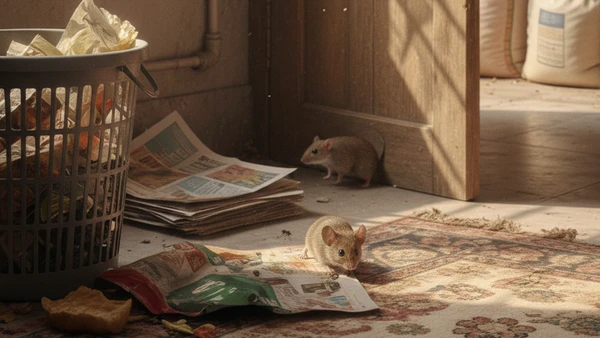
Rodent control doesn't work like insecticide treatment. There's no chemical you apply to the home that eliminates the rodent population and then holds for three months.
Bait stations need to be checked and replenished. Traps need to be reset. And entry point sealing — the thing that actually provides ongoing protection — isn't a treatment at all, it's a physical modification.
The realistic expectation for rodent management in an Indian home: a professional inspection and treatment, including bait placement and entry point assessment, significantly reduces the current population within 2 to 4 weeks. Maintaining that through regular bait station checks — monthly for high-pressure situations, quarterly once the population is under control — is what keeps it. There is no one-time rodent treatment that lasts six months. Entry point sealing is what provides the closest thing to it.
What to do when treatment doesn't last as long as promised
First, check whether the warranty period is still active. Most professional companies offer a 30 to 90 day callback period. If pest activity has returned within that window, call and report it. A reputable company will send someone back.
If the treatment consistently doesn't last as long as expected across multiple cycles — shorter than 6 weeks for cockroaches, for instance — the right conversation is about reinfestation source rather than treatment failure. Where are they coming from? What's been done about entry points? Is the building-level pressure being addressed or is only the individual flat being treated?
The duration question and the reinfestation source question are connected. Treatments last longer when the source is controlled. They don't last at all when the source is the building's shared drain system and no building-level treatment has happened.