There's a gap between how most people think about pests and what the health evidence actually shows.
The mental model is: pests are unpleasant, they're embarrassing, they're a sign the house needs cleaning. Deal with them when they get bad enough to notice. In the meantime, a cockroach here and there, a rat in the wall, mosquitoes in the bedroom — these feel like background noise, not medical risks.
The reality is different. Each common household pest in India carries specific, documented health risks that operate independently of whether you're bothered by the pest's presence. A cockroach you never see is still contaminating surfaces. A rat in the ceiling is still shedding bacteria through its urine. A mosquito you slept through still fed, and may have transmitted something in the process.
Here's what the health picture actually looks like for each major pest category.
Cockroaches
The health risk from cockroaches operates on two levels — acute contamination and chronic allergen exposure — and the second one is the one most people don't know about.
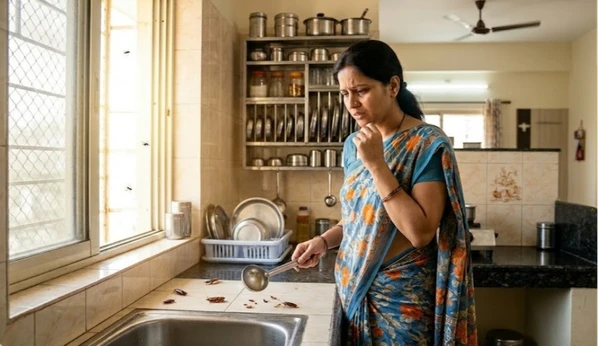
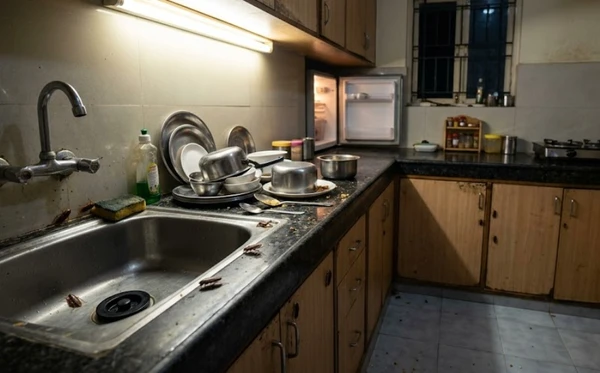
On the contamination side: cockroaches travel between drains, bins, wall voids, and food preparation surfaces continuously. They pick up and carry a range of bacterial pathogens — Salmonella, E. coli, Staphylococcus, Klebsiella — on their legs and bodies, depositing them on surfaces and directly into food they contact. Food poisoning in Indian households is common enough that the connection to cockroach contamination often doesn't get made. The gastroenteritis episode that felt like "something I ate" — if cockroaches have access to your kitchen, the source isn't always the restaurant.
The allergen issue is less visible and builds over time. Cockroach droppings, shed skins, egg cases, and body parts break down into fine particles that become airborne and accumulate in house dust. These particles are potent allergens. Chronic cockroach allergen exposure is one of the identified triggers for persistent asthma in urban Indian children — particularly in households where cockroach infestations aren't adequately controlled. A child with unexplained persistent wheezing or respiratory symptoms in a home with a cockroach problem is worth flagging to a doctor with this connection in mind.
Research published by the Indian Journal of Allergy, Asthma and Immunology has identified cockroach allergens as a significant contributor to childhood asthma burden in Indian cities. This isn't a peripheral finding — it's a direct, documented consequence of long-term cockroach presence in living spaces.
Rats and rodents
Rats are probably the highest direct disease risk of any common Indian household pest. The list of pathogens they carry and transmit is long, and several of them are serious.
Leptospirosis — also called rat fever — is transmitted through contact with water or soil contaminated by rat urine. During and after monsoon flooding, when rat urine mixes with floodwater and then with surfaces throughout a home, leptospirosis risk spikes significantly. Symptoms start like a bad flu — fever, headache, muscle pain — and can progress to kidney and liver involvement. India reports tens of thousands of leptospirosis cases annually, with Rajasthan and several other states being endemic areas.
Hantavirus is transmitted through inhalation of dust contaminated with rat droppings, urine, or nesting material. The risk is highest when disturbing accumulated rodent material in undisturbed spaces — opening a storeroom that's been closed for months, cleaning out a space where rats have been nesting. It's not common but it's severe when it occurs.
Rat-bite fever — Streptobacillus moniliformis — is exactly what it sounds like. Bites from rats, or contact with surfaces contaminated with rat saliva, can transmit it. Children sleeping on ground-level surfaces in rat-infested homes are specifically at risk.
Salmonella from rat droppings contaminating food storage areas is probably the most common day-to-day risk — again, often presenting as food poisoning without the cause being identified.
Beyond pathogens, rats gnaw through electrical wiring. This is not a health risk in the conventional sense but it's a direct physical danger — gnawed wiring inside wall cavities is a documented cause of residential fires in India, and it happens silently over months without any external sign until something fails.
Mosquitoes
The disease burden from mosquitoes in India needs no introduction — dengue, malaria, chikungunya, Japanese encephalitis, and lymphatic filariasis are all mosquito-borne and all active in India.
What's worth saying here specifically is how quickly risk escalates with population density. A single mosquito in a bedroom is a minor nuisance. A breeding site producing mosquitoes inside the home — an uncovered water container, a cooler tray, an AC drip tray — is a continuous exposure risk that scales with the breeding cycle. Ten days from egg to adult, continuously.
In Rajasthan specifically, dengue is not a distant abstract risk. Cases in Jaipur and surrounding districts are reported every monsoon season. The Aedes aegypti that carries it breeds in clean water containers inside homes, bites during the day while people are awake and unprotected, and produces enough offspring from a single container to create significant household exposure.
The consequences of untreated dengue include haemorrhagic complications in severe cases, significant hospitalisation costs, and weeks of recovery. The cost of eliminating a breeding site — or a professional mosquito treatment — is a small fraction of the cost of one serious dengue episode, financially or otherwise.
Children and elderly household members are specifically at higher risk for severe outcomes from mosquito-borne diseases. A household with a mosquito breeding problem and young children or elderly parents is carrying significantly more health risk than the inconvenience framing would suggest.
Bed bugs
Bed bugs don't transmit disease in the way mosquitoes and rats do — this is a genuine difference worth stating. There's no documented pathogen transmission from bed bugs to humans in normal conditions.
But the health consequences of an untreated bed bug infestation are real and underappreciated.
The most direct: allergic reactions to bites. These range from mild local irritation to significant urticarial rashes in people who develop sensitisation over repeated exposure. Some individuals develop severe allergic responses. Secondary bacterial infection of bite sites from scratching is common and occasionally requires treatment.
The less obvious and more significant consequence is sleep disruption. An untreated bed bug infestation means being bitten repeatedly throughout the night, with no control over it. The psychological impact — anxiety about sleeping, constant checking of the bed, hypervigilance — is well documented in pest control and medical literature. Chronic sleep deprivation from persistent nocturnal biting causes real cumulative health effects: reduced immune function, cognitive impairment, mood disruption, worsened chronic conditions.
People who've lived with an untreated bed bug infestation for months — which happens more than it should, because people are embarrassed and delay calling for help — describe it as one of the more psychologically taxing experiences they've had. The health impact of the sleep disruption alone, separated entirely from the bites themselves, is a legitimate medical concern.
Ants and flies — the contamination category
These two get less attention than the more dramatic pests but are worth including for completeness.
Ants walk across drain surfaces, bin areas, and outdoor soil before walking across food preparation surfaces and into uncovered food. The contamination mechanism is the same as cockroaches — physical transfer of bacteria on the body surface. Fire ant stings cause acute pain and, in allergic individuals, anaphylaxis — a genuine medical emergency.
House flies are significant vectors of foodborne illness. A single house fly carries millions of bacteria on its body and in its gut, depositing them on every surface it lands on. The habit of landing on food, regurgitating digestive fluid, and feeding — which is how flies eat — directly contaminates exposed food. Gastroenteritis, typhoid, cholera, and dysentery are all transmitted through fly-contaminated food. Homes with persistent fly problems near food preparation areas are carrying this risk continuously.
Why the cumulative picture matters
Each pest individually carries some risk. Multiple pests simultaneously — which is the reality for most Indian homes during and after monsoon — multiply the exposure. A home with cockroaches in the kitchen, mosquito breeding in the cooler, and rats in the ceiling isn't carrying three separate small risks. It's carrying a compound exposure that affects food safety, air quality, disease transmission probability, and physical infrastructure simultaneously.
The delay in treating these problems doesn't just mean living with inconvenience longer. It means an infestation that was treatable with one visit requires three. It means a child's asthma that might have been avoided has become established. It means a dengue hospitalisation that a ₹1,500 pre-monsoon treatment might have prevented.
None of this is alarmism. It's the documented consequence of common household pest infestations in Indian conditions, laid out plainly.
Pestend provides pest control across Rajasthan for cockroaches, mosquitoes, rodents, bed bugs, and general household pests. Visit pestend.in to book an inspection.