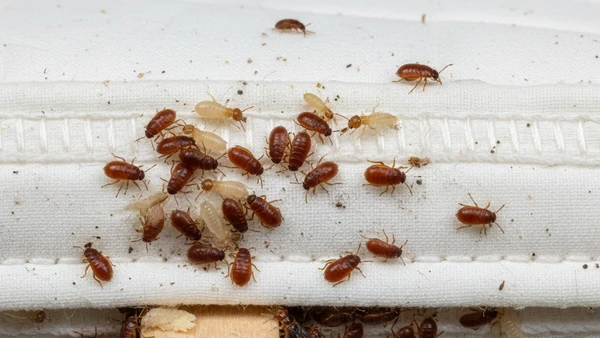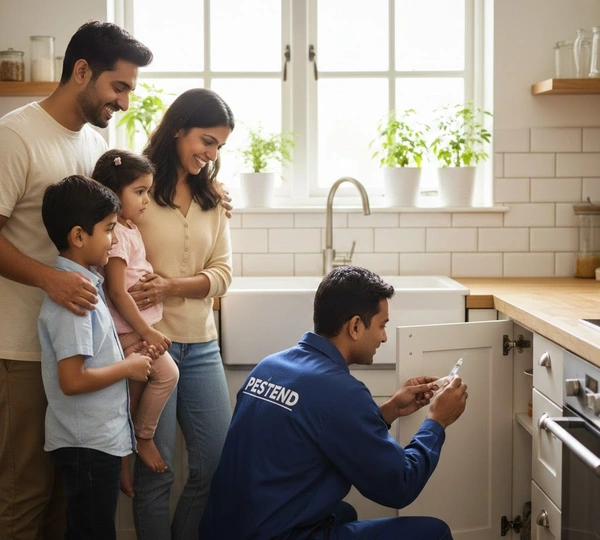
Most people who've had a professional cockroach treatment have seen the result without fully understanding what happened. A technician places small dots of paste in corners, under appliances, inside cabinet hinges — maybe a dozen spots total in a kitchen — and within two to three weeks, the cockroach problem that sprays never solved is gone.
It doesn't look dramatic. There's no spraying, no smell, no need to vacate the house. Which is exactly why people underestimate it. Here's what's actually happening in those small dots of gel.
The basic mechanism
Gel bait combines a slow-acting insecticide with a food attractant — usually something starch or sugar-based that cockroaches find irresistible. The cockroach finds the gel, eats it, and goes back to wherever it came from.
This is the part that matters. The insecticide doesn't kill instantly. It's formulated to take effect over hours, sometimes a day or two, depending on the product and the size of the cockroach. That delay is deliberate, and it's the entire reason gel bait works better than contact sprays for actually eliminating a colony.
Cockroaches are social insects in a loose sense — not like ants or bees with a structured hierarchy, but they do cluster, share spaces, and engage in something called coprophagy and necrophagy. In plain terms: they eat each other's droppings, and they eat dead or dying cockroaches. This sounds unpleasant, and it is, but it's the mechanism that turns one dose of bait into a colony-wide effect.
A single cockroach eats the gel, returns to the harborage area — the dark, undisturbed crack or void where the colony rests during the day — and dies there over the following hours or days. Other cockroaches in that harborage feed on its body and droppings, which still contain active insecticide residue. They die too, and the cycle repeats. This secondary and tertiary kill effect is what reaches cockroaches that never directly touched the original bait placement — including ones hidden deep inside wall voids that a spray could never reach.
Why this is fundamentally different from spray treatment
A contact spray kills on touch. It's fast, visible, and satisfying in the moment — you see cockroaches dying immediately. But it only kills what it directly contacts. Cockroaches hiding inside electrical equipment, deep in wall cavities, inside cabinet joints — completely unaffected.
Gel bait doesn't need contact with the colony directly. It needs contact with a handful of foraging individuals, and the colony-wide spread happens through their natural feeding behaviour. This is why a few small dots of gel, strategically placed, outperform an entire can of spray covering visible surfaces.
It also means gel bait reaches cockroach eggs indirectly, in a way sprays generally don't. While the gel doesn't kill eggs directly, the adult and nymph population that would otherwise protect and continue the colony's reproduction is significantly reduced, breaking the cycle that would otherwise replace each generation.
Where gel is placed and why it matters
Placement is not random, and this is where a professional treatment differs meaningfully from a DIY gel application bought from a shop.
Gel goes near harborage areas, not in open spaces. Inside cabinet hinges, behind the kickplate at the base of kitchen cabinets, in the gap where the countertop meets the wall, inside the motor housing area of refrigerators and other warm appliances, in electrical switch boxes, around pipe penetrations under the sink, and in cracks along baseboards.
The amount used matters too. A pea-sized dot every 30 to 45cm along an active area is generally more effective than larger amounts in fewer spots — cockroaches are more likely to encounter a higher density of smaller placements during normal foraging movement.
Gel placed in open, frequently cleaned areas — exposed kitchen counters, for instance — gets wiped away within days and provides almost no lasting effect. This is the most common reason DIY gel bait purchases from a shop don't work as well as people expect. The product itself is similar to what professionals use, but the placement isn't optimised for where cockroaches actually forage and rest.
How long gel treatment actually lasts
This depends on several factors, but here's a realistic breakdown.
The initial colony reduction — the dramatic visible drop in cockroach activity — typically happens within 7 to 14 days of a proper gel treatment. Most households notice cockroaches becoming far less visible within the second week.
Full elimination of the existing colony, including secondary kills from coprophagy and necrophagy, generally completes within 3 to 4 weeks for a moderate infestation. Severe, long-established infestations with multiple harborage areas can take longer — sometimes 6 to 8 weeks for complete resolution.
The residual protective effect — meaning the gel placements continue to be effective against new cockroaches entering the space — typically lasts 60 to 90 days under normal conditions, assuming the gel isn't disturbed, wiped away during cleaning, or exposed to conditions that degrade it (excessive heat, direct sunlight, or moisture).
After that window, a follow-up application is recommended to maintain the protective barrier, particularly in homes with ongoing exposure to reinfestation — ground floor units, homes near shared drains, properties with frequent deliveries or storage turnover.
What can shorten the effective lifespan
Heavy cleaning around treated areas removes gel faster than expected. If you're scrubbing cabinet interiors weekly with strong detergent, the gel placements there will need more frequent reapplication than in less-cleaned areas.
High humidity and heat — particularly relevant during Indian summers and monsoon — can degrade gel bait faster than in cooler, drier conditions. This is part of why pre-monsoon treatment timing matters; gel applied just before the season of highest cockroach pressure gets the most value from its effective window.
Multiple cockroach generations overlapping — if the original infestation was severe and multi-generational, with eggs hatching at different intervals — can mean the visible population reduces in stages rather than all at once, making it seem like the gel "stopped working" when actually a new hatch is just working through the same bait.
Why DIY gel often underperforms professional gel
The active ingredients available in over-the-counter gel products in India are generally similar in category to what professionals use — fipronil, indoxacarb, and hydramethylnon are common across both. The meaningful differences are concentration, placement expertise, and inspection.
A professional service identifies harborage areas you wouldn't think to check — inside the motor housing of an old refrigerator, behind a loose electrical switch plate, in a gap behind a built-in wardrobe. DIY gel application from a tube bought at a shop typically goes in the obvious places — under the sink, behind the stove — which helps, but misses a meaningful portion of where the colony is actually resting.
Professional treatment also typically includes assessment of why the infestation is occurring — entry points, moisture sources, food access — which DIY application doesn't address. Gel without fixing the underlying conditions reduces the population but doesn't prevent reinfestation as effectively.
What to expect during treatment
No need to vacate the home. No strong smell. No covering food or removing utensils from cabinets where treatment occurs, though it's reasonable to wipe down surfaces in direct food-contact areas as a precaution.
Don't clean treated areas immediately after application — this is the most common way people accidentally reduce the effectiveness of a fresh treatment. Avoid wiping cabinet interiors, hinge areas, and baseboards near placement points for at least a week to let the colony-wide effect develop.
If you see cockroaches still moving around in the days immediately following treatment — that's expected, not a sign of failure. They're actively foraging and finding the bait. Activity often appears to increase briefly before it drops, simply because more cockroaches are out searching as the colony's preferred food sources (your kitchen, basically) compete with the new bait.
Pestend provides professional gel bait cockroach treatment across Rajasthan, including full harborage inspection and entry point assessment. Visit pestend.in to book.