Walk into any hardware store or pharmacy in India and the pest control ↗ aisle is well-stocked. Sprays, gels, traps, powders, ultrasonic devices, sticky boards — there's a product for almost every pest, priced for casual, immediate use.
So the question makes sense: why call a professional and pay significantly more when there's a ₹200 spray sitting on the shelf?
The honest answer is that DIY and professional pest control aren't actually solving the same problem. They look like they're competing for the same job, but they operate at different depths. Understanding that difference is what helps you avoid wasting money on the wrong one.
What DIY products are actually good at
Contact-based products — sprays, in particular — kill what they touch, immediately, in the spot you apply them. If you see three cockroaches on the kitchen counter right now and want them dealt with this minute, a spray works. That's a legitimate use case and DIY products handle it well.
Sticky traps and glue boards are useful for monitoring. Placing a few in suspected activity areas tells you whether you have a problem and roughly how significant it is, even if they don't solve the underlying issue. This diagnostic use is genuinely valuable and cheap.
Simple barrier methods — sealing visible gaps, fitting door sweeps, repairing window mesh — are entirely DIY-appropriate. These don't require professional expertise, and a homeowner doing this work themselves is often more thorough than a rushed professional visit, simply because they have more time and motivation to get it right.
Natural deterrents and bait-style home remedies — boric acid for ants, bay leaves for cockroaches, vinegar trail disruption — have genuine, if limited, effectiveness for small, contained, early-stage problems. For a kitchen ant trail that just started, DIY remedies combined with food storage fixes often resolve it without needing anything more.
Where DIY consistently falls short
The core limitation across almost every DIY method is reach. Contact sprays kill what's visible. They don't penetrate wall voids, they don't reach nests inside furniture, they don't affect eggs protected inside a casing, and they don't follow a colony back to its source.
This is the entire reason gel baits exist as a professional standard — the insect carries the product back to where it actually lives, reaching individuals that were never going to walk across a sprayed surface. Most consumer products available in India don't include this mechanism, or include a weaker version of it.
DIY treatments also tend to be applied inconsistently — once, when the problem becomes annoying, rather than as part of a structured programme. A single spray application doesn't address eggs that hatch two weeks later, doesn't account for reinfestation from outside, and isn't timed to seasonal pest pressure the way a planned schedule is.
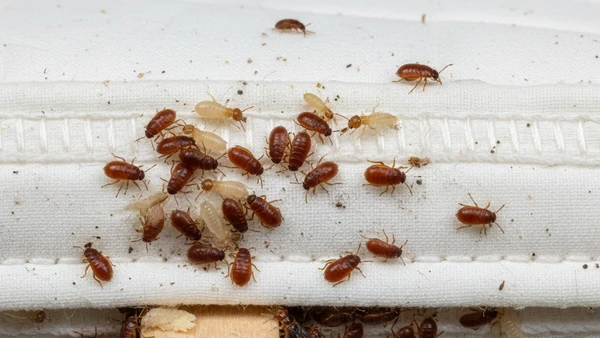
For specific pest categories, DIY is particularly limited. Termites require soil-barrier treatment with specialised injection equipment and termiticide that isn't sold for consumer use — there's no real DIY equivalent for an active termite infestation. Bed bugs hiding inside mattress seams, bed frame joints, and wall cavities are extremely difficult to fully eliminate with consumer sprays, which is why bed bug infestations are one of the most commonly "DIY-failed" pest problems. Rodent infestations beyond one or two individuals usually involve entry points and nesting behaviour that requires a proper inspection to address.
What professional treatment actually adds
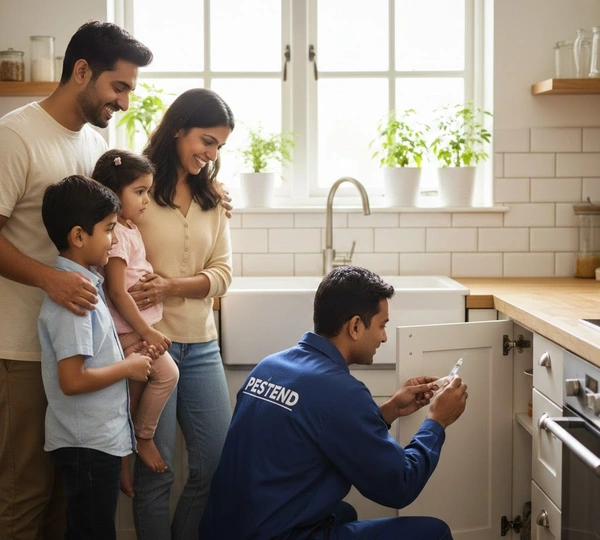
A trained technician identifies the pest species correctly, which changes the treatment approach. The difference between German cockroaches and American cockroaches, or between a wood-eating subterranean termite and a non-structural ant, changes what product and method is appropriate. Misidentification is a common reason DIY treatment fails — people treat the wrong problem.
Professional products are generally more potent and have a longer residual effect than what's available over the counter to consumers in India. This isn't marketing — it's regulatory. Higher-concentration pest control products require licensing to purchase and apply, which is part of why a professional treatment lasts roughly 90 days while a consumer spray's effect fades within days.
Access to application methods that aren't available to consumers — soil injection equipment for termites, professional-grade fogging machines, specialised bait stations — handles categories of problems that simply have no consumer equivalent.
A proper inspection identifies the source, not just the symptom. This is probably the single biggest practical difference. A homeowner sees ants on the counter and sprays the counter. A professional follows the trail, finds the entry point, identifies the likely nest location, and treats accordingly. The same visible problem gets a fundamentally different — and more durable — response.
Documentation and follow-up are part of a structured service, which matters for tracking whether a treatment actually worked and adjusting if it didn't.
The honest cost comparison
DIY products are cheaper per purchase — a spray can costs a few hundred rupees against a few thousand for a professional visit. But the comparison isn't fair if it stops there.
A DIY approach to an established infestation often involves multiple product purchases over weeks or months, repeated applications, and — if it doesn't work, which is common for anything beyond a minor, early-stage problem — eventually calling a professional anyway, except now the infestation has had more time to grow. The total cost, including the wasted DIY spend and the larger professional treatment needed afterward, frequently exceeds what professional treatment from the start would have cost.
For minor, early, visible problems — a few ants, an occasional cockroach, a single mosquito issue — DIY is genuinely the more cost-effective first response. The line where DIY stops making financial sense is roughly: if you've tried a DIY approach once and the problem persists or returns within a couple of weeks, that's the signal the issue is beyond what consumer products can resolve.
A practical way to decide
Use DIY for: monitoring (sticky traps to confirm whether you have a problem), minor visible issues caught early, barrier and prevention work (sealing, mesh repair, food storage), and any situation where you've identified a single, contained source.
Call a professional for: any infestation that's persisted or returned after a DIY attempt, anything involving termites, anything involving bed bugs beyond a single very early sighting, rodent activity beyond one or two individuals, infestations spread across multiple rooms or areas, and any situation where you can't identify where the pests are actually coming from.
A reasonable hybrid approach for most households: handle minor, visible, early-stage issues yourself, maintain prevention work (sealing, storage, cleanliness) as an ongoing habit regardless of whether you're using professional services, and bring in a professional for anything that's established, structural, or recurring despite your own efforts.