You wake up scratching. There are red marks on your arm that weren't there last night. And now you're doing what everyone does — pulling up photos on your phone, trying to figure out what bit you.
The frustrating truth is that bed bug bites and mosquito bites look almost identical at first glance. Both are red, both itch, both swell a little. But the differences between them — once you know what to look for — are actually pretty clear.
And it matters which one you have. Because the fix for a mosquito problem is nothing like the fix for a bed bug problem.
The first clue is the pattern, not the bite itself
This is the thing most people miss. They zoom in on one bite and try to identify it. That's the wrong approach. Step back and look at all the bites together.
Bed bug bites almost always show up in a cluster or a rough line — sometimes called "breakfast, lunch, and dinner" by pest professionals, because the bug feeds, moves a short distance, feeds again. You'll typically find three to five bites grouped together, spaced a centimetre or two apart. On the same patch of skin. In a pattern that looks slightly deliberate.
Mosquito bites don't do this. They appear wherever the mosquito could reach exposed skin — one here, one on the ankle, maybe one on the back of the neck. Random. Scattered. No logic to the placement.
So before anything else — look at the pattern.
When the bites appear tells you a lot
Think back to when you first noticed them.
If you went outside in the evening and came home with bites — that's a mosquito. They're most active around dusk and dawn. You'll feel the itch almost immediately, sometimes within minutes. The bump appears fast, fades fast. Usually gone within a day or two.
Bed bug bites are slower. You won't feel them at all when they happen — bed bugs inject a mild anaesthetic while they feed. The reaction comes hours later, sometimes the next day. And it lingers. The itch from a bed bug bite sticks around for several days, sometimes a week. It also tends to get worse over repeated exposures, not better.
So if you're waking up every morning with new bites that weren't there at night, and they're hanging around longer than they should — that's the pattern of a bed bug problem.
Where on your body matters too
Mosquitoes bite through clothing but prefer exposed skin. You'll find their bites on your forearms, legs, the back of your neck, your face. Anywhere that was uncovered.
Bed bugs can't bite through fabric. They go for exposed skin while you sleep — whatever part of you isn't covered by your sheet or pyjamas. Hands, arms, the side of the neck, ankles. If you sleep on your back and the bites are always in the same few places, that's worth noting.
One is actually dangerous. The other is mostly just miserable.
This part is important for Indian households especially.
Mosquito bites carry real disease risk. Dengue, malaria, and chikungunya are all transmitted by mosquitoes — and all three are active threats in Rajasthan during and after monsoon. If you develop fever, joint pain, or headaches after being bitten, that's not something to wait out at home.
Bed bugs, on the other hand, don't transmit disease. They're not a medical emergency in that sense. But the psychological toll is real. Waking up every night worried about being bitten, not sleeping properly, constantly checking your mattress — it adds up. And the infestation won't resolve on its own.
How to actually check for bed bugs
Here's the thing — if you suspect bed bugs, looking at the bites alone won't confirm it. You need to look at the bed.
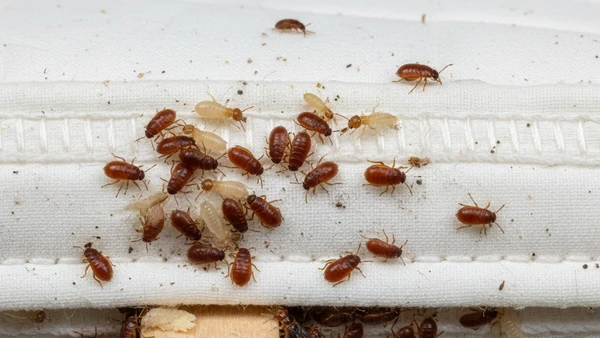
Pull back the mattress at the corners. Check the seams — that's where they hide. Look for tiny dark specks (their droppings), small reddish-brown stains on the fabric (from feeding), or actual bugs, which are roughly the size and colour of an apple seed. Check the gap between the mattress and the bed frame. Check behind the headboard if it's mounted to the wall.
If you find any of those signs, the bites are almost certainly from bed bugs, not mosquitoes.
No signs on the mattress, bites appeared after being outside in the evening, they're fading quickly — that's mosquitoes.
What to do about each one
For mosquito bites the bite itself is usually fine with a cold compress and some calamine lotion. The real work is keeping mosquitoes out — checking for standing water nearby, using window screens, a repellent if you're going outside at dusk.
Bed bugs are a different matter. You can't treat your way out of a bed bug infestation with sprays from a shop. They hide inside the mattress, in the bed frame, behind the headboard, in wall cracks. A professional heat treatment or a proper insecticide treatment that reaches harborage areas is what actually works. Anything short of that and they come back — because the eggs survive.
If you're in Rajasthan and you've spotted the signs, it's worth getting someone in to take a look before the infestation spreads.
Pestend provides bed bug and mosquito pest control across Rajasthan. Visit pestend.in to book an inspection.