Last monsoon, a mason chipped away plaster from our living room wall for a small repair job. He stopped mid-way and just stared at what was behind it.
The wooden beam running behind that wall was completely hollowed out. Surface looked totally normal — painted, smooth, nothing unusual. But press a finger into it and it crumbled like biscuit.
Nobody had noticed. Not once. That's a termite infestation for you.
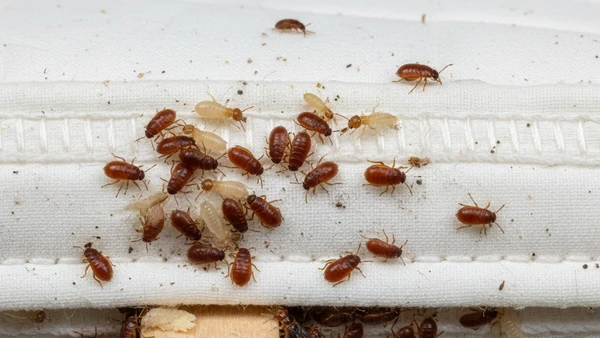
Termites are nothing like cockroaches or rats. They don't show up on your kitchen shelf at night. They live deep inside whatever they're quietly destroying — walls, floors, furniture, door frames — and they keep going for years without a single visible sign on the outside.
By the time something looks wrong, a lot is already gone. That's why catching hidden termite signs in your house early is everything.
Here's what to actually watch for.
1. Your Door Started Sticking — and You Blamed the Weather
Easy assumption. Monsoon humidity, wood expanding, seasonal issue. Sometimes that's exactly it.
But if a door that worked fine for years suddenly drags on the floor, or a window jams for no reason — and it doesn't improve once the season changes — termite infestation is worth considering seriously.
When termites tunnel through a wooden door frame, they release moisture. That moisture gets absorbed into surrounding wood. Wood swells. The frame shifts slightly. The door stops fitting.
It happens so gradually that most people keep dismissing it until the frame is badly damaged. This is one of the most overlooked signs of termites in walls and frames — it just doesn't look like a pest problem at first glance.
2. Mud Trails Behind Furniture or Along the Base of Walls
Move something that hasn't shifted in a while — a heavy cupboard, storage rack, anything kept against a wall for months.
If you find a narrow brown trail running up the wall — pencil-thin, sometimes branching — that's a mud tube. Subterranean termites build these tunnels to travel between their underground colony and the wood inside your home. They can't survive open air, so they build a covered route.
These tubes hide behind furniture, along plumbing pipes, in storeroom corners, near the base of walls nobody looks at regularly.
Finding one is a confirmed hidden termite sign in your house. These tubes don't sit around from old activity — termites maintain and actively use them while the colony is working. If the tube is there, they're using it right now.
3. Hollow Sound When You Knock on Wood
Go to a wooden door frame or skirting board. Knock with your knuckle. Then knock on a nearby section and compare.
Solid wood gives a dense, firm sound. Termite-damaged wood gives back something flatter — almost like knocking on a cardboard box. Dull, slightly echoing, empty.
This is one of the clearest signs of termites in walls and wooden structures. Termites eat inward from behind, leaving the outermost surface completely untouched. Paint looks fine. Plaster looks fine. But a few millimetres behind it — nothing but tunnels.
The hollow sound usually means a fair amount of wood behind that surface is already gone. It's not an early sign. It means the infestation has been active for some time.
4. Fine Powder Collecting Near Wood — and Coming Back
Slightly grainy, pale brown, like coarse sand. Sits at the base of a cupboard, inside a drawer, on the floor near a bookshelf or bed frame.
This is frass — termite droppings. Drywood termites push waste out through tiny exit holes as they tunnel. The pile lands directly below where they're working.
What separates this from ordinary dust: it comes back. Clean the area completely. Check again in three to four days. A fresh pile forming in the exact same spot means an active termite infestation is happening right now inside that wood.
The frass itself isn't the main problem. It's a marker. It tells you exactly where to start looking.
5. Paint on One Wall Keeps Bubbling — Even After Repainting
No water pipe behind it. No visible leak nearby. But one section of wall develops bubbling or blistering paint — and repainting only holds for a season before it starts again.
When termites work inside walls, they generate moisture. That moisture pushes outward through plaster and paint — not dramatically, just enough to lift the surface slightly. It looks exactly like a damp or paint adhesion problem.
This is one of those hidden termite signs in your house that gets misdiagnosed for years. If a specific patch keeps coming back no matter how many times it gets repainted, something behind that wall deserves a proper look — not another coat of paint.
6. Wings Near a Window or Doorway After an Evening
Small, translucent, all the same size — scattered on a windowsill or on the floor near a balcony door. Sometimes just a few. Sometimes quite a pile.
These are from termite swarmers. Once a year — usually just before or during monsoon in India — mature termite infestations release winged reproductives. They fly toward light, mate, drop their wings, and move on. The wings stay behind.
Most people sweep them up and think nothing of it. Big mistake.
Swarmers only come from a colony that's already well-established and mature enough to start expanding. They didn't drift in from somewhere far away — they came from a colony that's already inside or immediately around your home. By the time you're seeing swarmer wings, the original termite infestation has been building for a while.
7. A Faint Musty Smell in One Specific Corner — Always
Not the whole house. Just one wall, one corner, a particular cupboard or storeroom area. A dull, slightly earthy, damp smell that doesn't fully clear even when you open windows.
Termites tunnelling through wood create warm, moist conditions inside sealed spaces. That moisture encourages mould to grow where nobody can see it. The smell that mould produces seeps outward slowly — faint, easy to dismiss, persistent.
If that smell has been sitting in the same specific spot for months and you genuinely can't trace it to any water damage or visible source — it's one of the more subtle hidden termite signs in your house that's worth taking seriously.
What to Do When You Spot These Signs
Don't spray a regular insecticide. It won't kill the colony — it scatters them deeper into the structure and makes proper termite infestation treatment harder.
Don't break open mud tubes or start poking at affected wood yourself. It disturbs the markers a professional needs to understand where the damage actually is.
The termite infestation treatment that works for structural damage — walls, floors, door frames, beams — is the professional drill-fill-seal method. Holes drilled into affected areas, termiticide injected directly into the cavity, sealed after. It targets the colony where it actually lives, not just the surface.
For furniture with early signs, boric acid solution and neem oil can manage limited cases. But anything inside walls or floors needs professional handling — no exception.
PestEnd does full termite inspections and targeted treatment — proper assessment first, then the right treatment for what's actually there.