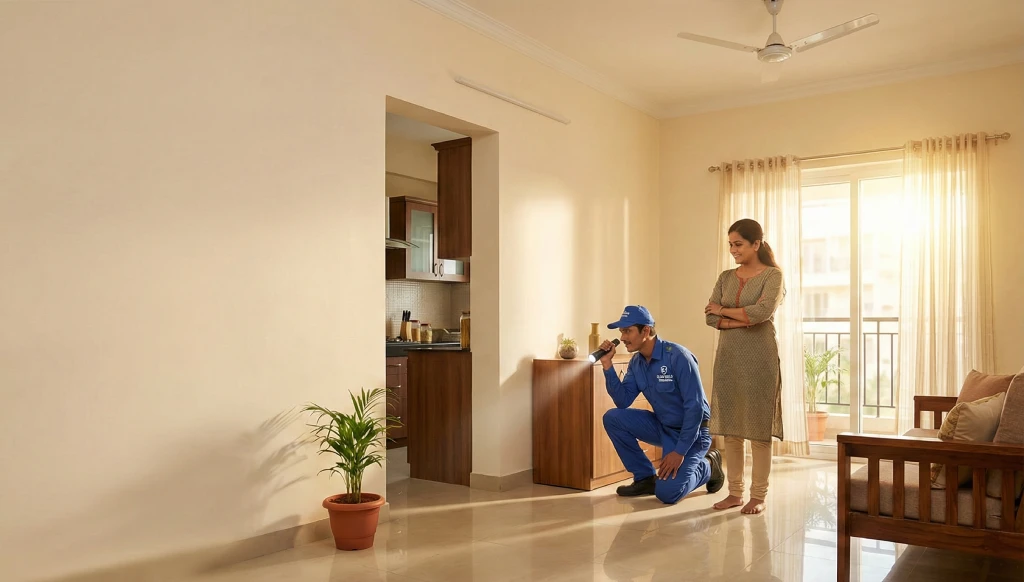
Need pest control in Shamli near you? PestEnd handles termites, cockroaches, rodents, mosquitoes and more across Shamli district. Safe. Warranted. Free inspection. Book today.
Fill form to get a call back in 10 mins
Customized solutions for Shamli's climate and pest problems.
""Termites every monsoon for years — finally treated at the soil level." Every local spray job lasted three to four weeks. PestEnd came and explained that the canal irrigation soil underneath our foundation was staying moist — that was why they kept coming back. They drilled the base of every wall, treated the soil, and sealed all the pipe gaps. Two monsoons have passed since. Not a single sign. First time in years this problem has actually been solved." "
""Cockroaches in our sweet shop — gone same evening, zero smell." "Previous spray jobs had a terrible smell for two days and cockroaches were back in ten days. PestEnd used gel — no smell at all, shop stayed fully open. By morning the cockroaches were dying near the drain. Three months on — completely clean. Told two neighbouring shop owners to call them too.""
""We live near the canal area. Every monsoon, mosquitoes are unbearable for weeks. Dengue scare last year too in our mohalla. PestEnd treated all the drain edges, canal-side waterlogged patches near our lane, and the rooftop water spots. Fogged after. This monsoon was genuinely different. We did not need a single coil inside the house this season." "
Termite mud lines creeping up the wall near your almirah.
Cockroaches in the kitchen after dark. Rats getting into grain storage after harvest. Mosquitoes after the rains. Red bite marks every morning.
You try the local spray. Three weeks later — same problem, same spot.
Shamli sits in the Upper Doab between the Ganga and the Yamuna. The Eastern Yamuna Canal feeds the entire district with irrigation water. Three major sugar mills operate here. Over 80 percent of the land is cultivated.
All that fertility and moisture creates ideal pest conditions — year round, underground, out of sight.
PestEnd serves Shamli and the full district. We treat the real source. Every job has a warranty.
Shamli is one of the most productive agricultural districts in western UP. Sugarcane is the primary crop. Three sugar mills — the Upper Doab Sugar Mill (operating since 1933), Bajaj Hindustan, and Unn Sugar Mill — process cane from hundreds of surrounding villages. Rice and wheat cover the remaining fields.
That agricultural intensity creates pest conditions that most homeowners in Shamli do not connect to their own home.
Underground moisture never goes away here. The Eastern Yamuna Canal delivers irrigation water across the district year-round. The doab alluvial soil — formed over centuries by Ganga and Yamuna silt deposits — absorbs and holds that moisture deep underground even in dry summer months. Subterranean termites live at exactly that depth. They travel through that hidden moisture and enter your home's foundation from below — silently, for months, before anything is visible above the surface.
Post-harvest rodent displacement hits every season. When sugarcane fields are cleared between December and February — the main crushing season for Shamli's three mills — thousands of field rats lose both food and shelter at the same time. They flood into nearby homes, shops, jaggery units, grain stores, and cold storage facilities. This happens every single year without fail.
Sugar and jaggery industry creates its own pest pressure. Gur production units, sugar mill surroundings, and grain storage near the mandi attract cockroaches, flies, and rodents heavily. Warm, food-rich environments with constant human traffic are ideal for rapid pest spread.
Dense residential areas share drainage. At 1,200 persons per square kilometre, Shamli is one of the most densely populated districts in UP. Cockroaches and bed bugs ↗ spread between adjacent homes and shops through shared drainage stacks and walls. Treating one property alone gives temporary results when the source is next door.
Spray the surface. The colony survives underneath. Give it three weeks — the same pests appear in the same corner.
Termites destroy wood from the inside. Door frames, almirahs, window panels, flooring, ceiling beams — all vulnerable. They build hidden mud tube tunnels through walls from the soil below. By the time you hear hollow wood when you tap it, the damage has been ongoing for months.
Shamli's Upper Doab alluvial soil holds deep moisture year-round from canal irrigation. Subterranean termites use that moisture channel at foundation depth to reach your home from below. Spraying wood above the surface never touches the colony — which lives in the soil, not in the wood.
Signs to check for: hollow sound in wooden items when tapped, thin mud lines along skirting boards or near wall pipes, wings shed near light sources on monsoon evenings, crumbling furniture legs, and doors or windows that suddenly stick for no clear reason.
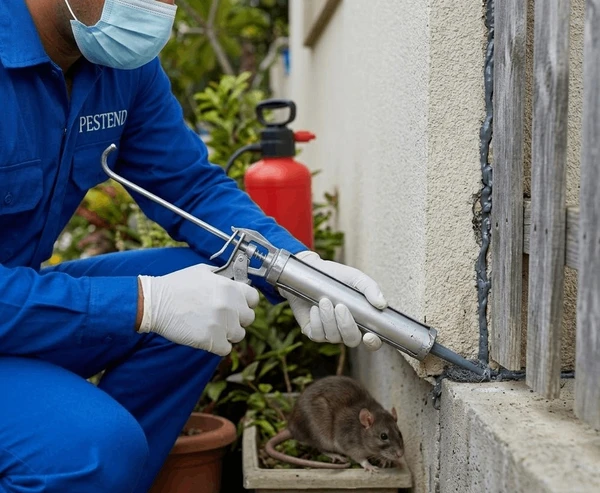
How we fix it: We drill at regular intervals along all wall bases — inside and outside. Termiticide is injected under pressure into the foundation soil, creating a chemical barrier the colony cannot cross. Every drill point is sealed with white cement. Every entry gap near plumbing, AC drainage, floor joints, and wall cracks is sealed shut. Pre-construction treatment — done before the floor slab is poured — permanently prevents the problem at a fraction of repair costs. Post-construction treatment for existing properties works effectively and carries a long warranty.
Cockroaches carry over 30 types of bacteria. They contaminate kitchen surfaces with salmonella, typhoid, and dysentery organisms through their droppings and movement. Their shed skins trigger asthma in children. One female produces 300 to 400 offspring in her lifetime.
They do not live where you see them. They nest inside cabinet hinges, behind refrigerator motors, under sink drain joints, inside electrical switch boxes, and within wall pipe gaps. Spray treatment only kills the visible ones. The colony inside fittings and wall voids survives and keeps producing new cockroaches every week.
In Shamli's dense market lanes — especially near jaggery units, sweet shops, and grain mandis — cockroaches travel freely between adjacent businesses through shared drainage. Treating one shop helps temporarily. They come back through the same shared pipe within days.
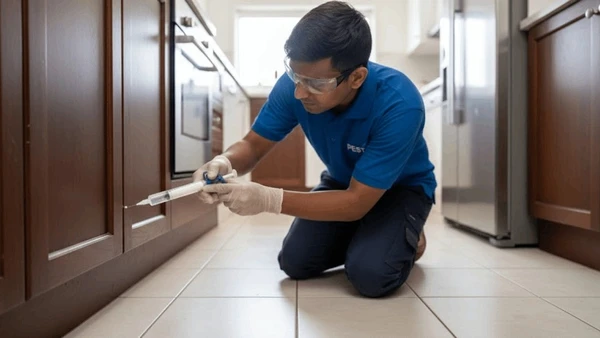
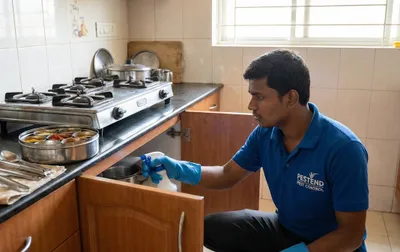
How we fix it: Odorless gel bait is placed in tiny amounts inside the exact spots where cockroaches live and breed — inside hinges, behind appliances, near drain entries. No spray. No smell. Kitchen stays open. You stay home. Cockroaches carry the bait back to the colony. The entire nest dies in 24 to 48 hours. Results hold three to four months. For commercial properties sharing drainage with neighbours, we seal the stack entry points after treatment to stop re-migration.
Rats chew through electrical wires — causing fires. They contaminate ten times more food than they eat through droppings and urine. They carry leptospirosis, plague, and hantavirus. In sugar mill surroundings and jaggery production units, they damage raw material and finished stock directly.
In Shamli, the post-harvest rodent surge is one of the most predictable pest events of the year. The December-February crushing season clears sugarcane fields across hundreds of villages simultaneously. Tens of thousands of field rats lose food and shelter at the same time and move into the nearest homes, shops, and storage facilities. Ground-floor properties near agricultural land get hit hardest.
Poison alone never solves this. It kills some rodents but leaves every entry point open. New ones arrive from outside within days.
How we fix it: Full property inspection to locate every entry gap — behind pipes, under doors, along wall-floor joints, inside false ceiling gaps, through drainage openings, near AC units. All gaps sealed. Professional traps placed inside. Decontamination of affected areas after capture. For jaggery units, sugar mill facilities, godowns, and cold storage — we build site-specific treatment plans.
Mosquitoes transmit dengue, malaria, and chikungunya. They breed in any standing water — blocked drains, terrace puddles, cooler containers, pot saucers, overhead tank gaps, and waterlogged ground near canal-side areas.
The real issue is larvae, not adults. Fogging kills today's mosquitoes. The larvae hatching in breeding spots keep producing new adults every few days. Most fogging treatments last four to five days because the source is never treated.
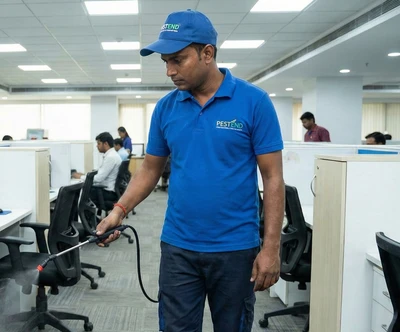
How we fix it: Every breeding spot around your property is identified and treated first. Drain edges, waterlogged patches, terrace corners, and overhead tank surrounds get larvicide treatment. Only after breeding spots are addressed do we fog open spaces. This gives results that last weeks, not days.
Bed bugs spread through luggage, second-hand furniture, and shared linen. They are increasingly common in Shamli's rental accommodation and guesthouses near the Delhi-Yamnotri highway corridor.
They hide in mattress seams, sofa joints, wooden headboards, wall cracks, and electrical switch gaps — spots standard spray never reaches. They survive months without feeding. Signs include red bite marks in rows on exposed skin, small blood spots on bedding, and a faint sweet-musty smell in heavily infested rooms.
How we fix it: Heat treatment raises temperature in mattresses and furniture above the survival level of bed bugs and eggs. Chemical treatment is applied inside wall cracks and furniture joints. Follow-up inspection confirms complete elimination.
Ants, flies, lizards, wood borers, spiders, silverfish — each needs a specific approach. Gel bait for ants. Residual spray for flies and lizards. Injected insecticide for wood borers inside affected timber. We identify what your property actually has and build a targeted plan.
Free inspection first. We visit your home or property. Check every corner — where pests enter, hide, and breed. No charge.
Your own plan. Not a standard package. Built around your actual problem and property.
Safe treatment. Government-certified chemicals. Odorless wherever possible. Safe for children and pets. Most jobs need no vacating.
Warranty on every job. Pests return in the warranty period — we come back and re-treat. No extra cost. No conditions.Tell us your location and the problem. We call back the same day. Free inspection. Clear price after we see the actual issue. No hidden charges.