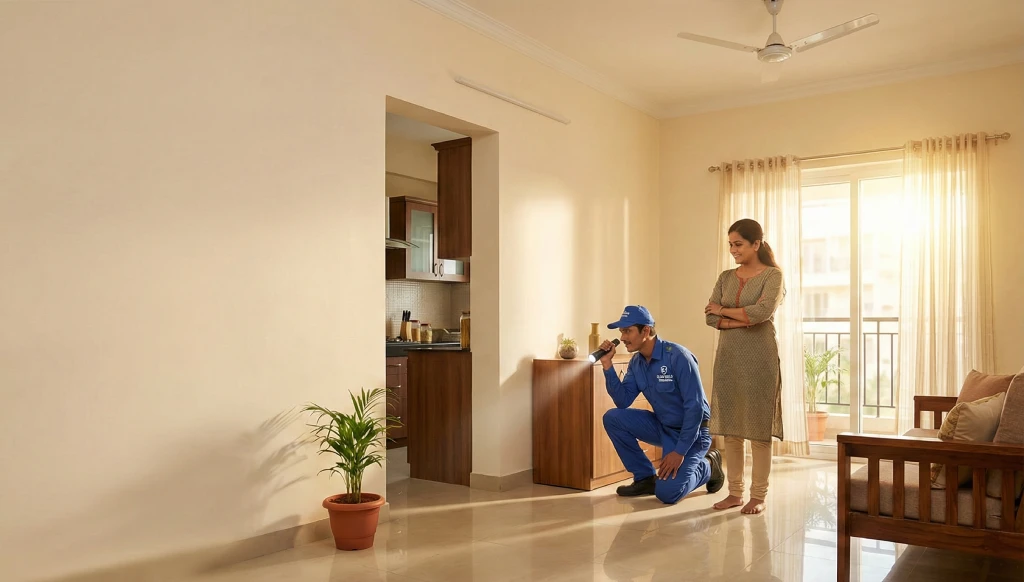
Pest control in Rohtak for homes, PGIMS area, sector colonies, agricultural fringe & offices. Termites, cockroaches, bed bugs, rodents & mosquitoes. Free inspection, transparent pricing, warranty. Call PestEnd.
Fill form to get a call back in 10 mins
Customized solutions for Rohtak's climate and pest problems.
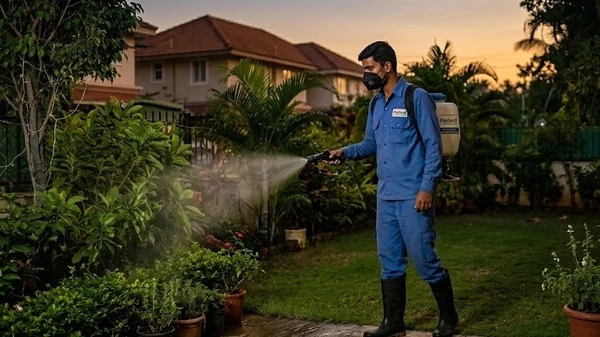
""Mosquitoes every evening through October despite the municipal fogging van coming regularly. PestEnd explained the lake breeding source issue — nobody had ever said that before. They treated the accessible water patches around the lake side and fogged. Still holding 3 weeks later. Longest it's been clear.""
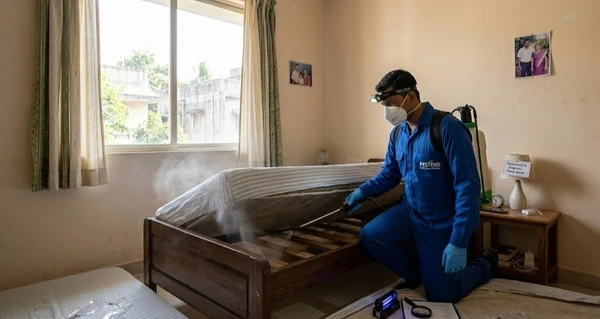
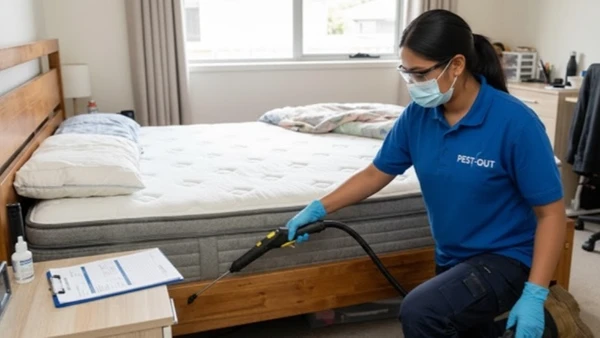
""Staff quarter hostel — bed bugs in two rooms discovered during a room change. PestEnd heat treatment done within 48 hours. Both rooms cleared properly. They advised treating all adjacent rooms in the same visit which we did. Fast, discreet, and thorough.""
""Ground-floor house near the paddy fields — rodents every October and November without fail. PestEnd found gaps in the compound drainage channel footing and sealed them before the harvest. Nothing came through this season. First time in 3 years.""
Rohtak gets described as a satellite city. Close to Delhi, growing fast, filling up with sector colonies and new societies built for families who work in the capital and sleep in Haryana.
That description is accurate. What it leaves out: Rohtak has its own specific pest geography that has nothing to do with Delhi proximity.
Start with Tilyar Lake. A permanent water body sitting inside the city — the Tilyar Tourist Complex lake doesn't drain between seasons. It holds. Year-round standing water in a residential urban zone creates year-round mosquito breeding. Rohtak residents near the lake deal with mosquito pressure in October and November that the city's drier inland zones don't experience. Fogging the neighbourhood without treating the lake-adjacent breeding sources resets within days.
Then the agriculture. Rohtak district grows wheat and paddy. Paddy is the key — rice cultivation requires standing water in fields during the kharif season. That standing water in paddy fields on the city's agricultural fringe is exactly the mosquito breeding source that city-centre fogging campaigns can't address. And paddy harvesting, typically October–November, displaces field rats and other agricultural rodents inward, into the residential edge. The harvest-season rodent pressure in Rohtak's fringe sectors is predictable, heavy, and comes every year.
And PGIMS. Post Graduate Institute of Medical Sciences — one of Haryana's major medical campuses. Student hostels, staff quarters, residential accommodation for thousands of people with varying turnover. Bed bugs in high-turnover institutional accommodation spread silently across shared rooms before anyone files a complaint.
Pest control ↗ in Rohtak that doesn't account for Tilyar Lake, paddy field seasonal cycles, and PGIMS campus dynamics is a generic service.
Tilyar Lake perimeter — areas near the lake and the Tilyar Tourist Complex residential belt — the most sustained mosquito zone in the city. Lake water doesn't drain. Breeding cycles reset continuously. Properties within 500 metres deal with mosquito activity into November in good monsoon years. Fogging alone gives 5–7 days of relief before the lake-sourced population replenishes. Larvicide in accessible standing water sources around the perimeter combined with fogging is what produces results that hold week on week.
Sector colonies on the Delhi-facing side — Sectors 1 through 14 and beyond on the NH-10 corridor — the fastest-growing residential belt. New construction on Ghaggar basin alluvial soil, 3–8 year old societies, dense flat complexes. Termites establish in the foundation soil in this type of construction before possession and show up at door frames and skirting in years 2–3. The density of shared-drainage flat complexes means cockroach problems in one unit recycle through the shared pipe stack to adjacent flats — treating one flat in a multi-storey block is incomplete.
PGIMS campus and the surrounding student-staff residential belt — high-turnover hostels, staff quarters, residential accommodation near the medical university on Sonepat Road. Bed bugs establish silently in shared accommodation and spread through mattress contact before any single occupant identifies the source. The institution's high intake-and-discharge rate for student and patient accommodation means reintroduction happens regularly throughout the year.
Model Town, Civil Lines, and government-era colonies — older Rohtak construction from the 1960s–80s. Original woodwork in some government quarter bungalows, aging drainage infrastructure, shared-wall constructions in the denser colony sections. Termite activity in these properties follows the same institutional housing pattern seen across every Haryana government colony — annual treatment manages it, proper perimeter renewal fixes it.
Paddy belt fringe — agricultural transition zones on the Jhajjar Road and Bahadurgarh Road edge — harvest-season rodent displacement from paddy fields is the primary pressure here. Field rats follow drainage channels and irrigation ditches inward when rice is cut. Ground-floor residential units in the 200–500m fringe zone beyond the paddy fields see a predictable October–November rodent surge. Sealing before harvest is significantly more effective than dealing with an active influx.
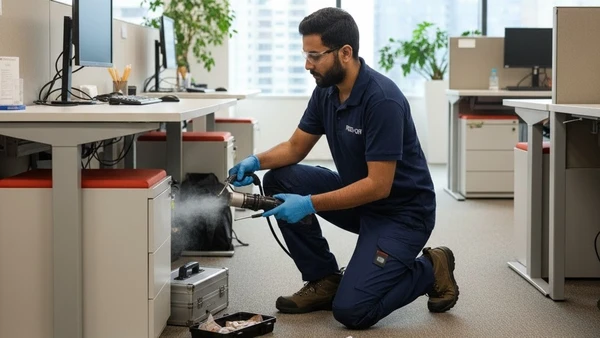
Rohtak industrial estate and the Bahadurgarh corridor — factory worker housing adjacent to light industrial units, food processing and packaging storage. The pattern repeats: factory organic waste sustains rodent and cockroach populations that cycle outward into adjacent residential areas. Sealing is the step that breaks the cycle.
Termites Sector colony new flat, Civil Lines government quarter, new society on Jhajjar Road fringe — approach matches the property. For Ghaggar basin alluvial soil in the sector colonies, the soil holds moisture longer than sandy North Indian soil — partial perimeter treatment degrades faster here. We drill the full foundation perimeter, inject termiticide at correct depth, seal every breach. For new construction under 3 years old in the outer sectors, pre-flooring soil treatment may still be accessible — cheaper than full post-possession drilling. Free inspection confirms the stage.
Cockroaches Sector colony multi-storey flats, PGIMS staff quarters, commercial kitchens near the old city market and Delhi Road — odorless gel bait placed in exact harbourage points: pipe chases, behind modular kitchen panels, wall-floor joints. No prep. No smell. No vacating. Active next morning. Holding 3 months later. For multi-storey complexes sharing a drainage stack, we advise on pipe-entry sealing that limits re-entry from adjacent flats — treating one unit in a block without addressing shared entry gives temporary results.
Mosquitoes Tilyar Lake perimeter zones, paddy field fringe during kharif season, society sump tanks and open plots in the outer sector belt — larvicide in every accessible standing source before fogging. For Tilyar-adjacent properties, fogging without larvicide gives one week of quiet before the lake-adjacent breeding sources replenish the population. Both steps together holds significantly longer.
Bed Bugs PGIMS campus hostels and staff quarters, transit hotels near Rohtak Junction and the Delhi Road, PG accommodations near MDU (Maharshi Dayanand University) — high turnover, consistent reintroduction. Heat treatment combined with targeted chemical application clears adults and eggs. Standard spray alone moves them to the next room. For institutional accommodation with multiple shared rooms, treating all affected rooms in one visit is the only approach that produces lasting results.
Rodents Paddy field fringe ground floors on Jhajjar and Bahadurgarh Road edge, industrial estate residential units, old city compound walls with original drainage gaps — harvest-season rodent sealing before October is the smart intervention. We bait, locate every real entry point, seal with material they cannot gnaw through. Without sealing, the harvest-season field rat pressure refills the space within weeks.
General Pest Control Ants, silverfish, spiders, lizards — one visit covers all. April pre-monsoon is the right timing. Rohtak's agricultural fringe and the early North Indian monsoon onset make pre-treatment before June important.
|
Service |
1 BHK |
2 BHK |
3 BHK |
|
₹999 |
₹1,299 |
₹1,599 |
|
|
Termite Treatment |
₹3,500 |
₹5,500 |
₹7,000 |
|
Bed Bug Treatment |
₹1,499 |
₹2,599 |
₹3,499 |
|
Mosquito Control |
₹999 |
₹1,899 |
₹2,599 |
|
General Pest Control |
₹899 |
₹1,299 |
₹1,599 |
|
Rodent Control |
₹1,500 |
₹2,500 |
₹3,000 |
This is the pest control services in Rohtak price for standard residential properties. Government colony bungalows, PGIMS institutional buildings, large industrial-edge commercial units, and multi-storey society AMC contracts quoted separately after inspection. Price confirmed before treatment — nothing added on the day.
For pest control Rohtak contact number, call the direct line at the top of this page. We pick up directly — no hold queue, no routing. Book within the same call.
We cover: Civil Lines · Model Town · Sector 1–14 · Delhi Road corridor · Sonepat Road · PGIMS campus belt · MDU area · Tilyar Lake zone · Jhajjar Road · Bahadurgarh Road fringe · Sunaria Road · Delhi Bypass road · Old Rohtak · Asthal Bohar · Industrial Estate · Makrauli · Khokri · Dighal Road edge and surrounding localities.
Not listed? Call — confirmed in minutes.
Free inspection first. Within 24 hours. Sector colony flat or Civil Lines bungalow — inspection depth suits the property. We assess infestation level, entry points, agricultural and lake-zone external pressure, what is actually sustaining the problem. Free. No commitment.
Fixed price after inspection. Confirmed before treatment begins. Nothing changes on the day.
Treatment. We bring all equipment. Standard flats done in 1–2 hours. Exact re-entry timing per room before we leave.
Follow-up at 7–10 days. Activity in the warranty window? We return. No charge.
Book your free inspection — no pressure, just find out what's actually there and what it costs to fix.