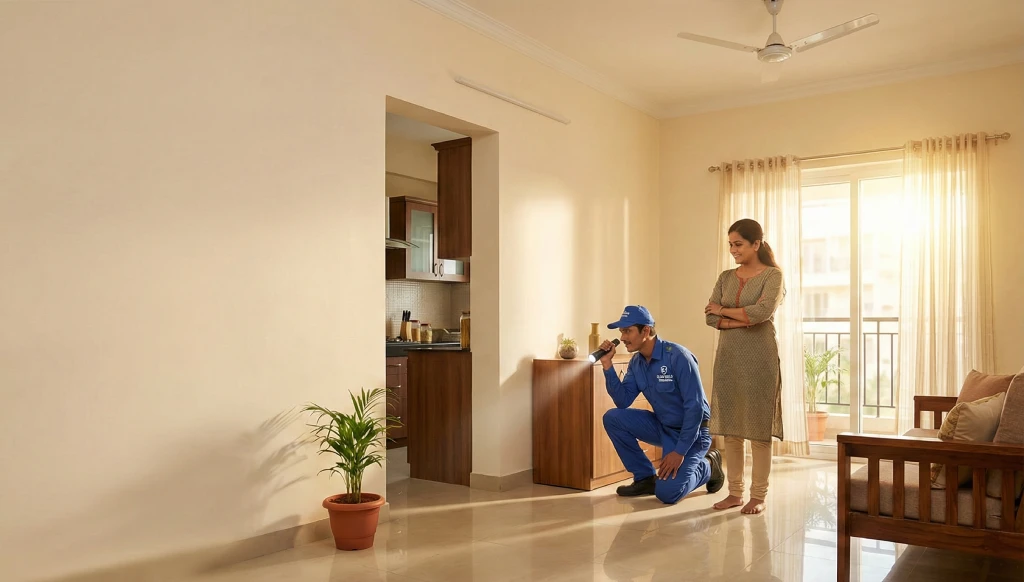
Pest control services in Rewari for homes, railway junction accommodation, Sahibi floodplain properties & offices. Termites, cockroaches, bed bugs, rodents & mosquitoes. Free inspection, fixed pricing, warranty. Call PestEnd.
Fill form to get a call back in 10 mins
Customized solutions for Rewari's climate and pest problems.
""House near the Sahibi side — termites in the kitchen skirting and one door frame. Previous treatment wore off within a monsoon. PestEnd explained the floodplain moisture issue — never heard that before. Full perimeter done. Eight months clear. First time it's held past one monsoon.""
""Cockroaches in the kitchen near the metalwork lane — back within weeks of every treatment. PestEnd gel treatment and sealed the drainage pipe at the back wall. Gone next morning and still clear at 4 months. The sealing was what finally made it last.""
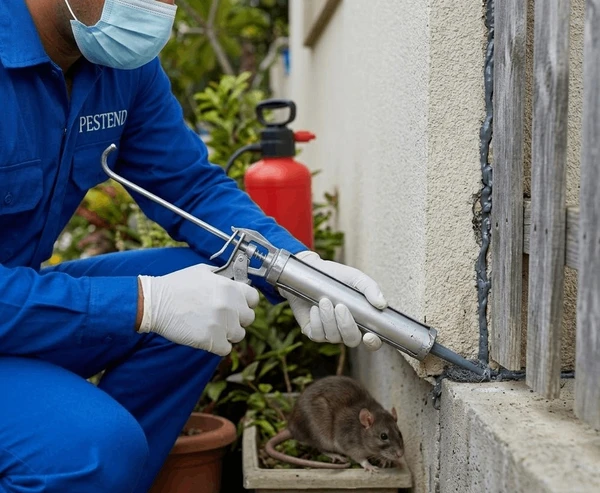
""Ground-floor house near the mustard fields — rodents in spring at rabi harvest time. PestEnd sealed the compound drainage gaps in February before harvest. Nothing came through in April. First time in 3 years the spring pressure didn't arrive.""
Rewari sits at the southern edge of Haryana, where the state meets Rajasthan. The Aravalli ranges begin here. The landscape gets drier as you go south. Rewari's annual rainfall is among the lowest in Haryana — 450mm in a decent monsoon year, often less.
On the surface, this looks like a low-termite-risk city. It isn't.
The Sahibi river — locally known as Krishnavati — runs through the Rewari district. It's a seasonal river, often dry for months, but when it flows during monsoon it carries significant volume and floods the low-lying residential stretches along its banks. That flooding leaves alluvial moisture trapped in the sub-surface soil of the Sahibi corridor long after the surface appears dry. Properties near the Sahibi banks — the residential stretches in Dhola, the low-lying parts of the old city, the areas toward Kosli — sit on floodplain soil that retains foundation moisture well past October. Termites don't read rainfall data. They read soil moisture at 30–60cm depth. In Sahibi-adjacent zones, that moisture is there when the surface says it isn't.
The second dimension is the railway. Rewari Junction connects five rail lines — it's one of the busiest junction points in North India's railway network for locomotive maintenance and goods traffic. Transit accommodation near the station — lodges, guesthouses, budget hotels — cycles through a volume of travellers, truck drivers, and migrant workers that few Haryana cities outside Faridabad or Gurugram can match. Bed bug reintroduction at a busy railway junction is consistent, year-round, and not seasonal.
The third is the Aravalli-adjacent agricultural fringe. Rewari's wheat and mustard belt is different from north Haryana's paddy zone — the harvest timing is different (rabi, April–May for wheat), the rodent pressure pattern is different, and the dry-season soil conditions create a different kind of rodent movement than paddy-field displacement.
Pest control ↗ in Rewari that starts with "like many other urban areas" is not a Rewari service.
Sahibi river floodplain residential belt — areas near the river course in Dhola, the old city low-lying stretches, and Kosli Road — the most termite-active zone in Rewari. Post-monsoon, the Sahibi's floodplain soil holds moisture at foundation depth through November and December in the residential areas closest to the river. Properties here experience termite activity well into winter when the city's elevated zones are dry. Treatment on the Sahibi belt needs complete perimeter coverage — partial drilling degrades in these moisture conditions before the following monsoon.
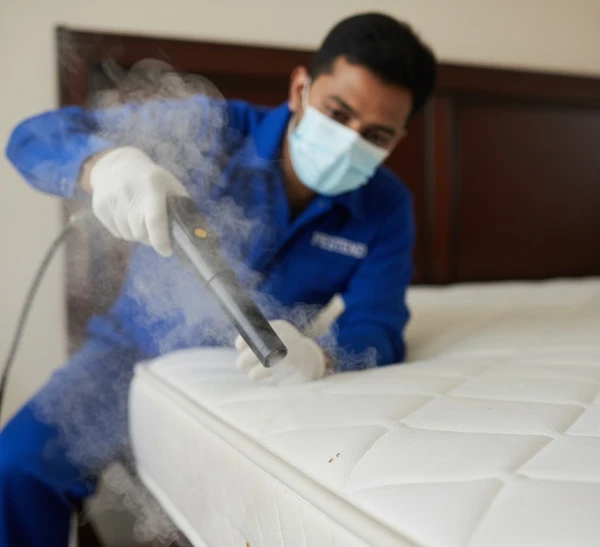
Rewari Junction and the railway colony belt — the station's transit volume creates one of Haryana's more active bed bug zones outside the NCR. Truckers' lodges on the approach roads, railway worker colony housing, budget guesthouses near the platform — high turnover, consistent reintroduction. One infested room seeds adjacent rooms through shared plumbing before anyone reports it. Heat treatment clearing eggs alongside adults is the approach that breaks the cycle. Standard spray creates a revolving-door situation at high-turnover properties.
Brass and metal manufacturing belt — the Rewari industrial corridor — Rewari's metalwork and light manufacturing units generate organic waste from finishing and plating processes that sustains cockroach populations in adjacent residential areas. The pattern is consistent with every industrial-residential mixed zone in this series: gel bait works in the flat, but drainage-pipe entry sealing is what stops the industrial perimeter from resetting results within weeks.
IMT Rewari and the Delhi-Mumbai Industrial Corridor zone — new industrial development, worker housing, construction labour accommodation in the vicinity of the developing industrial corridor. Transit worker accommodation with rapid occupant changeover — bed bug introduction risk in this zone is significant and growing as construction activity increases.
Old city and the Rao Tula Ram Chowk heritage area — dense old Rewari construction, shared boundary walls, original drainage infrastructure in the bazaar lanes. Cockroaches in the old city market kitchen zone follow the familiar collective pattern — shared drainage stack, treating one unit in a terrace row gives temporary relief. Older properties near the heritage construction belt have original woodwork in some cases, with the associated termite history.
Wheat and mustard agricultural fringe — Dharuhera Road, Bawal Road, Kosli Road edge — the rabi harvest in April–May creates a rodent displacement pattern different from paddy zones. Wheat and mustard harvest displaces field mice and rats inward, but the timing is spring rather than autumn. Ground-floor properties on the agricultural fringe deal with two rodent pressure peaks — one at rabi harvest in April and a secondary movement when monsoon floods drive rodents from low-lying agricultural land in August.
Termites Sahibi floodplain property near Dhola, old city construction near Rao Tula Ram Chowk, new IMT Rewari zone flat — approach matches the structure. For Sahibi riverside properties with seasonal post-flood soil moisture at foundation depth, complete perimeter coverage at correct injection depth is essential. Lighter treatment degrades before the following monsoon in these alluvial soil conditions. For old city properties with original woodwork, we treat at soil foundation level without disturbing existing timber elements or plaster surfaces. For new construction in the IMT zone under 3 years old, pre-flooring soil treatment is still accessible — significantly cheaper than full post-possession drilling.
Cockroaches Rewari industrial corridor residential flats, old city bazaar lane kitchens, commercial kitchens near the railway station market — odorless gel bait in exact harbourage points: pipe chases, behind modular panels, wall-floor joints. No prep. No smell. No vacating. Active next morning. Holding 3 months later. For industrial-corridor properties with metalwork processing drainage re-supply, pipe-entry sealing after gel treatment is what stops the factory perimeter cycling back in.
Mosquitoes Sahibi river floodplain low-lying pockets near Dhola and Kosli Road, open plots in new IMT zone societies, society sump tanks — the Sahibi's monsoon flooding creates standing water in the low residential pockets that persists into October. Larvicide in every accessible source before fogging. Fogging alone gives one week before the floodplain-adjacent sources replenish the population. Both together holds.
Bed Bugs Railway station lodges and guesthouses near Rewari Junction, IMT zone worker accommodation with rapid occupant changeover, transit hotels on the Delhi–Rewari NH-48 corridor — high-volume reintroduction. Heat treatment combined with targeted chemical application clears adults and eggs both. Standard spray relocates them. For railway-adjacent accommodation properties, treating all rooms in one visit is the only lasting approach — bed bugs spread room to room faster than lodges typically detect.
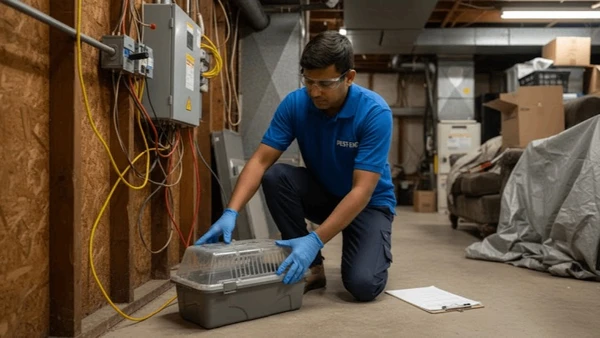
Rodents Wheat and mustard fringe ground floors on Bawal and Dharuhera Road edge, Sahibi riverside compound walls with original drainage gaps, old city properties with kuccha boundary gaps — both rabi harvest spring pressure and monsoon displacement need to be accounted for. We bait, locate every real entry point, seal with material they cannot gnaw. For agricultural-fringe properties, post-monsoon August sealing and pre-rabi March sealing are the two key timing windows.
General Pest Control Ants, silverfish, spiders, lizards — one visit covers all. March pre-rabi or April pre-monsoon are both valid timing windows for Rewari's dual agricultural pressure cycle. Earlier is always better than waiting until pests are already established.
|
Service |
1 BHK |
2 BHK |
3 BHK |
|
₹999 |
₹1,299 |
₹1,599 |
|
|
Termite Treatment |
₹3,500 |
₹5,500 |
₹7,000 |
|
Bed Bug Treatment |
₹1,499 |
₹2,599 |
₹3,499 |
|
₹999 |
₹1,899 |
₹2,599 |
|
|
General Pest Control |
₹899 |
₹1,299 |
₹1,599 |
|
Rodent Control |
₹1,500 |
₹2,500 |
₹3,000 |
Railway junction lodges, IMT worker accommodation complexes, industrial corridor commercial units, and Sahibi floodplain heritage properties quoted separately after inspection. Price confirmed before treatment — nothing added on the day.
Searching for pest control in Rewari near me? We serve:
Rewari town · Rewari Junction area · Old City · Rao Tula Ram Chowk · Dhola · Sahibi riverside belt · Kosli Road · Dharuhera Road · Bawal · Bawal Road corridor · IMT Rewari zone · Delhi Road (NH-48) belt · Industrial area · Railway Colony · Palhawas · Jatusana · Guriani · Majra Dhani · Nahar · Kund and surrounding localities.
Not listed? Call — confirmed in minutes.
Call PestEnd directly — number at the top of this page. No hold queue. We pick up, confirm your locality, and book within the same call. Most inspections happen within 24 hours.
For pest control in Rewari contact number — the direct line at the top of this page reaches us any day of the week.
Free inspection first. Within 24 hours. Sahibi floodplain property, railway station adjacent lodge, or new IMT zone flat — inspection depth suits the structure. We assess infestation level, entry points, floodplain and industrial external pressure. Free. No commitment.
Fixed price after inspection. Confirmed before treatment starts. Nothing changes on the day.
Treatment. We bring all equipment. Standard flats done in 1–2 hours. Exact re-entry timing per room before we leave.
Follow-up at 7–10 days. Activity in the warranty window? We return. No charge.
Book your free inspection — no pressure, just find out what's actually there and what it costs to fix.