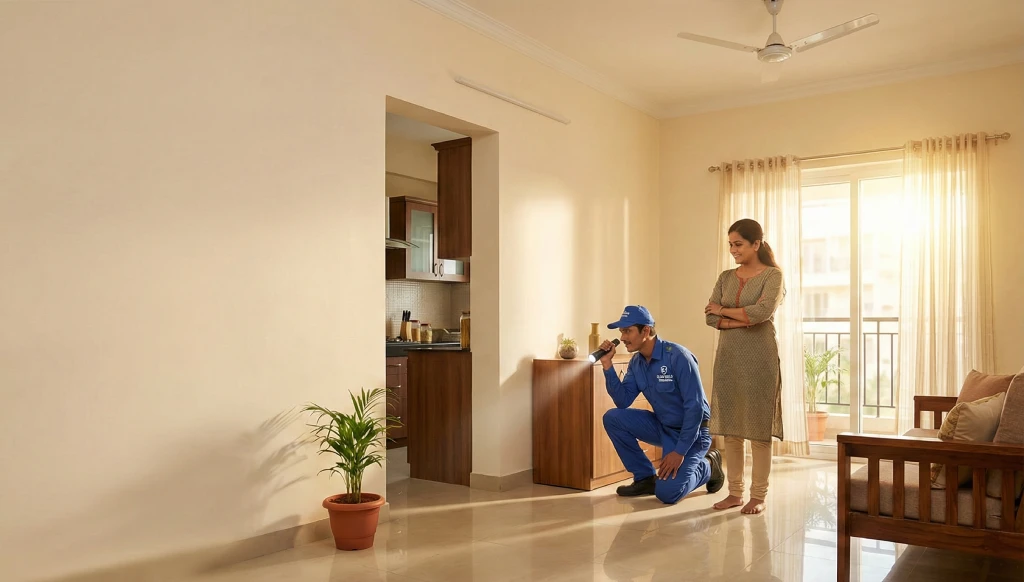
Pest control services in Morbi for homes, ceramic belt worker colonies, GIDC-adjacent residences & offices. Termites, cockroaches, bed bugs, rodents & mosquitoes. Free inspection, fixed pricing, warranty. Call PestEnd.
Fill form to get a call back in 10 mins
Customized solutions for Morbi's climate and pest problems.
""Post-monsoon mosquitoes from the river-bank low area behind the colony. PestEnd treated the standing water patches and fogged. Clear improvement by day 3. Follow-up call came as promised. Honest, good work.""
"New flat, 4 years old — first signs of termites in the bedroom door frame. PestEnd came the next day, assessed it as early-stage, treated the full foundation. Explained why Morbi soil near the highway expansion zones needs complete perimeter coverage. Price as quoted. Professional and clear.""
""Old family haveli — termites in the main door frame and the ground-floor skirting near the compound wall. Two previous treatments, both wore off within one season. PestEnd did the full perimeter treatment and explained the Machhu riverside moisture issue. Nine months clear. First time it's held this long.""
Morbi makes tiles. More tiles than any city on earth — roughly 70% of India's ceramic output, a significant share of global supply. The kilns run at over 1,000 degrees. They run continuously. Day, night, every day of the year.
That industrial character creates a pest situation no other Saurashtra city has.
Organic waste from clay processing and canteen operations at industrial scale generates cockroach and rodent populations that are sustained by a food supply that doesn't switch off between seasons, between harvests, or between shifts.
Residential properties adjacent to Morbi's ceramic GIDC belt deal with re-supply pressure that is among the most consistent of any industrial city in Gujarat. Interior gel bait works — but without sealing the drainage pipe entries that connect residential drainage to the industrial perimeter network, results on this belt fade faster than in a standard residential area.
Then there's the Machhu river. The Machhu runs through Morbi — famous, tragically, for the 1979 dam disaster that devastated the city. The river's floodplain soil along the residential stretches near the river banks retains moisture at foundation depth through most of the year. Properties on the Machhu-adjacent low ground have the sub-surface moisture conditions that keep termites active well past monsoon — the same pattern as every river-adjacent city in this series, but with Morbi's specific post-flood construction history adding additional masonry vulnerability.
The old city — the Clock Tower area, the Wankaner-era havelis, the dense lanes of original Kathiawadi construction — is a third dimension entirely.
Pest control ↗ in Morbi has to account for the kilns, the Machhu, and the old city. Not just a city name on a template.
Ceramic GIDC belt — worker colonies adjacent to Phase 1, Phase 2, and the main factory clusters on National Highway and Rajkot Road — the closest residential areas to the industrial estate. Cockroach and rodent pressure here is sustained by kiln-adjacent warmth, clay processing organic waste, and canteen food residue at factory scale. Ground-floor units near the GIDC drainage channels deal with re-supply that makes spray-only treatment ineffective. Gel bait combined with thorough drainage-entry sealing is what produces results that hold on this belt. Anything less and the industrial perimeter refills the space within weeks.
Machhu river low-lying residential belt — areas near the river bank on both sides, particularly the residential zones that were affected by historical flooding and have been rebuilt with varying construction standards since. Floodplain alluvial soil here retains moisture at foundation depth through the dry months. Termite activity in these properties stays more elevated through winter than in Morbi's elevated inland zones. Mosquito breeding in residual water near the Machhu banks persists into October.
Old Clock Tower area and Kathiawadi heritage havelis — Morbi's original town centre. Pre-independence Kathiawadi construction with thick lime-mortar walls, original wooden doors and ceiling elements, dense lane fabric with shared boundary drainage. Some of the older havelis here have had termite activity cycling through their foundations for decades without systematic treatment. Cockroaches in the bazaar kitchens share drainage infrastructure across multiple adjoining properties.
Ceramic dust-affected properties near active factory zones — a detail specific to Morbi that no other city in Gujarat has: fine ceramic dust from grinding and cutting operations infiltrates wall cavities and drainage channels in properties immediately downwind of active factory units. This creates micro-debris accumulation in wall voids that, combined with warmth and moisture, provides additional cockroach harborage that standard treatment without pipe and cavity sealing doesn't address.
Tankara and expanding highway corridor — Morbi's satellite sub-district and the new development along the Rajkot–Morbi highway. New societies, fresh excavated soil, 3–6 year old construction. Pre-possession termite treatment is not standard here. Year 2 to 3 the first activity appears in door frames and skirting.
Wankaner Road and new residential expansion zones — planned residential development away from the GIDC. Newer construction, some distance from industrial pressure. Standard residential termite and cockroach profile — alluvial Saurashtra soil, North Gujarat's modest rainfall, and the Machhu floodplain influence in the lower-lying sections.
Termites Machhu riverside property, old Clock Tower area haveli, new GIDC-edge colony flat, Tankara Road new society — treatment approach matches the structure. For Machhu floodplain properties with elevated sub-surface moisture, complete perimeter coverage at correct injection depth is essential — partial treatment here degrades before the soil moisture cycle shifts. For old Clock Tower havelis with original lime-mortar masonry, we treat the full foundation perimeter without drilling through carved woodwork or heritage surfaces. For new Tankara Road construction under 3 years old, pre-flooring soil treatment is still accessible and significantly cheaper than full post-possession perimeter drilling.
Cockroaches Ceramic GIDC-adjacent worker colony kitchens, Clock Tower bazaar lane kitchens, commercial kitchens and dhabas near the main market — odorless gel bait placed in exact harbourage points: pipe chases, behind modular panels, wall-floor joints, under refrigerator brackets. No prep. No smell. No vacating. Active next morning. Holding 3 months later. For GIDC belt properties with kiln-warmth and industrial re-supply pressure, drainage-pipe entry sealing after gel treatment is what stops the factory perimeter cycling back in.
Mosquitoes Machhu river low-lying stretches, post-monsoon standing water in the residential stretches near the river bank, open plots in new Wankaner Road societies — larvicide in every standing source before fogging. For Machhu-adjacent properties, fogging without larvicide gives one week of quiet before active breeding near the river bank resets the population. Source treatment first, fogging second, both together holds.
Bed Bugs Transit hotels near Morbi Junction, guesthouses serving the Rajkot–Bhuj highway commuter belt, worker accommodation with shift-rotation room sharing near the GIDC — high-turnover accommodation. Heat treatment combined with targeted chemical application clears adults and eggs. Standard spray moves them. It doesn't finish them. For GIDC worker accommodation with multiple shared rooms, treating all rooms in one visit is the only approach that produces lasting results.
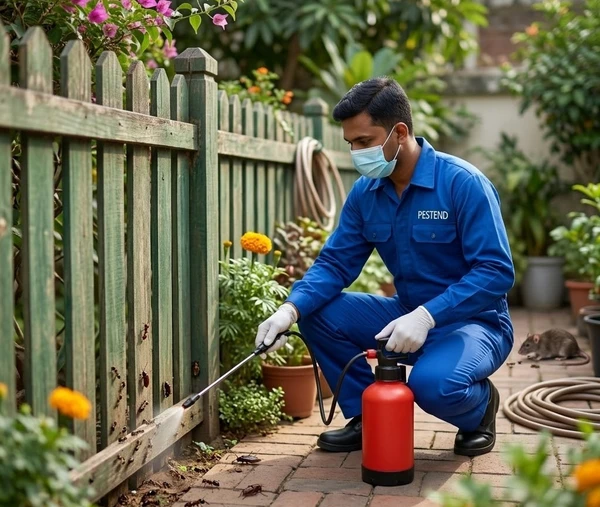
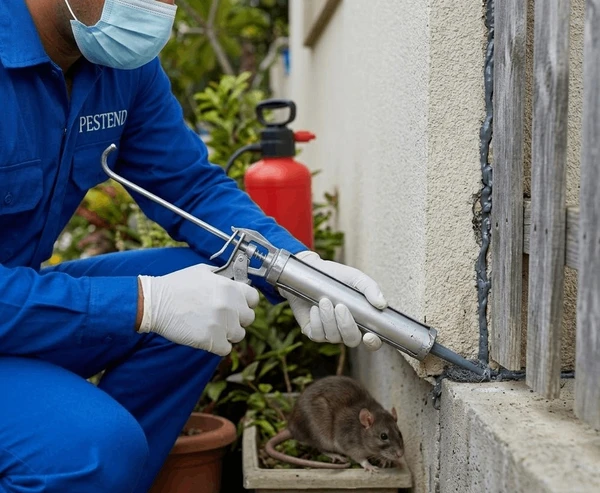
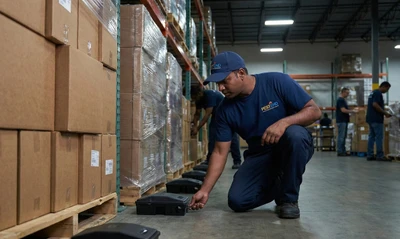
Rodents GIDC-edge ground-floor residential units, Clock Tower old city compound walls with kuccha drainage gaps, Machhu riverside properties with original boundary drainage — ceramic-belt rodent populations have a consistent industrial food source. Entry point sealing is the critical step. We bait, locate every real gap, seal with steel-reinforced material they cannot gnaw. Without sealing, the GIDC-sourced pressure refills the space within one season.
General Pest Control Ants, silverfish, spiders, wood borer, lizards — one visit covers all. April pre-monsoon is the right timing. Morbi's semi-arid climate means a shorter active window, but the kiln-warmth zones near the GIDC are active for cockroaches year-round regardless of season.
|
Service |
1 BHK |
2 BHK |
3 BHK |
|
₹999 |
₹1,299 |
₹1,599 |
|
|
Termite Treatment |
₹3,500 |
₹5,500 |
₹7,000 |
|
Bed Bug Treatment |
₹1,499 |
₹2,599 |
₹3,499 |
|
₹999 |
₹1,899 |
₹2,599 |
|
|
General Pest Control |
₹899 |
₹1,299 |
₹1,599 |
|
Rodent Control |
₹1,500 |
₹2,500 |
₹3,000 |
Large GIDC worker colony complexes, Clock Tower heritage havelis, industrial-adjacent commercial units, and Machhu riverside heritage properties quoted separately after inspection. Price confirmed before treatment — nothing added on the day.
Looking for pest control in Morbi near me? We serve:
Clock Tower area · Old City havelis · GIDC Phase 1 · GIDC Phase 2 · Ceramic factory cluster zones · Rajkot Road corridor · Wankaner Road · Machhu riverside belt · National Highway residential belt · Tankara · Station Road · Main Bazaar · Navlakhi Road · Maliya Road edge · Halvad Road approach · Bhuj Road corridor and surrounding localities.
Not listed? Call — confirmed in minutes.
Free inspection first. Within 24 hours. GIDC-edge worker colony, Clock Tower heritage haveli, or new Tankara Road flat — inspection depth suits the property. We assess infestation level, entry points, kiln-zone external pressure, Machhu riverside moisture conditions. Free. No commitment.
Fixed price after inspection. Confirmed before treatment starts. Nothing changes on the day.
Treatment. We bring all equipment. Standard flats done in 1–2 hours. Exact re-entry timing per room before we leave.
Follow-up at 7–10 days. Activity in the warranty window? We return. No charge.
Book your free inspection — no pressure, just find out what's actually there and what it costs to fix.