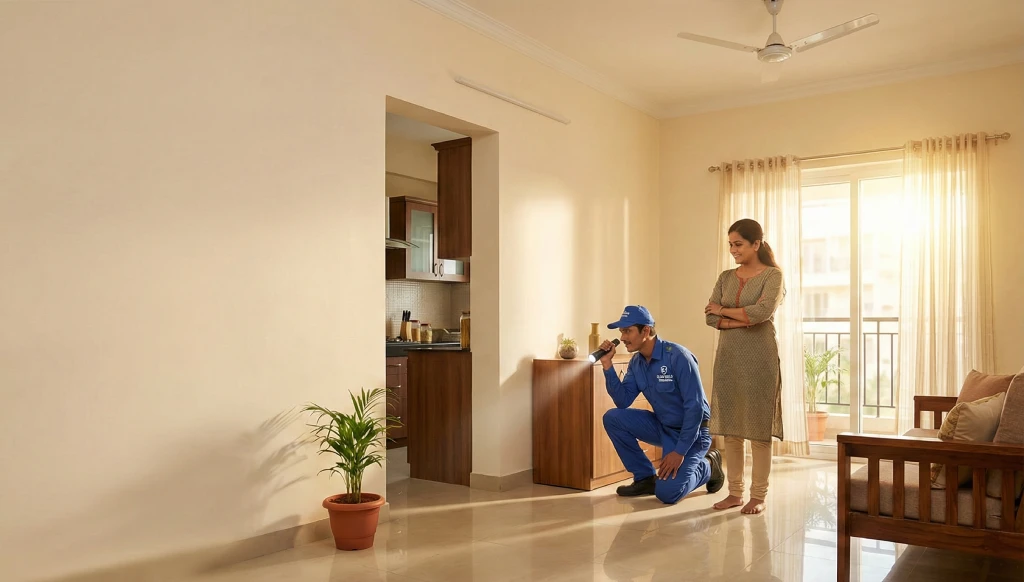
Need pest control services in Bulandshahr near you? PestEnd handles termites, cockroaches, rodents, mosquitoes and more across Bulandshahr district. Safe. Warranted. Free inspection. Book today.
Fill form to get a call back in 10 mins
Customized solutions for Bulandshahr's climate and pest problems.
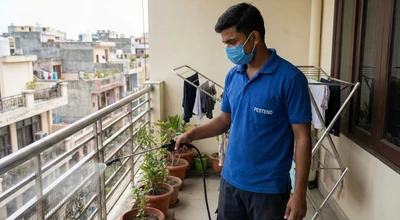
""Mosquitoes near the Kali Nadi side — this monsoon was different." "We live close to the Kali Nadi and dengue is a serious worry here every year. Previous fogging lasted about a week. PestEnd treated all the drain edges around our building and the waterlogged ground near the nala before the peak season. Fogged after. Genuinely the calmest monsoon we have had in years. Told our entire housing society.""
""Rats in our cold storage every harvest season — fixed this year." "We store potatoes and vegetables in our cold storage near the mandi. Rats were getting in every harvest season and damaging stock. PestEnd found three entry gaps we had completely missed — around the drain pipe and at the back wall base. Sealed all of them and set traps. This season, not a single rat. We have a quarterly contract with them now.""
" "Cockroaches in my shop in Khurja — gone overnight, no smell." "Running a shop in Khurja market — cockroaches near the back storeroom were becoming embarrassing. Previous spray smelled terrible for two days and they were back in a week. PestEnd gel treatment — completely odorless, shop stayed open the whole time. By morning cockroaches were dying near the drain. Three months later, still clean. Recommended to my neighbors in the market." "
Termites eating through your almirah legs or door frame.
Cockroaches in the kitchen every night. Rats in the grain or vegetable store. Mosquitoes after every monsoon rain. Red bite marks that appear every morning.
You try the local spray. Two weeks later — same problem, same corner.
Bulandshahr sits in the Upper Ganga-Yamuna Doab. The Ganga flows along its eastern boundary. The Kali Nadi runs through the centre of the district. The soil between these rivers — deep, fertile alluvial — stays moist underground all year.
That soil is why pest problems here keep coming back no matter what surface treatment you apply.
PestEnd serves Bulandshahr. We treat the actual source. Every job has a warranty.
Most treatments spray what is visible on surfaces. The colony underneath stays untouched. Three weeks later, the same pests are back from the same source.
This happens because pest problems in Bulandshahr are driven by conditions that surface treatment cannot fix.
Underground moisture. The Upper Doab sits between two rivers. The canal irrigation network covers almost every corner of the district. Bulandshahr's alluvial soil retains moisture at foundation depth year-round — even in dry months. Subterranean termites use that moisture to travel underground and enter your home from below. Spray the wood above all you want. The colony in the soil stays active.
Agricultural cycles. Bulandshahr has four sugar mills and vast wheat, sugarcane, paddy, and potato cultivation. After every harvest cycle, rodents that lived in the fields lose food and shelter and flood into nearby homes, dhabas, warehouses, and cold storage units. This is predictable. It happens every season without fail.
Rapid urbanisation near NCR. New residential colonies, commercial buildings, and industrial units are coming up fast across the district — especially along the Bulandshahr-Delhi highway belt. New construction on moist doab soil, frequently without proper pre-slab termite treatment, creates pest problems within two to three years of possession. Flat owners in newer colonies are often the most surprised when termites show up in a relatively new home.
Dense mixed-use areas. Bulandshahr city's old markets and mohallas, Khurja's ceramics industry area, and Jahangirabad's textile belt all create warm, food-rich environments where cockroaches and rodents thrive and move freely between adjacent properties.
Until the source is treated — soil for termites, drain gaps for cockroaches, entry holes for rodents, breeding water for mosquitoes — the problem will keep returning.
Termites are silent and systematic. They build mud tube tunnels through your walls from the soil below, feeding on all cellulose material — wooden doors, almirahs, window frames, flooring, books, even certain wall materials. By the time you notice hollow-sounding wood, crumbling furniture legs, or thin mud lines on your skirting, the colony has been active for months.
Bulandshahr's Ganga-Yamuna doab soil keeps underground moisture elevated year-round. This is the primary reason termite problems here are so persistent. Subterranean termites — the most destructive species — need that moisture to survive and travel. Even in peak summer, when the surface is bone dry, the soil at foundation depth stays moist enough for active termite movement.
Signs to watch for: hollow sound when tapping wood, thin muddy lines running up walls near the floor, wings shed near lights during monsoon evenings, crumbling skirting or furniture legs, and doors that suddenly stick without reason.
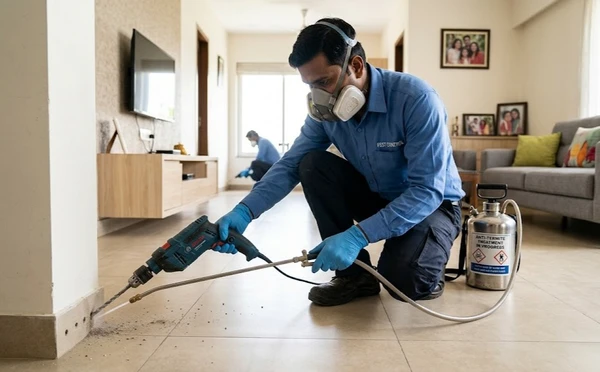
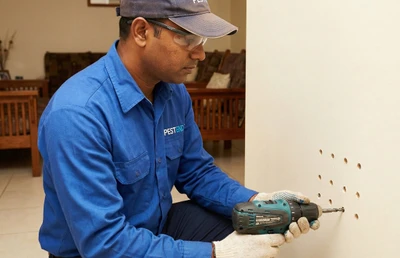
How we treat it: We drill at regular intervals along all wall bases — inside and outside. Termiticide is injected under pressure directly into the soil, creating a chemical barrier the colony cannot cross. Every drill point is sealed with white cement. Every entry gap near pipes, plumbing, AC drainage, and wall joints is sealed. Pre-construction treatment — before the floor slab is poured — is the most cost-effective protection and prevents the problem permanently. Post-construction treatment works well for existing properties and carries a long warranty.
Cockroaches carry 33 types of bacteria. They contaminate food surfaces with salmonella, typhoid, and dysentery pathogens. Their droppings and shed skins trigger asthma and allergies in children. One female produces 300 to 400 offspring in her lifetime.
They live in hidden spots — inside cabinet hinges, behind refrigerator motors, under sink drain joints, inside electrical switch boxes, within wall pipe openings. These are spots no spray ever reaches properly. You kill the visible ones. The colony inside the wall and inside fittings survives and keeps producing new cockroaches every week.
In Bulandshahr's dense residential areas, cockroaches spread between adjoining kitchens through shared drainage stacks. In commercial areas like Khurja's market lanes, they travel through shared shop drainage and move freely between neighbouring businesses.
How we treat it: Odorless gel bait is placed in tiny amounts inside the exact spots where cockroaches live and breed. No spray. No smell. No disruption. Kitchen stays open. You stay home. Cockroaches eat the bait and carry it back to the nest. The entire colony dies within 24 to 48 hours. Results hold for three to four months. For shared-wall properties in commercial areas, we also seal drainage entry points to cut off migration from neighbouring premises.
Rats chew electrical wires — causing fires and equipment damage. They contaminate far more food than they eat through droppings and urine. They carry leptospirosis, hantavirus, and plague. A single pair can produce dozens of offspring within months.
In Bulandshahr, rodent pressure has two peaks. The agricultural harvest season — October to February — displaces field rats from cleared sugarcane and wheat land into homes, shops, cold storage units, and grain stores. The sugar crushing season at the district's four mills also generates heavy rodent activity in mill surroundings and adjacent residential areas.
Rat poison alone is never the solution. It kills some rodents but leaves every entry point open. New rats come in within days from outside.
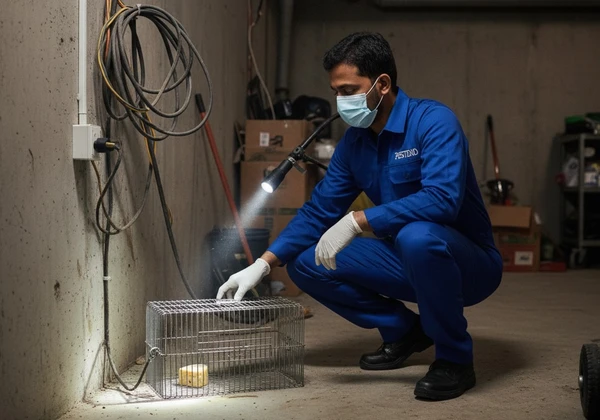
How we treat it: Full property inspection to identify every entry gap — behind pipes, under doors, along wall-floor joints, inside false ceiling gaps, and through drainage openings. All gaps sealed. Professional traps placed inside. Decontamination of affected areas after capture. For godowns, cold storage units, and food processing facilities, we build a site-specific treatment and maintenance plan.
Mosquitoes transmit dengue, malaria, and chikungunya. They are most dangerous in monsoon and post-monsoon months when Bulandshahr's canal network, irrigation drains, Kali Nadi overflow, and blocked city drains all produce extensive waterlogging.
The real problem is always larvae, not adult mosquitoes. Fogging kills adults. But thousands of larvae already hatching in drain edges, terrace puddles, pots, cooler water, and waterlogged ground keep producing new adult mosquitoes every few days. Most fogging treatments last four to five days because the source is never addressed.
How we treat it: Every breeding spot around your property is identified and treated first. Drain edges get larvicide. Terrace corners, overhead tank gaps, cooler containers, and waterlogged ground are all addressed. Only after breeding spots are treated do we fog open areas. This approach gives results that last weeks, not days.
Bed bugs ↗ are spreading rapidly across Bulandshahr's growing rental accommodation, paying-guest housing, and budget hotels on the Delhi-Aligarh highway belt. They spread through luggage, second-hand furniture, and linen.
They hide in mattress seams, inside sofa springs, behind headboards, in wall cracks, and inside wooden furniture joints. Standard spray reaches perhaps 20% of their hiding spots. The rest survive and breed.
Signs: red bite marks in rows on exposed skin each morning, small blood spots on bedding, shed casings near mattress seams, and a faint sweet-musty smell in severely infested rooms.
How we treat it: Heat treatment kills bed bugs and their eggs inside mattresses and furniture — no chemicals needed in fabric items. Chemical treatment is applied precisely inside wall cracks, furniture joints, and headboard gaps. Full follow-up inspection confirms complete elimination one week later.
Ants, flies, lizards, wood borers, spiders, silverfish — each requires a different treatment. Gel bait for ants. Residual spray for flies and lizards. Injected insecticide for wood borers inside timber. We identify what your property actually has and build a targeted plan.
We give you the exact price only after the free inspection. No guessing over the phone.
|
Pest Type |
1 BHK |
2 BHK |
3 BHK |
|
₹999 |
₹1,199 |
₹1,499 | |
|
Termite Treatment |
₹3,249 |
₹5,500 |
₹6,500 |
|
₹999 |
₹1,899 |
₹2,600 | |
|
Bed Bug Treatment |
₹1,399 |
₹2,599 |
₹3,399 |
|
₹899 |
₹1,300 |
₹1,600 |
Godowns, cold storage units, sugar mill facilities, offices, and commercial spaces — call for a custom quote.
Free inspection first. We visit your home or property. Check every corner — where pests enter, breed, and hide. No charge for the visit.
Your own plan. Not a standard package. Built for your specific problem and property.
Safe treatment. Government-certified chemicals. Odorless wherever possible. Safe for children and pets. Most jobs need no vacating.
Warranty on every job. Pests return in the warranty period — we come back and re-treat. No extra cost. No conditions.Tell us your location and the problem. We call back the same day. Free inspection. Clear price after we see the actual issue. No hidden charges.
Visit pestend.in to book your free inspection.