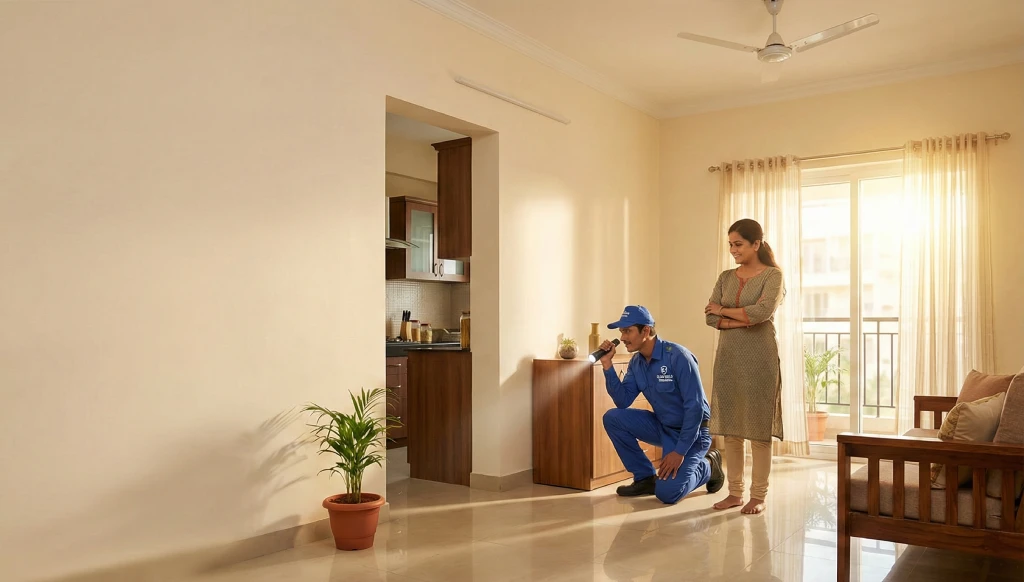
Pest control services in Bhiwani for homes, cotton mandi belt, pilgrimage accommodation & offices. Termites, cockroaches, bed bugs, rodents & mosquitoes. Free inspection, transparent pricing, warranty. Call PestEnd.
Fill form to get a call back in 10 mins
Customized solutions for Bhiwani's climate and pest problems.
""New flat, 3 years old — termites in the main door frame. PestEnd came next day, assessed the stage and the Chautang drainage channel factor on our side of the city. Full perimeter treatment done. Seven months clear and still holding. Price matched the quote.""
""Cockroaches in the kitchen near the dyeing lane — present even in December when the neighbours said it was normal. PestEnd gel treatment and explained the workshop warmth issue. Gone next morning, still clear 4 months later. Hadn't realised the loom lane was the reason it never stopped.""
""Dharmashala near the temple — bed bugs returning after every major yatra season despite spraying after each event. PestEnd heat treatment done on all 10 rooms before the next pilgrimage month. Nothing returned. They explained why spray keeps failing at this turnover rate. Should have switched to heat treatment years ago.""
Bhiwani is called Chota Kashi. Dozens of temples, religious institutions, and pilgrimage sites across the city draw devotees year-round — not on the scale of Kurukshetra's eclipse gatherings, but consistently, month after month. That steady pilgrim flow means steady guesthouse and dharmashala turnover. And steady turnover means bed bugs.
That's the first thing. Not the most dramatic, but the most consistent.
The second is cotton. Bhiwani is one of Haryana's major cotton-trading centres. The cotton mandi operates with ginning and pressing units adjacent to or embedded within the city. Cotton seed storage at scale — the same situation as Surendranagar in Gujarat's cotton-ginning belt — generates rodent populations with a consistent, high-calorie food supply that cycle outward into adjacent residential areas. Ginning season running October to March means heavier rodent pressure on the mandi-adjacent residential zones during those months, with a partial carry-over between seasons because the storage doesn't fully empty.
Third: the Chautang system. The seasonal drainage channels and the Chautang river's tributary network run through the Bhiwani district. Bhiwani's eastern residential zones near the seasonal drainage channels hold post-monsoon sub-surface soil moisture longer than the city's dry western Rajasthan-facing side. That's the floodplain termite condition appearing where the surface suggests it shouldn't.
And textile. Bhiwani has a significant handloom and powerloom textile sector — warm dyeing and processing workshops embedded in and adjacent to residential areas on the old city's commercial lanes. The same year-round cockroach warmth as Morbi's kiln zones and Navsari's loom belt.
Pest control ↗ in Bhiwani needs to know the cotton mandi, the pilgrimage calendar, and the textile lane — not just that it's a city in Haryana.
Cotton mandi and ginning unit belt — areas adjacent to the cotton market on the Loharu Road and industrial edge — cotton seed storage generates rodent populations with a sustained food supply that doesn't behave like urban rat patterns. Ginning season runs October through March, but the storage yards hold seed before and after processing, so the external pressure on adjacent residential units is present for most of the year at varying intensity. Ground-floor properties within 300–500m of active ginning yards deal with rodent re-supply that interior bait alone doesn't resolve. Sealing every entry point is the step that breaks the cycle.
Pilgrimage and dharmashala belt — areas near the Bansiwala complex, Hanuman Mandir, and the old city temple zone — consistent year-round devotee traffic rather than spike-event pilgrim pressure. Dharamshalas near these sites cycle occupants regularly. Bed bugs establish in one room and spread through shared bedding before any single occupant reports it. Heat treatment clears both adults and eggs — standard spray moves them to adjacent rooms and the cycle continues with the next batch of occupants.
Textile and dyeing workshop lanes — old city commercial-residential mixed zones — warm dyeing vats, organic chemical residue in drainage channels, workshop warmth that persists year-round. Cockroaches in the textile belt stay active through December and January when standard Bhiwani residential kitchens cool and get seasonal relief. The same loom-room cockroach logic as Navsari and Burhanpur — warmth from the process keeps the population active outside normal seasonal patterns.
Chautang drainage channel eastern belt — low-lying residential areas near seasonal drainage channels — the eastern side of Bhiwani nearest the Chautang tributary channels holds post-monsoon sub-surface soil moisture longer than the city's arid western zones. Termite activity in properties here persists through October and November when the city's surface looks completely dry. Mosquito breeding in seasonal water pockets in this belt continues past the visible monsoon recession.
Old city and the Hanuman Chowk bazaar area — dense market construction, shared boundary walls, original drainage in the bazaar rows. Cockroaches in the old bazaar kitchen zone follow the shared-drainage collective pattern — treating one unit in a connected terrace row gives temporary relief without addressing the shared pipe entry from adjacent properties.
Expanding residential corridors — Siwani Road, Charkhi Dadri Road, Loharu Road new societies — new construction on semi-arid Haryana soil. Pre-possession termite treatment is not standard in Bhiwani's newer developments. Year 2 to 3 is when door frames begin showing activity. The cotton mandi proximity on the Loharu Road side adds external rodent pressure to the standard new-construction termite profile.
DHBVN township and institutional housing — government employee housing with the Bhiwani power sector colony character. Older construction in some sections, original woodwork in senior officer quarters, large compound grounds with mature tree cover. Garden root systems disrupting treated soil barriers annually — the standard institutional housing termite recurrence pattern.
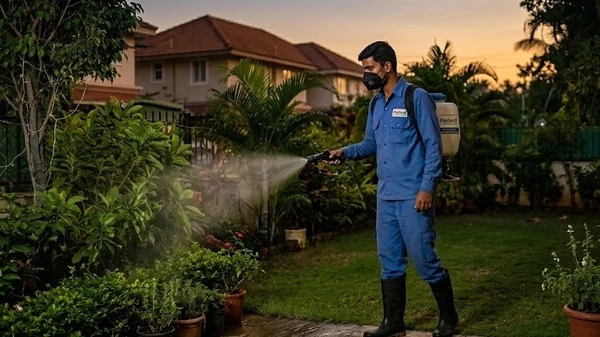
Termites Chautang drainage belt eastern property, DHBVN township quarter, new Siwani Road society flat — approach matches the structure. For Chautang-adjacent properties with post-monsoon sub-surface moisture, complete perimeter coverage at correct injection depth is essential — Bhiwani's dry surface misleads: the soil at foundation depth in these zones holds moisture from seasonal drainage channels well past what the surface suggests. For DHBVN institutional housing with mature compound trees, we treat the full perimeter including garden-adjacent soil channels that root systems reopen seasonally. For new Loharu Road construction under 3 years old, pre-flooring soil treatment is still accessible and significantly cheaper than post-possession drilling.
Cockroaches Textile belt residential kitchens in the old city workshop lanes, cotton mandi adjacent colony flats, commercial kitchens near Hanuman Chowk — odorless gel bait placed in exact harbourage points: pipe chases, behind modular panels, wall-floor joints. No prep. No smell. No vacating. Active next morning. Holding 3 months later. For textile workshop-adjacent properties with warm drainage re-supply, pipe-entry sealing after gel treatment is what stops the year-round warmth-zone cycling from resetting results within weeks.
Mosquitoes Chautang drainage channel low-lying pockets on the eastern residential belt, open plots in new Siwani Road societies, society sump tanks — larvicide in every accessible standing source before fogging. For Chautang-adjacent properties, fogging alone gives one week of relief before drainage channel breeding sources reset the population. Source treatment first, fogging second, both together holds.
Bed Bugs Dharamshalas and guesthouses near the Bansiwala complex and temple belt, budget lodges near Bhiwani bus stand and railway station, cotton mandi worker transit accommodation — year-round pilgrim and worker reintroduction. Heat treatment combined with targeted chemical application clears adults and eggs. Standard spray relocates bed bugs. For dharmashala properties: treating all rooms in one visit is the only approach that produces results that last beyond the next occupant changeover.
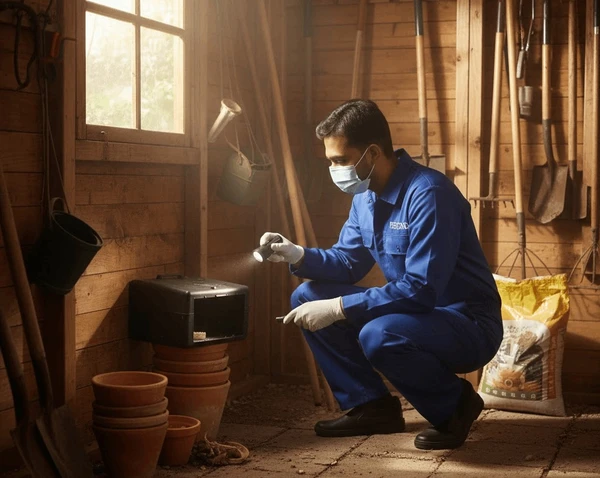
Rodents Cotton mandi adjacent ground-floor residential units, old city compound walls with original drainage gaps, Chautang floodplain properties near the drainage channels — cotton seed storage rodent pressure needs sealing as the priority. We bait, locate every real entry point, seal with material they cannot gnaw. Without sealing, the mandi-adjacent pressure refills the space within weeks because the food source doesn't disappear between seasons.
General Pest Control Ants, silverfish, spiders, lizards — one visit covers all. April pre-monsoon is the right timing. Bhiwani's semi-arid climate means a shorter but intense monsoon — early pre-treatment captures the window before the season begins.
|
Service |
1 BHK |
2 BHK |
3 BHK |
|
₹999 |
₹1,299 |
₹1,599 | |
|
Termite Treatment |
₹3,500 |
₹5,500 |
₹7,000 |
|
Bed Bug Treatment |
₹1,499 |
₹2,599 |
₹3,499 |
|
₹999 |
₹1,899 |
₹2,599 | |
|
General Pest Control |
₹899 |
₹1,299 |
₹1,599 |
|
Rodent Control |
₹1,500 |
₹2,500 |
₹3,000 |
This is the pest control in Bhiwani price for standard residential properties. Cotton mandi ginning units, large dharmashala complexes, DHBVN institutional bungalows, and textile belt commercial properties quoted separately after inspection. Price confirmed before treatment — nothing added on the day.
Call PestEnd directly — number at the top of this page. No hold queue, no routing. We pick up, confirm your locality, and book within the same call. Most inspections happen within 24 hours.
For pest control in Bhiwani Haryana contact number — the direct line at the top of this page reaches us any day of the week.
Free inspection first. Within 24 hours. Cotton mandi adjacent colony, Chautang drainage belt property, or new Siwani Road society — inspection depth suits the structure. We assess infestation level, entry points, mandi and textile external pressure, drainage channel moisture conditions. Free. No commitment.
Fixed price after inspection. Confirmed before treatment starts. Nothing changes on the day.
Treatment. We bring all equipment. Standard flats done in 1–2 hours. Exact re-entry timing per room before we leave.
Follow-up at 7–10 days. Activity in the warranty window? We return. No charge.